“My company?”
Elaine Porter did not answer immediately.
She looked toward the camera mounted high in the interview-room corner, then at Malcolm, as though calculating how many versions of the truth she could still afford to keep separate.
Kendra leaned forward. “Elaine, you have already admitted stealing confidential trust records and maintaining contact with Travis. This is not the moment to become selective.”
“I’m not being selective.”
“You just told us Jocelyn’s company was the larger target.”
“It was.”
“How much larger?”
Elaine looked at me. “What is Mercer Ridge worth now?”
I felt my stomach tighten. “That depends on valuation.”
“Approximately.”
“Privately held. Somewhere between one hundred eighty and two hundred twenty million.”
Brittany stopped breathing for a moment.
She knew I owned a successful company. I had deliberately kept discussions of its valuation away from her. Not because the information was secret, exactly, but because I had wanted her childhood measured in ordinary things—grades, friendships, mistakes, plans—not in what she might inherit.
Elaine nodded. “Warren estimated ninety million when he first became interested.”
“When?”
“About eleven years ago.”
That was before Brittany’s trust existed.
Before Travis’s foreclosure.
Before Warren photographed my daughter.
Daniel stepped closer to the table. “Then Brittany was never the original target.”
“No.”
“What was?”
“Jocelyn.”
The answer was so simple that I almost laughed.
Instead I thought of Warren Beckett, a man I had never knowingly met, studying my marriage before it failed and my business before it became valuable enough to attract headlines.
“How?” I asked.
Elaine rubbed the handle of her cane. “Warren specialized in families whose wealth was increasing faster than their governance structures.”
“That sounds like language from a brochure.”
“It was.”
“What does it actually mean?”
“He looked for people who had built something valuable without realizing how exposed the people around them were.”
Kendra said, “Spouses.”
“Spouses. Children. Elderly parents. Business partners. Anyone who might someday hold shares, voting rights, inheritance interests, or influence.”
My mind went immediately to Mercer Ridge’s ownership structure.
I held sixty-eight percent.
Daniel owned four.
Senior executives and early employees held most of the remainder.
Brittany owned none.
Not yet.
But my estate plan changed that.
“How much does Brittany inherit?” I asked Kendra.
She understood before Elaine answered.
“If you died under the current documents, the majority of your Mercer Ridge shares would enter the family holding trust.”
“And Brittany?”
“Eventually becomes the principal beneficiary.”
Brittany stared at us.
“Eventually?”
I turned toward her. “Those documents were created when you were younger. We were going to review them after graduation.”
“That phrase is becoming terrifying.”
“I know.”
Elaine continued. “Warren learned about the succession structure.”
Kendra’s voice sharpened. “How?”
“I don’t know.”
“You had access to Jocelyn’s trust documents?”
“Not the corporate succession documents.”
“Then who did?”
Elaine looked at me. “Someone at Mercer Ridge.”
The room became very quiet.
Malcolm opened his notebook.
“Name.”
“I never knew.”
“Warren did.”
“Yes.”
“How did you know there was someone?”
“Because he had information he could not have obtained otherwise.”
“What information?”
“Board discussions. Insurance policies. Executive compensation. Draft succession plans.”
Daniel swore under his breath.
Those were not documents a financial adviser could casually find.
Some had never existed outside our internal systems.
“What did Travis know?” Brittany asked.
Elaine hesitated.
“Initially, very little.”
“Later?”
“More.”
“How much more?”
“Enough to understand that if your mother died while you were still young, whoever controlled your financial decisions could gain enormous influence over Mercer Ridge.”
Brittany’s face changed.
I felt it happen inside me too.
Not fear exactly.
Something colder.
“Say that again,” I said.
Elaine looked at me.
“If you died.”
Kendra interrupted immediately. “Was there ever a plan to harm Jocelyn?”
“I never saw one.”
“That was not the question.”
“I never heard Warren suggest murder.”
“Did Travis?”
“No.”
“Did anyone discuss accelerating Jocelyn’s death?”
“No.”
Brittany’s hand found mine beneath the table.
Elaine saw it.
“Warren didn’t need people dead,” she said. “He preferred legal leverage. Divorce. Incapacity. family disputes. lawsuits. succession crises.”
“Why?”
“Dead people create investigations.”
Malcolm wrote that down.
“Living people,” Elaine continued, “sign things.”
I remembered the birthday forms.
The hidden power of attorney.
The forged petition.
The fake therapist affidavit.
A system built not around breaking laws openly, but around making legitimate institutions act on fraudulent information.
Kendra asked, “What was the ultimate corporate objective?”
“Influence the beneficiary. Gain fiduciary authority. Use that authority to influence the holding trust.”
“That would not automatically produce control of Mercer Ridge.”
“No.”
“Then what are we missing?”
Elaine looked at me.
“Your shareholder agreement.”
My chair seemed to become harder beneath me.
Mercer Ridge’s shareholder agreement contained a provision written after a disastrous dispute between two early investors.
If my shares entered a trust following death or incapacity, the trustee could designate an interim voting representative until the succession board confirmed permanent governance.
The safeguard had seemed sensible when we created it.
Temporary continuity.
Thirty days.
Maybe sixty.
Enough to keep the company functioning.
But temporary voting control over sixty-eight percent of Mercer Ridge would be extraordinary leverage.
“Warren knew about the interim provision,” I said.
“Yes.”
“How?”
“I don’t know.”
Malcolm asked Elaine to explain the timeline.
Warren had first noticed Mercer Ridge when our logistics software began appearing in industry publications. He researched me. My marriage. Travis’s struggling businesses. My growing wealth.
Then my divorce created an opening.
Warren contacted Travis indirectly through a lender.
“He offered financial restructuring,” Elaine said.
“For Travis’s debts?”
“Yes.”
“Before Brittany’s trust?”
“Before.”
That changed everything again.
Travis had known Warren before the house.
Before the supposed educational planning.
Before the first photograph.
“How long?” Brittany asked.
“About eleven years.”
She was seven then.
I remembered Travis during those years: restless, resentful of my work, constantly chasing ventures that failed six months after he promised they would change our lives.
Had Warren been there already?
“What did Warren ask Dad to do?”
“Nothing illegal at first.”
“Stop saying ‘at first.’”
Elaine lowered her eyes.
“He wanted information.”
“About Mom?”
“Yes.”
“Her schedule?”
“Yes.”
“Her company?”
“Yes.”
“Me?”
“Eventually.”
Brittany squeezed my hand harder.
Daniel asked, “What did Travis receive?”
“Debt relief. Investment money. introductions.”
“In exchange for spying on his wife?”
Elaine did not soften it.
“Yes.”
I thought I would feel betrayed.
Instead I felt strangely detached.
The betrayal was eleven years old.
The person who had lived through it simply had not known its name.
Malcolm asked, “When did the plan shift toward Brittany?”
“When Jocelyn created the residential trust.”
“Why?”
“Warren realized she was building protective structures around her daughter.”
“So he attacked those structures.”
“He studied them.”
“By bribing you.”
“Yes.”
Brittany looked at Elaine. “Thirty thousand dollars.”
“Yes.”
“Was that all my privacy cost?”
Elaine flinched.
“No.”
“How much?”
“Seventy-five thousand over two years.”
Brittany nodded slowly. “Better.”
The sarcasm was quiet enough to hurt.
Elaine wiped her eyes.
“I am sorry.”
“I don’t know what I’m supposed to do with that.”
“Nothing.”
That answer, at least, was decent.
Malcolm asked about Warren’s disappearance.
Elaine said the relationship between Warren and Travis deteriorated after Travis discovered the corporate objective.
“Why would that bother him?” Daniel asked.
“It didn’t.”
“What did?”
“Warren intended to use Travis and then remove him.”
Brittany’s expression hardened. “Dad thought the money should be his.”
“Yes.”
“So he stole Warren’s records.”
“Yes.”
“And started running the scheme himself.”
“Parts of it.”
“What parts?”
“Your trust.”
“And Mercer Ridge?”
Elaine hesitated too long.
Kendra noticed.
“What about Mercer Ridge?”
“I don’t know whether Travis continued that plan.”
“Elaine.”
“I truly don’t.”
Malcolm placed the burner-phone transcript between them.
“You have been talking to him for eight years.”
“Mostly because I was afraid.”
“Of Travis?”
“Of what he had.”
“Warren’s files.”
“Yes.”
“What was in them?”
“Names. payments. recordings. account information. compromised employees.”
“At Mercer Ridge?”
Elaine looked at me.
“At many companies.”
“Mine?”
“One.”
My pulse slowed.
“Name.”
“I never knew.”
“You expect me to believe Warren told you there was an insider but never said who?”
“He used codes.”
“What code?”
Elaine whispered it.
“Northstar.”
I knew that word.
Not from Warren.
From my company.
Three years earlier, Mercer Ridge had launched an internal succession-security project after a cybersecurity audit.
The project name was Northstar.
Only twelve people had known.
I stood.
Daniel looked at me. “What?”
“Northstar isn’t Warren’s code.”
“What is it?”
“An internal project.”
Kendra immediately understood.
“If Elaine heard that name years earlier—”
“Then whoever was feeding Warren information had access long enough to learn a confidential project created years after the original scheme began.”
The insider was not historical.
The insider might still be inside Mercer Ridge.
I called our chief information-security officer, Nathan Cho.
He answered on the first ring.
“Jocelyn?”
“Do not use company email. Do not message anyone. Do not alert IT.”
A pause.
“What happened?”
“I need physical access logs, system logs, and the Northstar permissions list preserved externally.”
“How far back?”
“Eleven years.”
“That’s going to take—”
“Start now.”
He heard something in my voice.
“Who am I looking for?”
“Everyone.”
Another pause.
“Including me?”
“Yes.”
“Understood.”
That was why Nathan had worked for me for fourteen years.
No wounded pride.
No argument.
Just procedure.
I ended the call.
Brittany watched me.
“You really think someone at your company has been helping them?”
“I think someone has been leaking information.”
“For eleven years?”
“Possibly.”
“Who?”
“I don’t know.”
Elaine shifted in her chair.
“There’s something else.”
Kendra looked almost tired of those words.
“What?”
“Warren kept audio recordings.”
“We know.”
“No. You don’t understand. He recorded almost every meeting.”
“With Travis?”
“With everyone.”
“Where?”
“Encrypted drives.”
“Did Travis take them?”
“Some.”
“Where are they?”
“I don’t know.”
Brittany leaned forward. “But you know how to find them.”
Elaine looked at her.
“Maybe.”
“How?”
“Warren was paranoid. He kept redundant copies.”
“Where?”
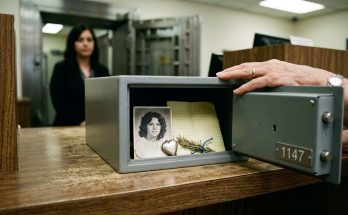
“One was in a safe-deposit box.”
“Which bank?”
“The bank where I worked.”
Kendra immediately called.
The bank confirmed that Warren Beckett had maintained a box there.
Closed four years earlier.
Contents released to an authorized agent.
“Who?” Malcolm asked.
The bank representative would not disclose it without legal process.
Kendra sent the subpoena.
We waited forty-eight minutes.
The response arrived electronically.
Authorized agent:
Elaine Porter.
Everyone turned toward her.
Elaine looked genuinely confused.
“I never collected it.”
“The signature says you did.”
“I didn’t.”
Kendra enlarged the release form.
Elaine’s signature appeared at the bottom.
She shook her head.
“That’s not mine.”
Brittany gave a humorless laugh.
“Welcome to the club.”
Security footage no longer existed.
But the bank had retained identification records.
The person collecting the box presented Elaine’s employee credential and driver’s license.
Both were photocopied.
The photograph on the license was Elaine.
The employee credential was genuine.
“What happened to your credential after you resigned?” Malcolm asked.
“I surrendered it.”
“To whom?”
“Human resources.”
My phone rang.
Nathan.
I answered.
“I found something,” he said.
“What?”
“The Northstar permissions archive.”
“Who accessed it?”
“Seven authorized executives and one administrator.”
“Name.”
He hesitated.
“Jocelyn, there’s another issue.”
“What?”
“The administrator’s credentials were used last night.”
My skin went cold.
“Last night?”
“While we were dealing with Brittany’s trust?”
“Yes.”
“What did they access?”
“Your succession file.”
The room blurred around me.
“What was changed?”
“Nothing.”
“Then what did they do?”
“Downloaded it.”
I looked at Kendra.
“When?”
“11:52 p.m.”
Seven minutes before Brittany’s trust transfer was supposed to complete.
A diversion.
While every eye was on $2.84 million, someone inside Mercer Ridge had downloaded documents connected to a company worth nearly two hundred million.
“Whose credentials?” I asked.
Nathan gave me the name.
I knew it immediately.
Not an executive.
Not a lawyer.
Not someone who appeared in photographs beside me at conferences.
Someone who had sat twenty feet from my office for thirteen years.
Someone who knew my calendar, my travel, my passwords before we stopped using shared credentials, Brittany’s school schedule when she was young, and every attorney who ever called.
My executive assistant.
Marianne Cole.
Brittany looked at my face.
“Mom?”
I lowered the phone.
“Northstar has a name.”
Click here to continue reading: PART 10: The Woman Who Managed My Calendar for Thirteen Years Had Access to Every Door, but Her Empty Desk Held a Warning
The Birthday Gift I Took Back After My Daughter Told a Ballroom She Wished I Had Never Raised Her
Part 9 of 27