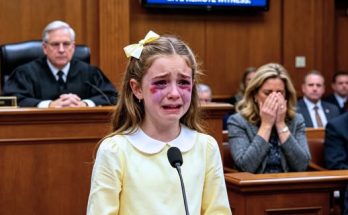
The assignment seemed harmless.
Family history.
Ten pages.
One oral presentation.
Harper's sophomore English teacher wanted students to write about an event that changed the structure of their family.
Harper came home carrying the rubric like it had personally offended her.
“No.”
I glanced at it.
“No what?”
“I am not writing about our divorce.”
“You don't have to.”
“It literally says an event that changed your family.”
“You could write about Grandma moving after Grandpa died.”
“She didn't live with us.”
“Your birth.”
“That made the family.”
“Technically structural change.”
“Mom.”
I tried not to smile.
“Pick something else.”
“Everybody knows my parents are divorced.”
“That is not a secret.”
“Some people know about Dad.”
Less simple.
Caleb's case had made local news years earlier.
Most coverage disappeared quickly.
But the internet preserved things longer than children understand.
Harper had occasionally encountered articles.
So had classmates.
She handled it better than I expected.
Not effortlessly.
Better.
“Then don't write about it.”
She stared at the rubric.
“I kind of want to.”
That surprised me.
“Why?”
“Because everybody who knows parts of it knows weird parts.”
“What does that mean?”
“They know Dad got arrested. Or they know I lived with you. Or they know there was some video.”
She looked irritated.
“But they don't know what actually mattered.”
“What mattered?”
Harper looked at me.
“I don't know yet.”
That was apparently the reason to write.
Her teacher allowed students to change names or omit sensitive details.
Harper decided not to change ours.
I was less comfortable.
“Are you sure?”
“It’s my story too.”
That sentence ended my objection.
She interviewed me.
Formally.
Phone recording on the table.
A notebook open.
“State your name.”
“Absolutely not.”
She laughed.
“Mom.”
“Claire Dawson, unwilling participant.”
“Relationship to interviewer?”
“Exhausted mother.”
She rolled her eyes.
Then the questions became serious.
“What did you think when Dad filed?”
“That I could lose you.”
“Did you think he was right about you?”
The question hurt.
“Sometimes.”
“Why?”
“Because he had spent a long time teaching me to question my reactions.”
“Was that on purpose?”
I paused.
“Some of it was.”
“How do you know?”
“Because he admitted it later.”
Harper nodded.
She knew.
“Did you ever lie to me?”
“Yes.”
Her pen stopped.
“When?”
“Small ways. Saying everything was fine when it wasn't. Saying I wasn't scared when I was. Telling you court would be okay when I had no idea.”
“That’s different.”
“Still untrue.”
She considered that.
“Were you trying to protect me?”
“Yes.”
“Did it help?”
“Sometimes. Sometimes it probably made you trust your own perception less.”
Harper wrote that down.
I wished she had not.
Then understood why it mattered.
“Do you think showing the video saved us?”
“No.”
She looked up.
“Really?”
“It exposed what already existed.”
Her face changed.
She had once said almost exactly the same thing.
“You stole that from me.”
“I prefer ‘learned from.’”
She smiled.
Next she interviewed Caleb.
I was not present.
I learned only what Harper chose to share.
“He answered everything.”
“Everything?”
“Mostly.”
“What did you ask?”
“If he wanted to take me away from you.”
My chest tightened.
“What did he say?”
“Yes.”
The honesty shocked me.
Harper continued.
“He said at first he told himself it was about stability. But really he wanted leverage and also wanted to control what I believed before you could explain anything.”
That sounded brutal.
“Are you okay?”
“Yeah.”
“He could have softened that.”
“I told him not to.”
Of course.
“What else?”
“I asked if he loved Vanessa.”
I looked at her.
“And?”
“He said yes.”
That answer still touched an old bruise.
Not sharply.
Enough to notice.
“Did that bother you?”
Harper shrugged.
“A little.”
“Why?”
“Because then part of me thinks maybe our family wasn't enough.”
I put down the dish towel I was holding.
“His affair had nothing to do with whether you were enough.”
“I know.”
“Knowing and feeling can disagree.”
She looked at me.
“You say that a lot.”
“Because it's annoyingly true.”
Harper continued.
“He said loving Vanessa didn't mean he stopped loving me.”
“That’s possible.”
“He said it meant he was dishonest about what he wanted and afraid of what ending the marriage would cost.”
That sounded like Caleb now.
More direct.
Less flattering.
“Did he blame me?”
“No.”
“Did he blame me?”
“No.”
Good.
Harper interviewed Mara too.
Mara agreed enthusiastically.
“Finally, someone asking intelligent questions.”
“Excuse me?” I said.
“You were emotionally compromised.”
“I paid you.”
“And I earned it.”
Harper loved her.
From Mara she learned procedural details.
How temporary custody creates momentum.
Why documentation matters.
Why accusations can become persuasive when assembled selectively.
Why judges need evidence instead of intuition.
Harper asked whether the video had guaranteed the outcome.
Mara answered no.
That surprised her.
“It changed everything.”
“Yes,” Mara said. “But evidence is rarely one magic object. The recording mattered because other records supported it.”
Harper looked at me afterward.
“I thought the video was everything.”
“So did I at first.”
“It wasn't.”
“No.”
That realization became central to the essay.
She titled it:
The Folder Was Not the Truth.
I objected to the title only because it sounded like a thriller.
She kept it.
The first draft was seventeen pages.
“Assignment says ten.”
“I know.”
“That's almost twice ten.”
“I can count.”
“Apparently not during drafting.”
She cut it to twelve.
Her teacher accepted the length.
She asked me to read it.
I hesitated.
“You don't have to.”
“I want you to.”
“Are you sure?”
“Yes.”
I read it alone.
The first page described the courtroom.
Not dramatically.
Harper remembered the carpet.
The clicking sound of someone's pen.
The way Judge Marwood spoke directly to her instead of through adults.
She described holding the tablet and feeling as though her arms did not belong to her.
Then she wrote:
I thought proof would make the adults stop arguing because I did not understand that proof changes arguments more often than it ends them.
I stopped reading for several minutes.
She described Caleb carefully.
Not as villain.
Not as victim.
She wrote about his jokes, pancakes, manipulation, apologies, letters, prison sentence, museum visits, and eventual trust.
She described me too.
My fear.
My over-questioning.
My effort not to make her choose.
My failures when I did.
One sentence hurt:
My mother became so afraid of controlling me that sometimes she pretended not to have opinions, which is also confusing when you're a kid.
I laughed through tears.
She was right.
Avoiding control had occasionally made me evasive.
Parenting required guidance, not disappearance.
Then came the part about the folder.
For when I no longer believe you.
Harper explained it had been written to herself.
Not about Caleb.
Not about me.
About memory.
She wrote:
The worst part was not believing my father instead of my mother. The worst part was believing I needed someone else to tell me which of my own memories were allowed to count.
I closed the document.
Walked outside.
Cried for a while.
Then finished.
Her conclusion surprised me.
She did not say truth saved us.
She did not say honesty fixed everything.
She wrote that truth created responsibility.
Once people knew what happened, they had choices.
Caleb could continue lying or admit his role.
I could use Harper's fear to control her or allow her to make choices.
Harper could carry the video forever or delete the folder.
Judge Marwood could treat her as evidence or as a child.
The event that changed our family, Harper wrote, was not the divorce.
It was the moment each person stopped being allowed to pretend they had no choice.
I read that paragraph twice.
Then three times.
When Harper came home, she found me in the kitchen.
“Well?”
“I hate that you're better at writing than I am.”
“That bad?”
“No.”
She watched my face.
“You cried.”
“Obviously.”
“Which part?”
“Several.”
“Mom.”
“The line about me pretending not to have opinions was cruel.”
She smiled.
“True though.”
“Unfortunately.”
Then I told her what mattered.
“You were fair.”
“To Dad?”
“To everyone.”
She shook her head.
“I wasn't trying to be fair.”
“What were you trying to be?”
“Accurate.”
Better answer.
Caleb read it next.
He called me afterward.
His voice sounded rough.
“She didn't protect me.”
“No.”
“Good.”
“Good?”
“Yes.”
That surprised me.
“I spent years making people adjust facts so I could tolerate them.”
He exhaled.
“I don't want her doing that for me.”
We were quiet.
Then he added, “She was hard on you too.”
“Extremely.”
“Did that bother you?”
“Yes.”
“Are you going to tell her?”
“I told her.”
He laughed softly.
“Good.”
That was another sign of health.
Harper no longer needed either parent to pretend truth did not sting.
The classroom presentation came two weeks later.
Parents were not invited.
I was grateful.
Harper told me afterward that she shook during the first minute.
Then stopped.
A classmate asked whether she still loved her father.
She answered yes.
Another asked whether she forgave him.
She said:
Some things yes. Some things I don't think about that way.
Her teacher praised that answer.
So did I.
One boy apparently asked whether Caleb was a criminal.
Harper said:
He was convicted of crimes. That's different from making it his whole identity.
That phrasing sounded like Dr. Ortiz.
Harper admitted it was.
The essay won a school writing award.
She almost refused it.
“Why?”
“Because I don't want people clapping for trauma.”
“That makes sense.”
“Teacher says they're clapping for the writing.”
“Also true.”
She accepted the award.
At the ceremony, both Caleb and I attended.
Separate seats.
Same row this time.
Not planned.
There were only two available.
We survived.
When Harper’s name was called, we both stood.
Again.
This time she rolled her eyes from the stage.
Teenager.
Healthy embarrassment.
Afterward, Caleb said, “You were brutal.”
Harper grinned.
“You earned it.”
“I did.”
No wound.
No guilt.
No demand she soften it.
Then he handed her flowers.
Approved by nobody.
Because nobody needed approval anymore.
She accepted them.
Later, at home, Harper placed the award certificate on her desk.
Not beside the castle.
Not beside the old courtroom documents.
With school things.
Where it belonged.
A week later, she came into my office holding a flash drive.
My heart reacted irrationally.
She saw my face.
“Relax.”
“What is that?”
“My essay.”
“Why on a flash drive?”
“Because apparently cloud storage exists but I enjoy traumatizing you.”
“That is deeply unkind.”
She laughed.
Then set it on my desk.
“I want you to keep a copy.”
“Why?”
“In case I lose it.”
I picked up the drive.
An ordinary object.
No hidden seam.
No secret evidence.
Just writing.
“Okay.”
She turned to leave.
“Harper.”
“Yeah?”
“What's the folder called?”
She smiled.
My Story.
Nothing else.
Click here to continue reading: PART 23: When Caleb Finally Asked Me for Forgiveness, the Answer We Both Needed Was Not the One Either of Us Would Have Expected Years Earlier
The Divorce Papers Arrived Quietly, but Caleb Had Been Preparing for a War I Did Not Know We Were Fighting
Part 22 of 24