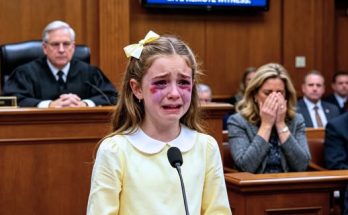
Harper turned eighteen on a bright Saturday in early autumn.
By then she was taller than me.
She had been accepted to a journalism program three states away.
Caleb still pretended not to be nervous about the profession.
I still pretended not to be nervous about her leaving home.
Neither of us fooled her.
HFD transferred into its next stage that month.
Not fully into Harper’s hands.
The structure had been designed carefully.
But she received direct access to statements, educational funds, and increasing decision authority.
The independent trustee held the final safeguards.
Harper read every document.
Of course she did.
At dinner she said, “This is the most paperwork anyone has ever created around giving someone money.”
Caleb replied, “You should be grateful.”
“I am.”
Then she looked at him.
“Also, historically, you are not allowed to complain about financial safeguards.”
Caleb raised both hands.
“Fair.”
We were eating together.
Not because her parents had reunited.
Because Harper asked for one birthday dinner with both of us.
Over the years, shared meals had become occasional and surprisingly ordinary.
Graduations.
Birthdays.
A college acceptance.
Nothing more.
Enough.
Caleb sat across from me.
His hair had gone noticeably gray at the temples.
Mine too, though I preferred not to discuss it.
Harper looked between us.
“This is weird.”
“You requested it,” I said.
“I know.”
“Then your complaint lacks standing.”
Caleb smiled.
“Lawyer-adjacent.”
Harper groaned.
“You two have become equally annoying.”
That may have been our most successful co-parenting achievement.
After dinner, Caleb gave Harper an envelope.
She eyed it suspiciously.
“Is there a flash drive in this?”
He closed his eyes.
“I'm never escaping that.”
“No.”
“Fair.”
Inside was a copy of the original HFD planning note.
Not the financial documents.
Just the handwritten line from the estate attorney:
Client wants independent reserve for daughter regardless of future marital/financial circumstances.
Harper read it.
Her expression changed.
“You kept this?”
“The attorney's office did.”
“Why give it to me?”
Caleb looked at her.
“Because the account was always yours in intention, even when I handled everything around it badly.”
Harper read the line again.
“Did Mom know?”
“Not then.”
She looked at me.
“I know now.”
Caleb continued.
“I hid it from her. That was wrong.”
No excuse.
No fear of ruining the moment.
Just fact.
“But I want you to know that the original reason wasn't a lie.”
Harper nodded.
“I know.”
She folded the page.
Then looked at him.
“Thanks.”
That was enough.
My gift to Harper was less financially impressive.
A leather notebook.
Blank.
She stared.
“A notebook?”
“You're going into journalism.”
“I own computers.”
“Humor me.”
She opened it.
On the first page I had written only one sentence:
You never need permission to notice what happened.
Harper went still.
Then looked at me.
“That’s unfair.”
“What?”
“Making me cry on my birthday.”
“Parenting privilege.”
She hugged me.
Over her shoulder, I saw Caleb read the sentence.
His expression tightened.
Not wounded.
Understanding.
He nodded once.
Later, after cake, Harper brought something from her backpack.
The old canvas tablet bag.
I had not seen it in years.
My stomach reacted before logic could intervene.
“Where did you find that?”
“My closet.”
She laughed at my face.
“Relax.”
“Easy for you to say.”
Caleb recognized it too.
He became quiet.
Harper placed the bag on the table.
Empty.
“I was going to throw it away.”
Neither of us spoke.
“Then I thought maybe that was too dramatic.”
“That has never stopped you,” Caleb said.
“True.”
She ran one hand over the worn fabric.
“I used to think this thing was important.”
“It was,” I said.
“Not really.”
I frowned.
Harper explained.
“The video was important. What Dad said was important. What the court did was important.”
She lifted the bag.
“But this was just the bag.”
The distinction felt familiar.
The castle had become just a drawing.
The tablet had become just a tablet.
Now the bag could become just fabric.
Harper folded it once.
“I’m donating it.”
Caleb looked surprised.
“To who?”
“Thrift store.”
He almost smiled.
“Someone's going to carry groceries in the container that ended my marriage.”
“The video ended nothing,” Harper said.
We both looked at her.
She rolled her eyes.
“Seriously? We learned this already.”
I smiled.
“Explain it anyway.”
Harper leaned against the counter.
“The marriage was already ending. The money stuff was already happening. Dad was already lying. You were already scared.”
She looked at Caleb.
“The video didn't cause it.”
Then at me.
“It made everybody stop pretending.”
The same conclusion she had reached years earlier.
Only now it sounded less like analysis.
More like memory fully integrated.
Caleb nodded.
“You're right.”
Harper pointed at him.
“Do not get emotional. We still have cake.”
He laughed.
The next morning Caleb left early.
No lingering.
No symbolic goodbye.
Harper and I cleaned the kitchen.
She packed for college steadily over the next month.
Her room became boxes.
Books.
Clothes.
A desk lamp.
Three pairs of shoes she insisted were necessary.
The stuffed owl remained on the shelf until the final week.
I found her holding it.
“Taking that?”
“I don't know.”
The crooked eyes stared between us.
Once, Caleb had hidden a flash drive inside its body.
Years later, it was only an ugly stuffed animal.
Mostly.
Harper squeezed it.
“I think yes.”
“Why?”
“It’s funny.”
I smiled.
“That is absolutely not why.”
“Okay.”
She sat on the bed.
“Because I don't want everything connected to bad memories to belong to the bad memory forever.”
That was good enough.
The owl went into the college box.
So did the leather notebook.
The purple castle drawing stayed with me.
The canvas bag went to charity.
The tablet had been replaced twice since court.
Life was ruthless about turning sacred objects into obsolete technology.
The day before Harper left for college, Caleb came over to help load the car.
There were two cars, actually.
Mine and his.
Harper had accumulated more possessions than seemed physically possible.
Caleb lifted a box labeled BOOKS.
“You own bricks?”
“Be careful.”
“This weighs forty pounds.”
“Knowledge is heavy.”
“Journalism has already ruined you.”
She smiled.
I carried bedding.
For an hour, we worked like any family helping a child leave home.
Not healed into the old shape.
Built into a new one.
When the cars were loaded, Harper stood in the driveway.
Her face changed.
“Oh.”
“What?” I asked.
“I'm leaving.”
“Yes.”
“You could have warned me.”
“We've been packing for a month.”
“That was theoretical.”
She started crying.
Then I did.
Caleb looked alarmed.
“Do I hug someone?”
Harper laughed through tears.
“All of us.”
So we did.
A three-person hug.
Awkward.
Brief.
Real.
It did not mean reunion.
It did not rewrite anything.
It belonged only to that moment.
At the university, we carried boxes up three flights of stairs because the elevator line was ridiculous.
Caleb complained about his knees.
I reminded him we were old.
He objected.
Harper ignored us.
Her roommate arrived.
Parents crowded hallways.
Doors slammed.
Music played somewhere down the corridor.
Ordinary beginnings.
Once the room was arranged, Harper announced we had to leave.
Already.
I wanted another hour.
Another day.
Another year.
Instead I remembered every lesson about control.
“Okay.”
Caleb hugged her first.
He said something I did not hear.
She nodded.
Then he stepped away.
I hugged her.
She whispered, “Don't call constantly.”
“I would never.”
“Liar.”
“Twice a day.”
“Mom.”
“Once.”
“Every other day.”
“Cruel.”
She laughed.
Then we separated.
Caleb and I walked together toward the parking lot.
Halfway there, he said, “This is worse than prison.”
I stopped.
He immediately grimaced.
“Terrible joke.”
“Deeply.”
“Sorry.”
Then I laughed.
He did too.
Harper had made us capable of surviving inappropriate humor.
At the cars, we stood for a moment.
Two people whose marriage had ended years earlier.
No daughter physically between us now.
Just history.
“She's going to be good,” Caleb said.
“I know.”
“You worried?”
“Terrified.”
“Same.”
I looked back toward the dormitory.
“You know what I keep thinking about?”
“What?”
“The first custody hearing.”
His expression changed.
“Me too.”
“She was ten.”
“I know.”
“She carried that tablet like it was her job to save us.”
Caleb looked down.
“I know.”
I did not soften the memory.
He did not ask me to.
Then he said, “I’m glad she asked the judge.”
So was I.
Not because the day was heroic.
It should never have been necessary.
But because Harper had reached the point where silence felt more dangerous than truth.
And once truth entered the room, every adult lost the ability to claim helplessness.
Caleb could no longer say he was only protecting us.
I could no longer say I did not know what was happening.
The court could no longer treat Harper’s anxiety as ordinary divorce stress.
The money could no longer remain hidden.
Vanessa could no longer pretend the missing funds were temporary confusion.
Rebecca and Elliot could no longer avoid their own pieces.
Truth did not fix us.
It assigned responsibility.
That was its real work.
I drove home alone.
For the first time in eighteen years, Harper did not live under my roof.
The house felt impossibly quiet.
I walked into her room.
Empty desk.
Bare walls except for two pinholes where photographs had hung.
Closet half empty.
Bed neatly made.
I sat on the edge.
Then noticed something beneath the mattress.
A folded sheet of paper.
I pulled it out.
The purple castle.
Harper must have taken it from my files.
The drawing was worn along the folds.
Bridge down.
Gatehouse beside it.
Tiny words beneath.
You can come in, but you don't get the keys.
Below that, in newer handwriting, Harper had added another sentence.
I recognized her adult script immediately.
Actually, the keys are mine.
I laughed.
Then cried.
Of course.
That had been the lesson all along.
Not that no one should enter.
Not that trust meant keeping every bridge raised.
Not even that people who fail us must remain outside forever.
The keys belonged to the person whose life it was.
Harper could open the gate.
Close it.
Change the locks.
Hand someone a key.
Take it back.
No parent, judge, spouse, therapist, attorney, or frightened child version of herself could make that decision permanently on her behalf.
I framed the drawing again.
This time I placed it in the hallway.
Not as evidence.
Not as a warning.
As family history.
Harper called that evening.
Her roommate snored.
The cafeteria was terrible.
One professor already assigned too much reading.
She sounded happy.
Then she said, “Did you find it?”
“The castle?”
“Yeah.”
“You sneaky little criminal.”
“Bad word choice in this family.”
I laughed.
“Fair.”
“Did you see what I added?”
“Yes.”
“Too dramatic?”
“Extremely.”
“Good.”
We were quiet.
Then she asked, “Mom?”
“Yeah?”
“Do you ever wish none of it happened?”
The question reached across nearly a decade.
Divorce papers.
A courtroom.
A video.
Money.
Fear.
Sentencing.
Letters.
Rebuilding.
Choices.
“Yes.”
She was silent.
I continued.
“I wish your father had made different decisions. I wish you never had to hear those conversations. I wish you never needed that folder.”
“Me too.”
“But I don't wish away who you became.”
“That sounds like saying it was worth it.”
“No.”
I was certain.
“Pain doesn't have to be worth something to become part of you.”
She breathed softly on the other end.
“You really love complicated answers.”
“Occupational damage.”
“You don't have that occupation.”
“Life experience.”
She laughed.
“Okay.”
Then she said, “I don't wish away who Dad became either.”
I understood.
Neither did I.
The marriage had ended.
The financial crimes had consequences.
The money was restored as far as restitution could restore it.
Madeline went to college.
Harper rebuilt a relationship with Caleb.
I rebuilt trust in myself.
Caleb built something more honest from a life he had nearly destroyed trying to protect through lies.
Nothing erased what came before.
Nothing needed to.
Our family did not get its original ending.
It got the true one.
Years earlier, my husband filed for divorce and asked a court to believe I was the danger.
Then my ten-year-old daughter stood before a judge carrying the proof that he had built that story deliberately.
At the time, I believed the most important thing she did was expose him.
I was wrong.
The most important thing Harper did was ask to be heard.
Everything after that depended on whether the adults around her could learn to listen without turning her voice into another tool.
Eventually, we did.
Not perfectly.
Not all at once.
But enough.
Before hanging up, Harper said, “Love you.”
“Love you too.”
“Tell Dad I got here safe.”
“You tell him.”
A pause.
Then she laughed.
“Right.”
The old instinct would have made me the messenger.
The bridge.
The manager of everyone's emotions.
Not anymore.
“Good night, Harper.”
“Night, Mom.”
The call ended.
I walked through the quiet house and stopped beside the framed castle.
The bridge was down.
The gatehouse still stood.
And beneath it, in two different versions of my daughter’s handwriting, were the rules she had learned first through fear and later through freedom.
You can come in, but you don't get the keys.
Actually, the keys are mine.
I touched the edge of the frame.
Then turned off the hall light.
The story did not end with forgiveness.
It did not end with punishment.
It did not end with a marriage saved or a villain defeated.
It ended with a daughter who no longer needed anyone else to tell her what she remembered, what she felt, whom she could love, or where her boundaries belonged.
And with two parents who finally understood that loving her meant never asking for those keys again.
The End
Read more original stories on Feel Every Story.
The Divorce Papers Arrived Quietly, but Caleb Had Been Preparing for a War I Did Not Know We Were Fighting
Part 24 of 24