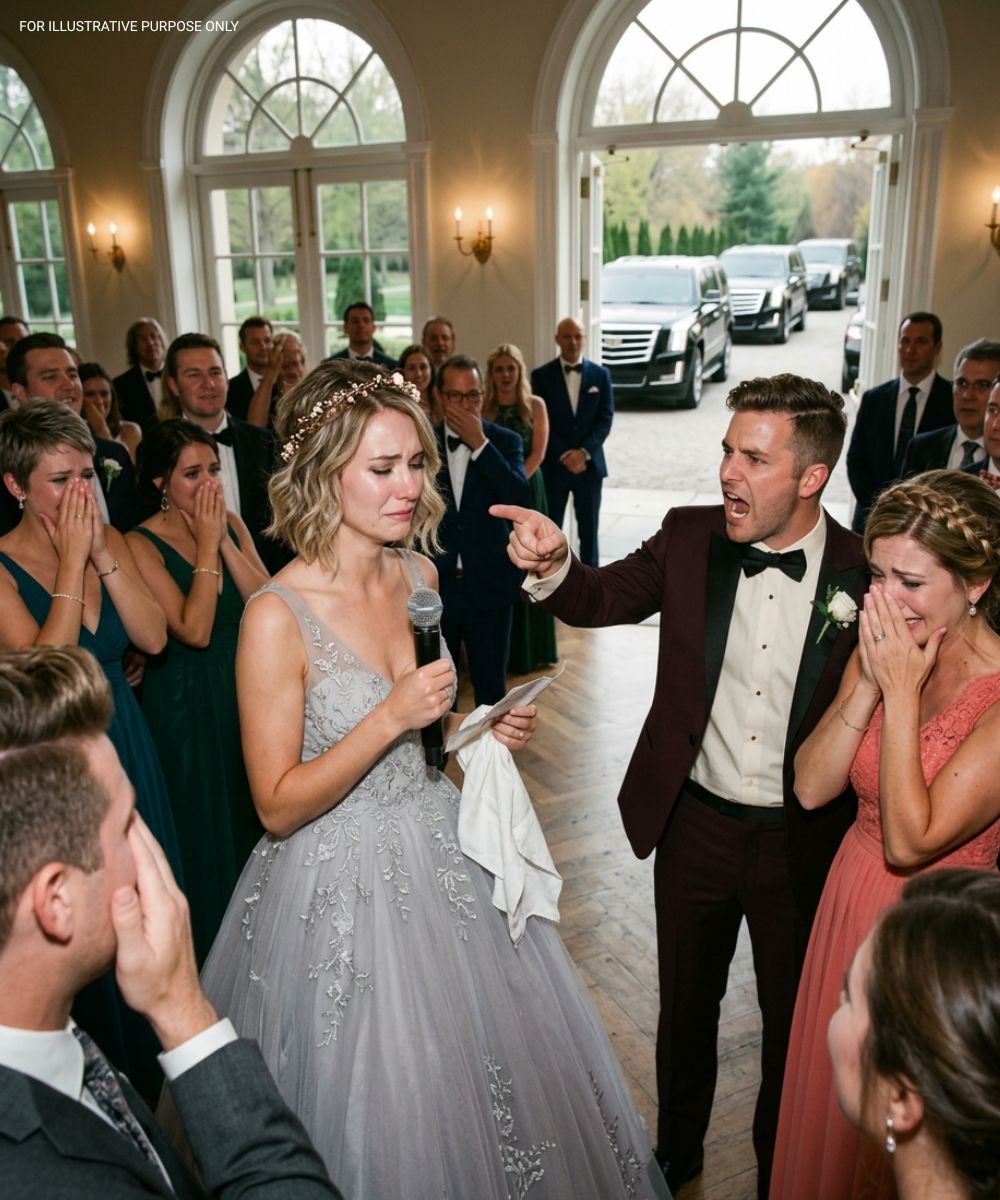
By the time Julian Cross tore my wedding dress apart, the string quartet had already gone silent—not faded, but completely stopped.
Three hundred and twenty guests sat frozen inside St. Bartholomew’s Chapel in Newport, Rhode Island, watching as the white silk split from my waist down with a sharp, violent sound that echoed through the entire room. The gown had cost forty thousand dollars and taken months to create—hand-stitched lace, a fitted bodice, a long cathedral train. Moments earlier, I had been standing at the altar, bouquet in hand, sunlight pouring through stained glass.
Then Julian grabbed the fabric—and ripped it.
Gasps filled the chapel.
“Leave,” he said, loud enough for everyone to hear. “My sister can’t handle seeing you dressed like this.”
His foster sister, Camille, sat in the front row wearing a pale dress that was already too close to bridal white. She didn’t look shocked.
She looked pleased.
For a moment, I stood there, holding the torn fabric, half the room staring, the other half pretending not to.
Julian showed no regret.
That was what struck me most—not anger, not panic, just certainty. The kind of certainty that comes from believing humiliation is something you’re entitled to inflict.
“Go,” he repeated coldly. “You’ve done enough.”
I bent down, gathered the ruined lace, and something unexpected happened.
I didn’t break.
I understood.
Everything from the past six months suddenly made sense—Camille inserting herself into everything, Julian quietly moving money, the pressure to sign updated prenups, the strange guest list filled with people tied to his business interests, and the way his behavior shifted as the wedding approached.
This wasn’t love.
It was a setup.
I stood up, still holding a strip of lace.
Then I smiled.
Not because I wasn’t hurt—but because I finally saw the truth.
I walked away from the altar, stepped toward the microphone near the floral arch, and picked it up.
The room went completely silent.
Julian frowned. “What are you doing?”
I looked at him. Then at Camille. Then at the guests sitting closest to the front—lawyers, investors, people who suddenly looked very uncomfortable.
“Fixing the guest list,” I said.
Then I made one call.
“Mr. Vale,” I said calmly, “please send everyone in.”
At first, nothing happened.
Then headlights appeared outside the chapel windows.
One SUV.
Then another.
Then dozens more.
Forty-seven in total.
By the time the first door opened, Julian’s face had gone pale. For the first time, he looked uncertain—like he realized this moment no longer belonged to him.
Guests turned in their seats. Murmurs spread. Even Camille lost her smirk.
Julian stepped toward me, voice low. “What did you do?”
“I made sure the truth had witnesses,” I replied.
Outside, teams of professionals stepped out—lawyers, investigators, security personnel. Not dramatic, not chaotic—just controlled and precise.
At the center was Graham Vale, my grandfather’s longtime advisor, carrying a case full of documents.
People in Newport knew that name.
What they didn’t know… was me.
To them, I was Nora Whitfield—a gallery director with quiet wealth and good manners.
What they didn’t realize was that I had inherited far more than that.
And I had kept it hidden—on purpose.
Because money attracts the wrong kind of love.
Julian had been one of those people.
At first, he seemed sincere—attentive, charming, grounded. But slowly, curiosity about my life turned into something else: questions about assets, ownership, legal structures.
I ignored the warning signs.
Until I found the altered prenup.
It wasn’t accidental.
It was deliberate.
A clause designed to give him leverage over my assets after marriage—subtle, but powerful enough to trap me in years of legal battles.
That was when I stopped trusting him.
And started preparing.
What we uncovered was worse than betrayal.
Julian had been planning everything—working with Camille and outside contacts to turn the wedding into an opportunity. The documents would have been slipped into the signing process during the chaos of the ceremony.
If I signed, he gained control.
If I refused, he would use public pressure against me.