Part 5: The Perfect Wife Who Never Existed
People imagine the aftermath of something like this as dramatic, but the true aftermath is administrative and lonely. Paperwork. Statements. Interviews. Account reviews. Legal notices. Selling the house because the walls themselves had started to feel dishonest. Relearning how to answer ordinary questions like “What happened?” without feeling as though the answer made me sound either pathetic or unbelievable. Starting over in a rental apartment at forty-two with the strange sense that my whole adult life had been pushed back to raw materials.
Sometimes people ask whether I miss Sarah. They mean the woman I thought I married—the woman who rubbed my shoulders when I had migraines, who remembered my sister’s birthday, who curled against me on winter nights and talked about where we might travel once work got less hectic. But grief requires an object, and the woman who did those things was a role performed by someone who had other motives running underneath. I do not miss a fiction. I mourn the years I gave it.
What remained with me most stubbornly was not the money she stole or the criminal life she concealed, though both mattered. It was the violation of vulnerability itself. I had given someone unguarded access to my fears, my family history, my hopes for children we never had, my quietest worries about aging, my private jokes, my unremarkable tenderness. I had believed, as spouses do, that mutual knowledge creates safety. In reality, I had supplied her with the intimate texture necessary to make her performance more convincing.
The lesson was brutal and enduring. Charm is not character. Routine is not trustworthiness. Shared years are not proof of mutual truth. I built a new life after Sarah’s arrest, but I built it slowly, suspicious of easy narratives, including my own. I learned to ask more questions. To verify. To notice when explanations are always smooth but never specific. To pay attention to what a person avoids as much as to what they volunteer. The cost of learning those things in midlife was high, but not as high as continuing to live inside the lie would have been.
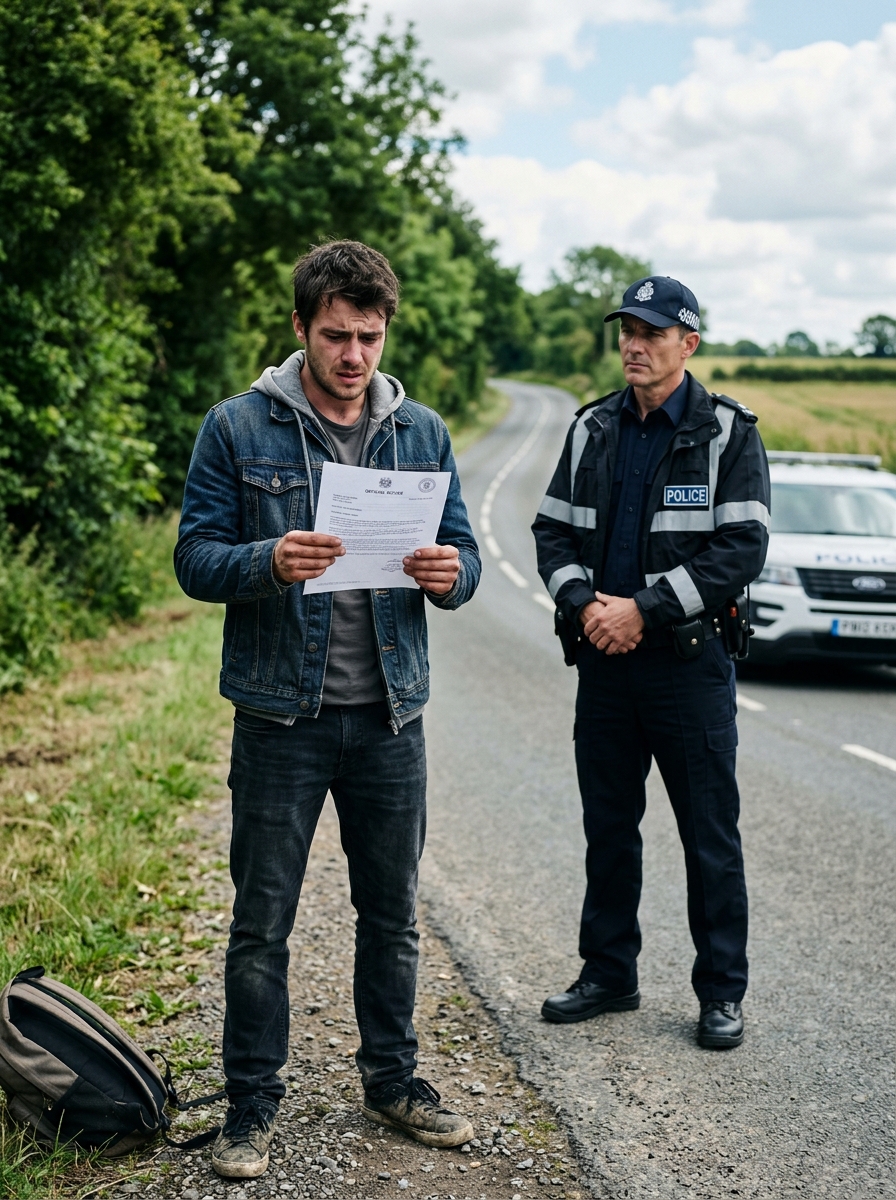
Late at night, on certain rare occasions when the house is dark and the world has gone quiet enough for old ghosts to move, I still think about that traffic stop on Route 35. About the red and blue lights. About Officer Martinez tapping on my window. About how close I came to driving home that night and continuing my life exactly as it had been, never knowing what sat beneath it until it crushed me completely. I think about how many people live inside stories that feel safe only because they have not yet been interrupted by the right piece of truth.
That stop was supposed to be about speed.
Instead, it was the moment my life split in two.
Part 6: After the Illusion
I am grateful to Officer Martinez for warning me. I am grateful to Detective Reynolds for giving me a choice before events removed all choice from me. Mostly, though, I am grateful for something I would once have mistaken for cruelty: the collapse itself. Because the truth did not destroy a real marriage. It destroyed the illusion of one. And illusions, however comfortable, do not become less dangerous just because they are elaborately maintained.
Sarah’s perfect-wife act had been almost flawless. That is what made the discovery so disorienting. There was no melodrama. No obvious villainy. Just a series of plausible explanations, careful omissions, disciplined charm, and one husband willing to take love at face value because he believed love deserved that kind of trust. In the end, that was the most painful revelation of all—not that she had been a criminal, but that she had understood the language of normal domestic devotion well enough to imitate it without ever feeling bound by it.
My life now is smaller in some ways and more honest in all the ways that matter. A different home. Different habits. Different silences. I no longer mistake ease for safety. I no longer assume that longevity proves sincerity. I live more carefully, but I also live more awake. There is a bleak kind of freedom in that. A life stripped of fantasy is not always beautiful, but it is at least built on load-bearing truth.
And if there is a lesson in any of this, it is not that no one should trust. It is that trust should never be blind simply because you want the story to stay pleasant. Reality does not become kinder because we refuse to examine it. The perfect wife turned out to be perfectly false, and learning that terrible fact was the beginning of whatever real life I still had left to build.
I lost ten years to a woman who never truly shared them with me.
But I kept the years that came after.
And those, at least, belong to the truth.
