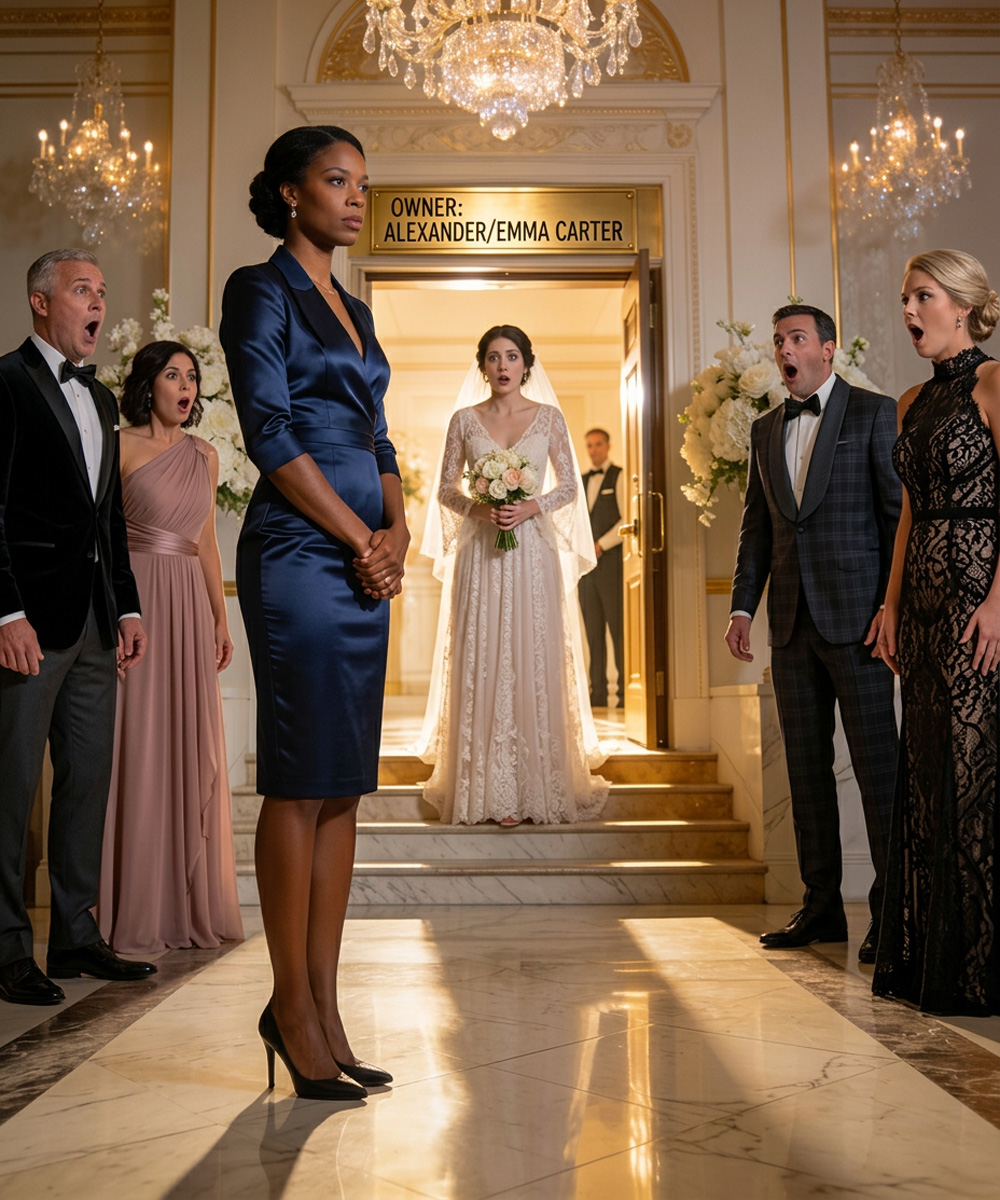
“That’s the problem,” I said. “You knew just enough about me to feel superior.”
Her jaw tightened. “Oh, please. Don’t pretend this is some moral victory. If you had money, you would have said so.”
There it was again—her belief that wealth only counted if it was displayed. It had shaped her for years. She chased image like oxygen, leased luxury she couldn’t afford, dated names with promise, and treated taste like character.
I stepped closer, lowering my voice. “I didn’t stay quiet out of shame. I stayed quiet because people who actually build things don’t have time to explain themselves to people who aren’t listening.”
My mother closed her eyes. Trevor looked at Vanessa like he was reassessing a risky investment.
Then Vanessa made the mistake that changed everything.
She lifted her chin. “Fine. Then prove you’re not petty. Because if you cancel this wedding out of spite, you’ll humiliate the whole family.”
I held her gaze.
“Interesting,” I said. “You only care about family when you need something from it.”
Marcus shifted slightly. He knew I was deciding.
And yes—for a moment, I considered canceling. The contract allowed it. Legally, I could justify it. But ownership isn’t about what you can do in anger. It’s about what serves you when the anger fades.
So I looked at Marcus. “Give us ten minutes.”
Vanessa exhaled.
Too soon.
Because ten minutes wasn’t mercy.
It was time for me to decide what her lesson would cost.
We moved into the west parlor, with blue silk wallpaper and the original 1912 mantel. It was where I handled difficult clients—quietly, cleanly, without turning conflict into a spectacle. Marcus closed the doors, leaving just me, Vanessa, Trevor, and our mother.
Vanessa stayed standing.
Too angry to sit. Too shaken to pace. Too proud to apologize without trying one more angle.
Right on cue, she crossed her arms. “I don’t know what kind of point you think you’re making—”
“I’m not making a point,” I said. “I’m reviewing a contract.”
That stopped her.
I sat at the walnut table and opened the event file. The room shifted—from family space to business negotiation.
Trevor spoke first. “What are our options?”
Smart.
I looked at him. “The wedding proceeds. Or I invoke the venue’s termination clause due to abusive conduct toward ownership and material concealment affecting the event relationship.”
Vanessa stared. “Material concealment?”
“Yes. You banned the property owner from attending while presenting the booking as a family event requiring full cooperation. That matters.”
Our mother sat down slowly. “Olivia, are you really going to cancel your sister’s wedding?”
I met her eyes. “Did you ask Vanessa if she was really going to ban me?”
She looked away.
That hurt more than I expected.
Vanessa finally asked, “What do you want?”
There it was. Not how to fix it—just the transaction.
I closed the file. “First, you apologize. Clearly. No excuses. Second, my invitation is reinstated publicly before the rehearsal dinner. Third, you stop describing my work as embarrassing or low-class. Permanently.”
Her face hardened. “That’s it?”
“No. Those are the personal terms.”
Trevor leaned forward. “And the business terms?”
I almost respected him.
I slid a page across the table. “Revised venue addendum. High-risk event hold. Additional security. Staff protection fee. Balance due today.”
Vanessa picked it up. “Twenty-five thousand dollars?”
“Yes.”
She looked stunned. “That’s insane.”
“No,” I said. “What’s insane is insulting the owner of a luxury venue and expecting premium grace for free.”
Trevor took the paper, read it carefully. He understood.
My mother whispered, “Vanessa, apologize.”
Vanessa looked at me, furious. For a moment, I thought she might let everything collapse. Then Trevor said quietly, “If this gets canceled because you can’t say two honest sentences, I walk.”
That did it.
She turned to me, each word forced out. “I’m sorry I said you weren’t welcome. I’m sorry I treated your work like it was beneath me. I was wrong.”
Not graceful. Not warm. But real enough.
I nodded. “Accepted.”
An hour later, in the courtyard, Vanessa told both families there had been “a misunderstanding” and that her sister Olivia would, of course, attend the wedding. I let her keep that softened version. Humiliation wasn’t the goal.
Memory was.
The wedding went forward.
Beautifully.
The flowers were perfect. The music was on time. The food was exceptional. My team performed flawlessly, and because I was there, everything ran smoother than she probably realized. She thanked me once, quietly, before the ceremony. I nodded once in return.
We weren’t healed.
We were simply honest—for the first time.
Months later, she sent me a baby shower invitation with my full name handwritten on the envelope and a note inside: I’m still learning how not to confuse appearances with worth.
It wasn’t exactly an apology.
But it was a beginning.
Some people think class is about excluding the wrong person from the guest list.
I know better.
Class is owning the venue, staying calm, and deciding whether the person who dismissed you gets married under your roof at all.