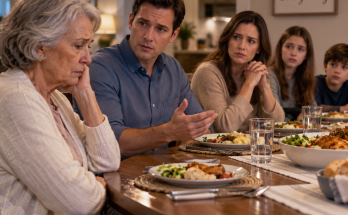
The first formal meeting about my estate occurred at Willow Creek because I refused to sit beneath fluorescent office lights while discussing what should happen after I died.
Richard objected.
I ignored him.
Daniel came alone.
Renee offered to join but then changed her mind.
“She said this should be between us first,” Daniel explained.
“That was thoughtful.”
“She’s improving.”
“So are you.”
“So are you.”
“Careful.”
We sat at the dining table with coffee.
Richard placed several folders in front of us.
I stared.
“I dislike folders now.”
“They remain useful.”
“Fire remains useful too. I still don’t want it on my dining table.”
Daniel laughed.
Richard continued anyway.
The first subject was Harold’s existing trust.
The second was my lottery assets.
The third was what, if anything, should eventually be combined.
“What does Mom want?” Daniel asked.
Richard looked at me.
“That is why we are here.”
I appreciated the correction.
No assumption.
No automatic plan.
Mine.
I opened my notebook.
“I want Lily and Ethan’s education protected.”
Daniel nodded.
“Even expensive schools?”
“Within reason.”
“What does within reason mean?”
“We define it.”
“Good.”
“I want medical emergencies covered.”
“Good.”
“I want you and Renee to have long-term security.”
Daniel’s expression tightened.
“But not cash.”
“I did not say that.”
“I know where this is going.”
“Do you?”
“You’re going to build a structure like Dad.”
“Maybe.”
He shook his head.
“No.”
Richard leaned back.
I waited.
“What do you mean, no?”
“I don’t want a trust that spends the next thirty years treating me like I’m nineteen.”
The bluntness helped.
“What would you want?”
“Nothing right now.”
“That is not the question.”
“It’s my answer.”
“Daniel.”
He looked directly at me.
“I want to fix our debt.”
“You will.”
“I want to rebuild savings.”
“You can.”
“I want my business decisions to be mine.”
“Fine.”
“And if someday you leave me something, I don’t want every dollar attached to Dad’s opinion about who I was fifteen years ago.”
That landed.
Harold’s trust was built around caution.
Useful caution.
But frozen caution.
It remembered Daniel’s failures with remarkable accuracy.
Did it remember his growth?
That question bothered me.
“What would feel fair?” I asked.
Daniel looked surprised.
“Fair?”
“Yes.”
“To whom?”
“You.”
He sat back.
Nobody had apparently asked him that before.
Finally he said, “Maybe give me responsibility before inheritance.”
Richard raised an eyebrow.
“Explain.”
“Let me participate.”
“In investments?”
“Some.”
“In charitable decisions?”
“If Mom wants.”
“In managing family structures?”
Daniel looked at me.
“Yes.”
That was interesting.
“You want work.”
“I want trust.”
The word mattered more.
Not money.
Trust.
Harold had given him responsibility with the second lantern.
But secretly.
What Daniel wanted now was responsibility in daylight.
“I like that,” I said.
Richard immediately became difficult.
“There are governance concerns.”
“Of course there are.”
“You cannot simply place family members in fiduciary roles without considering competence, conflicts, succession, liability—”
“Richard.”
“Yes?”
“We are considering it. Not engraving it in stone.”
He nodded.
Fair.
Daniel smiled.
“I almost enjoy watching you interrupt him.”
“You inherited that from me.”
“Dad did it too.”
“Unfortunately.”
We spent the morning building something different from Harold’s model.
Not careless.
Not unrestricted.
But less paternal.
Education funds for Lily and Ethan.
Medical reserves.
A long-term family trust.
Independent co-trustees.
Daniel eligible to join an advisory committee after completing financial-governance training.
Renee not excluded, but not automatically controlling Daniel’s inherited assets either.
Clear divorce protections.
Clear creditor protections.
Clear rules against using trust resources to maintain a lifestyle beyond reasonable means.
“Dad would approve of that last one,” Daniel said.
“I approve of it.”
“Right.”
He smiled.
“Your structure.”
“Yes.”
Then came the difficult question.
“How much?”
Richard had valuations.
My lottery assets after taxes and early allocations remained enormous.
The existing Silver Lantern trust had grown.
The Tucson land was now expected to be worth closer to ten million after updated planning information.
Willow Creek.
Other investments.
Numbers stacked until they stopped feeling real.
I looked at Daniel.
“What would too much do to you?”
He stared.
“That’s an uncomfortable question.”
“Good.”
“Too much could make me stupid.”
“That is surprisingly honest.”
“I have evidence.”
We both smiled.
“What would enough do?”
“Give us choices.”
“Which choices?”
“Retire earlier.”
“Fine.”
“Help the kids.”
“Fine.”
“Maybe take business risks without betting the house.”
“Very fine.”
“Travel.”
“Good.”
“Not worry every month.”
That was the real answer.
Not luxury.
Freedom from constant low-level fear.
I understood that.
“What amount creates that without replacing your life?”
Daniel laughed.
“Mom, you’re asking me to price existential security.”
“Yes.”
“Richard, save me.”
“No.”
Traitor.
We did not choose an exact number that day.
Good.
Major decisions did not need to become dramatic simply because wealth made them possible.
Instead, we agreed on principles.
That felt sturdier.
At lunch, Daniel asked something unexpected.
“What are you doing with Dad’s land?”
“I don’t know.”
“Sell?”
“Maybe.”
“Keep?”
“Maybe.”
“Develop?”
“No.”
That answer was immediate.
“Why?”
“I don’t want another project.”
“Then sell.”
I studied him.
“You say that easily.”
“It’s dirt.”
“It belonged to your grandfather.”
“And?”
“Family history.”
Daniel shrugged.
“Grandpa’s history is not the land.”
That surprised me.
“It isn’t?”
“It’s the fact that he kept it when people pressured him. Dad’s history is proving the option was fake. Your history is deciding what happens next.”
He took a sip of coffee.
“The dirt doesn’t need to become sacred.”
I sat back.
That was wiser than I expected.
Perhaps I had been preserving too much simply because dead people once touched it.
Harold’s chair.
His papers.
His land.
Memory did not require possession of every object involved.
“What would you do?” I asked.
Daniel smiled.
“You told me not to ask what Dad would do. Now you’re asking what I would do.”
“Different question.”
“I’d sell at market value.”
“Why?”
“Because then Victor doesn’t get it cheap, Dad’s fight mattered, and you can put the money somewhere useful.”
Straightforward.
I liked it.
I did not decide.
But I liked it.
That afternoon, Desert Crest made an unexpected offer.
Not for the old option price.
Full market value.
Actually slightly above.
“They still want the land,” Richard explained.
“Why?”
“Access to the corridor remains valuable.”
“After all this?”
“Business incentives survive embarrassment.”
“What conditions?”
“Standard due diligence. Release of certain civil claims relating to the old option.”
“No.”
Richard nodded.
“I expected that.”
“Why should I release anything before investigations are complete?”
“You shouldn’t.”
He negotiated.
By evening, Desert Crest removed the release language.
They also offered to pay title-clearing costs.
Daniel read the revised proposal.
“They really want it.”
“Yes.”
“Sell.”
“I have not decided.”
“You’re enjoying saying that now.”
“I am.”
Renee arrived after dinner.
She looked nervous.
“I have something to tell you.”
Those words had historically led to trouble.
“What?”
“I got a job.”
Daniel stared.
“You what?”
She looked at him.
“I was going to tell you tonight.”
“What job?”
“Part-time operations work for a design firm.”
Daniel looked genuinely shocked.
“You haven’t worked outside freelance projects since Ethan was little.”
“I know.”
“Why?”
She gave him a look.
“Money.”
He laughed.
Then realized she was serious.
“And because I’m tired of being scared every time a bill arrives.”
I liked that answer.
“What about your current freelance work?” I asked.
“Keeping some.”
“Children?”
“Old enough to survive.”
Lily, overhearing from the hall, shouted, “Barely.”
Renee rolled her eyes.
Daniel hugged her.
Not because she needed a job to earn worth.
Because she had chosen action instead of waiting for rescue.
Later, she found me alone in the kitchen.
“Do you think I’m doing it because you won’t pay the debt?”
“Partly.”
She winced.
“That obvious?”
“Yes.”
“Does that make it bad?”
“No.”
She looked relieved.
“Fear can start useful things.”
I thought of Donna.
Caroline.
Thomas.
Harold.
Everyone shaped by fear.
The question was what happened next.
“Just don’t stay because you think suffering proves something,” I added.
She frowned.
“What?”
“If the job makes you miserable and you don’t need it, leave. Responsibility is not punishment.”
Renee looked at me carefully.
“I thought you’d be harder.”
“So did I.”
Maybe I was learning too.
The following week, investigators announced charges against Gavin related to unlawful computer access, attempted extortion, and conspiracy allegations tied to surveillance activities.
Victor remained under investigation.
No final resolution yet.
The media moved on.
That helped.
My life began becoming mine again.
Then Richard called with news about Naomi Bell.
“She agreed to cooperate.”
“Did she leak my lottery claim?”
“Yes.”
The answer was blunt.
“To Gavin?”
“At first.”
“Why?”
“Money.”
“How much?”
“Twenty thousand dollars.”
I sat down.
Eighty-nine million dollars.
Exposed for twenty thousand.
Human beings had peculiar exchange rates.
“Did Gavin leak it publicly?”
“No.”
“Then who did?”
“Victor.”
I frowned.
“You said Victor didn’t know.”
“He didn’t until recently.”
“How?”
“Gavin disclosed it during their dispute.”
“So Gavin stole the information, held it, then used it when Victor became useful?”
“Yes.”
“And Victor leaked it to pressure me.”
“That appears likely.”
The chain was complete.
Naomi to Gavin.
Gavin to Victor.
Victor to media.
Money passing through people until privacy became leverage.
“What happens to Naomi?”
“Potential charges. Employment consequences. Civil exposure.”
I thought I would feel satisfaction.
I did not.
Mostly fatigue.
“Do I need to sue?”
“No.”
“Then I don’t want to.”
Richard paused.
“You may have significant claims.”
“I know.”
“You don’t want them preserved?”
“Preserve them.”
“That sounds like Harold.”
“Preserve does not mean pursue.”
Another pause.
“Fair.”
That distinction became important to me.
Having power did not require using every available ounce of it.
Sometimes power was choosing not to extend a fight.
Later that evening, Daniel stopped by with a folder.
I groaned.
He laughed.
“This one is mine.”
“What is it?”
“A plan.”
“For?”
“Our debt.”
He had created a repayment schedule.
Truck proceeds.
Budget reductions.
Renee’s expected income.
Consulting contracts.
Loan restructuring.
Eighteen months if things went well.
Twenty-four if they did not.
I read every line.
“Good.”
“That’s all?”
“What do you want, a sticker?”
“Yes.”
I found one in Ethan’s old craft drawer.
A gold star.
I placed it on the folder.
Daniel laughed so hard he had to sit down.
Then he became serious.
“I wanted you to see I’m not waiting.”
“I know.”
“I also want to ask something.”
“What?”
“If things go wrong—not inconvenient, actually wrong—can I come to you?”
“Yes.”
“Without you saying Dad told you so?”
“Yes.”
“Without Renee feeling judged?”
“I’ll try.”
“Without you instantly paying everything?”
I smiled.
“That part may be hardest.”
“I mean it.”
“I know.”
“Help me think first.”
That request touched something deep.
For years, I had confused helping with fixing.
Daniel was asking for something more difficult.
Presence.
Judgment shared, not imposed.
“I promise.”
He nodded.
Then pointed at the gold star.
“I’m keeping that.”
“Obviously.”
After he left, I sat in Harold’s chair.
Not because it was sacred.
Because it was comfortable.
I looked at the estate drafts.
The trust principles.
The proposed land offer.
The charitable-property closing documents.
So much money.
So many decisions.
Yet the most important conversation of the day had involved no transfer at all.
My son had asked whether he could come to me when life became difficult.
Not for rescue.
For thought.
Perhaps inheritance began long before death.
Perhaps money was only one of the things we passed down.
Click here to continue reading: PART 23: Victor Finally Told the Full Story About Harold, and the One Thing He Admitted Changed How I Understood My Husband’s Hardest Decision
At Dinner My Son Asked Me to Move Out, Unaware I Had Been Keeping an Eighty-Nine-Million-Dollar Secret
Part 22 of 28