
Victor Hale was charged six weeks after his statement.
Not with every wrong committed across fifteen years.
Law is rarely that emotionally satisfying.
But prosecutors announced charges tied to fraud-related conduct, conspiracy allegations, unlawful surveillance activity, and other offenses connected to the Carter transactions.
Gavin faced separate charges involving computer intrusion, extortion-related conduct, and the more recent surveillance network.
Naomi entered a cooperation agreement.
Martin Shaw kept his job only after an internal review concluded he had violated procedure but had been manipulated rather than acting for personal gain.
Caroline avoided prosecution on several issues through cooperation, though civil disputes remained.
Donna went home.
Eric gave a formal statement.
Desert Crest revised its internal controls and publicly disclaimed the old option.
The machinery moved.
Slowly.
Imperfectly.
But it moved.
I did not attend Victor’s first court appearance.
Reporters expected me.
That was reason enough not to go.
Instead I spent the morning choosing tile for the Tucson lodging property.
Samuel insisted beige was practical.
I called it depressing.
We compromised on something warm and plain.
“Harold would have picked beige,” Samuel said.
“I know.”
“That isn’t why I suggested it.”
“I know.”
We laughed.
The building had a name now.
Not Briggs House.
Not Harold House.
Not Silver Lantern.
Open Door.
Simple.
Slightly obvious.
I liked it.
The emergency room at the far end remained unnamed.
Samuel called it Room Twelve.
I called it the room nobody reserved.
One bed.
One sleeper chair.
Small desk.
Private bath.
Always held open.
The rule went into governance documents.
No executive could override it for a donor.
No board member could promise it to a friend.
If somebody arrived unexpectedly because a family member had been transferred for urgent treatment, that room existed.
Money would protect the vacancy.
That pleased me enormously.
Eleanor joined the board.
Not as chair.
She refused.
“I’ve had enough powerful men deciding I should manage things.”
“Fair.”
She funded the courtyard.
Quietly.
No plaque.
Samuel ran operations.
Professional staff handled referrals.
A social worker built relationships with hospitals.
I funded an operating reserve large enough to keep the property stable for years.
Then I stopped.
That was important.
I could have doubled it.
Tripled it.
Bought another building.
Then another.
Eighty-nine million dollars could turn one useful project into an empire before breakfast.
I did not want an empire.
I wanted Open Door to work.
Richard approved.
“That shows restraint.”
“You sound surprised.”
“I’ve met lottery winners.”
“So have I.”
He gave me a look.
The family changed too.
Daniel’s debt balance dropped steadily.
Renee’s job became full-time after three months.
She liked it more than she expected.
The first time she received a performance bonus, she called me.
“I understand why money I earned feels different.”
“That sentence is dangerous around wealthy people.”
“You know what I mean.”
“I do.”
Daniel’s consulting work recovered.
He stopped trying to look successful and became more profitable.
That amused me.
He sold equipment he did not need.
Quit leasing an office larger than necessary.
Moved into a smaller workspace.
“Dad would be insufferable,” he said.
“Correct.”
Lily applied to universities.
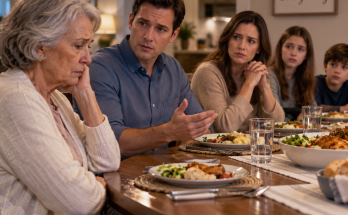
When acceptance letters arrived, she brought all of them to Willow Creek and spread them across my dining table.
One school was very expensive.
She looked at me nervously.
“I don’t want to pick based on your money.”
“Good.”
“But it matters.”
“Yes.”
“So what do I do?”
I thought about every bad lesson wealth could teach.
Then said, “Choose the school you would choose if reasonable cost differences were manageable.”
She frowned.
“That is annoying.”
“Excellent.”
“If I pick the expensive one, will you pay?”
“We will discuss it after you decide why you want it.”
“Why?”
“Because I don’t want the money making the first decision.”
She stared.
Then smiled.
“That sounds like something Grandpa would say.”
“Everyone needs new material.”
She chose the expensive school.
For excellent reasons.
I paid tuition through an education trust.
Not because she was entitled.
Because I wanted to.
Ethan asked for a gaming computer.
I said no.
He looked personally betrayed.
“Why does Lily get college?”
“Because college and gaming computers are different.”
“I’m being oppressed by inconsistent philanthropy.”
Daniel had taught him the word philanthropy.
I made a mental note to punish Daniel somehow.
Willow Creek became the center of family life.
Not because it was larger.
Because everyone gradually stopped feeling like they were entering my private fortress.
Sunday dinners returned.
But differently.
Renee cooked sometimes.
Daniel cleaned.
Lily drove herself.
Ethan complained professionally.
Nobody expected me to serve everyone.
That mattered.
One evening, after dinner, Daniel stayed behind.
He carried no folder.
“Suspicious,” I said.
“What?”
“No paperwork.”
“I can go get some.”
“Sit.”
He joined me on the porch swing.
For a while, we listened to insects in the yard.
Then he said, “I read Dad’s notebook.”
I looked at him.
“All of it?”
“The parts we agreed were mine.”
“And?”
“I hated some.”
“I expected that.”
“Loved some.”
“I expected that too.”
“He worried about me constantly.”
“Yes.”
“He was proud of me more often than he said.”
“Yes.”
Daniel looked toward the yard.
“That makes me angry.”
“I know.”
“Why couldn’t he just say it?”
“Because your father believed praise should be rationed like emergency water.”
Daniel laughed.
Then became quiet.
“I’m going to do that differently with Ethan.”
“Good.”
“And Lily.”
“Good.”
“And maybe myself.”
That one mattered most.
I touched his hand.
“You were never your worst business decision.”
He looked at me.
“Did Dad ever say that?”
“No.”
“Good.”
“Why good?”
“I wanted one thing to be from you.”
My throat tightened.
“Then keep it.”
We sat in silence.
I thought about inheritance again.
Not legal inheritance.
Emotional.
Harold left caution.
I left reassurance.
Daniel might leave something better formed from both.
That was enough.
The land sale closed shortly afterward.
Ten point eight million transferred.
The old option was formally released from title.
The dispute that had shaped years of Harold’s private life ended with signatures, electronic transfers, and a surprisingly dull conference call.
No music.
No applause.
No final speech.
I preferred it.
Afterward, Richard asked, “How does it feel?”
“Finished.”
“Happy?”
“No.”
“Sad?”
“No.”
“What then?”
“Finished.”
Completion is its own emotion.
I visited Harold’s grave that weekend.
Alone.
I had avoided talking to gravestones since his funeral because it made me feel ridiculous.
This time I sat on the grass.
“I sold it.”
The grave did not object.
“Full market value.”
Nothing.
“You were right about Victor.”
Still nothing.
“You were wrong about keeping me uninformed.”
A bird landed several yards away.
“That is not an apology.”
The bird left.
I laughed.
Then I told him about Open Door.
The emergency room.
Eleanor.
Daniel.
Renee.
Lily.
Ethan.
I told him I still loved the porch swing.
I told him I had eighty-nine million dollars before taxes and an absurd number of people suddenly pretending to remember my birthday.
I told him I had finally learned to block telephone numbers.
Then I said something I had not been able to say earlier.
“I am alright without you.”
The words hurt.
But they were true.
“I hate that.”
Also true.
Both could exist.
I touched the grass.
“I’m building something.”
Not for him.
Not instead of him.
Because I was still alive.
That distinction felt like freedom.
When I returned home, Richard was waiting at Willow Creek.
Uninvited.
That meant paperwork or disaster.
“What happened?”
“Neither.”
“That is suspicious.”
He handed me a single envelope.
“What is this?”
“Final accounting recommendation.”
I stared.
“You came to my house for accounting?”
“There is a decision.”
“Of course.”
He sat.
“Based on your current assets, projected growth, land-sale proceeds, and existing charitable allocation, your estate will likely remain extremely large even after generous family planning.”
“How large?”
He gave me a number.
I laughed.
“That is offensive.”
“Financially, yes.”
“What is the decision?”
“How much do you actually want to keep under personal control?”
I stared at him.
Nobody had asked that before.
The assumption had always been preservation.
Grow the assets.
Protect the assets.
Structure the assets.
Pass the assets.
But why?
I had Willow Creek.
Security.
Healthcare.
Travel.
Everything I could reasonably need.
More than I could reasonably need.
“What happens if I give away too much?”
“You are nowhere near that risk.”
“How do you define too much?”
“That is the question.”
Again.
Choice.
I took out my notebook.
“What would you do?” I asked.
Richard smiled.
“You have finally learned not to ask me that.”
“Worth trying.”
We reviewed options.
Family trust.
Education.
Open Door reserve.
Medical research donations.
Local housing.
Scholarships.
Legal-aid funding for families facing predatory land disputes.
That last one interested me.
Too obvious?
Perhaps.
Still useful.
I did not want a foundation that existed primarily to perpetuate my name.
I did not want employees building an institution whose main purpose became keeping itself alive.
I wanted money moving toward things I understood.
So I set limits.
A substantial family structure.
Enough that Daniel, Lily, Ethan, and future descendants would have opportunities but not infinite insulation from consequence.
A large charitable fund with an independent board.
No requirement to preserve principal forever.
Spend it intelligently.
Eventually finish.
Richard looked surprised.
“You don’t want perpetual giving?”
“No.”
“Why?”
“Because organizations can become more interested in existing than helping.”
“True.”
“And because I don’t need Margaret Briggs controlling strangers a hundred years after I’m dead.”
Richard laughed.
“That is unusually self-aware estate planning.”
“Put it in the document.”
“I will phrase it differently.”
“Coward.”
We worked until evening.
When Daniel arrived, I told him the broad plan.
He listened.
Then asked, “How much are you leaving yourself?”
“Enough.”
“Specific.”
“More than enough.”
“And giving away?”
“A lot.”
He nodded.
No protest.
No question about his share.
That still moved me.
Then he asked, “Are you sure?”
“No.”
He smiled.
“That seems to be your favorite answer.”
“It means I understand decisions can be revised.”
“Dad hated revising decisions.”
“I know.”
“That may be your rebellion.”
“Then it is a very boring one.”
He laughed.
Outside, the porch light came on automatically.
I watched it through the window.
Silver Lantern.
First lantern.
Second lantern.
Last light.
For months, those phrases had carried secrets.
Now they meant something simpler.
Light does not matter because it controls where someone walks.
It matters because it lets them see enough to choose.
Harold had taken too long to learn that.
So had I.
But I had learned.
And with four parts of my life still unresolved—the final disposition of my fortune, Open Door’s opening, the long aftermath of Victor’s case, and what my family would become after the crisis—I understood the next chapter would not be about defeating anyone.
It would be about living after there was no enemy left to organize us.
That, I suspected, might be the harder test.
Click here to continue reading: PART 25: Open Door’s First Family Arrived Before We Were Ready, and Their Emergency Forced Me to Decide Whether My Rules Actually Meant Anything
At Dinner My Son Asked Me to Move Out, Unaware I Had Been Keeping an Eighty-Nine-Million-Dollar Secret
Part 24 of 28

One Comment on “PART 24 – The Final Charges Against Victor Ended Harold’s Old Battle, but I Had to Decide Whether Winning Meant Keeping the Fortune or Giving Part of It Away”