The debt was not gone.
Not all of it.
Mortgages do not disappear because people become emotionally healthier.
Neither do student loans, ordinary bills, or every foolish credit-card purchase.
But fourteen months after Daniel showed me the gold-star folder, he paid off the high-interest portion that had been strangling their monthly budget.
He called at seven in the morning.
“We did it.”
I knew what he meant immediately.
“How much left?”
“Normal debt.”
“That is not a financial category.”
“It is today.”
Renee shouted in the background, “Tell her the card is zero.”
“The card is zero.”
I smiled.
“Good.”
“That’s all?”
“What do you want?”
“Enthusiasm.”
“I am seventy-one.”
“That is not an excuse.”
“Fine.”
I raised my voice.
“Wonderful, Daniel.”
“Better.”
“Do you want another sticker?”
“Yes.”
I found one.
Of course I had kept them.
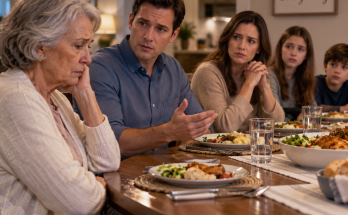
That evening, they came to Willow Creek for dinner.
Lily was home from her first semester of university.
The expensive one.
She had done well.
Not perfect.
Good.
She complained about a professor who apparently believed deadlines applied literally.
I sided with the professor.
She called me oppressive.
Ethan had grown nearly four inches and now treated the refrigerator as personal property.
Renee brought dessert.
Daniel brought the folder.
The original gold star was still attached.
Wrinkled.
Ridiculous.
I loved it.
He placed a new payoff statement beside it.
“Proof.”
“I believe you.”
“Read it.”
I did.
Zero balance.
No rescue.
No secret payment.
No inheritance advance.
They had done it.
Renee watched my face.
“I hated you for about six months.”
“Only six?”
She laughed.
“Maybe eight.”
“Better.”
“I kept thinking how stupid it was that you could solve the whole thing in one transfer.”
“I thought that too.”
“You did?”
“Repeatedly.”
“Why didn’t you?”
“Because you didn’t need rescue.”
She nodded.
“I understand that now.”
That mattered.
Then she added, “I still would have accepted it.”
“Also understandable.”
We laughed.
Daniel opened wine.
I made a toast.
Not to financial responsibility.
That sounded unbearable.
I lifted my glass.
“To fewer stupid bills.”
Everyone approved.
Dinner became noisy.
Ordinary.
Then Lily said something that changed the mood.
“Dad, are we going to be rich when Grandma dies?”
Silence.
Ethan looked up.
Renee stopped cutting cake.
Daniel stared at his daughter.
“Lily.”
“What? Everybody knows Grandma has estate stuff.”
I put down my fork.
“No one dies during dessert.”
“That wasn’t what I meant.”
“I know.”
Lily looked embarrassed.
“I’m sorry.”
“Do not apologize for asking.”
Daniel looked at me.
I could see the old family instinct.
Avoid discomfort.
Protect.
Delay.
The habit had survived.
“No,” I said.
He understood.
We were not doing that.
I looked at Lily.
“You and your brother will have support.”
“What kind?”
“Education. Medical needs. Some long-term financial security.”
“How much?”
Daniel inhaled.
I ignored him.
“I have not decided every future amount.”
“But enough to be rich?”
“What does rich mean?”
“Grandma.”
“Serious question.”
She thought.
“Enough not to worry.”
“That is one goal.”
“Enough not to work?”
“No.”
Ethan groaned.
“Terrible estate planning.”
I pointed at him.
“You remain computerless.”
“That happened a year ago.”
“Pain can be renewed.”
Everyone laughed.
Lily did not.
“So we still have to work?”
“Yes.”
“Why?”
There it was.
Not entitlement.
Curiosity.
Because from her perspective, money existed.
Why preserve scarcity?
Why make descendants struggle if you could prevent it?
A reasonable question.
“Because work is not only about survival.”
She frowned.
“That sounds like something rich people say.”
“Sometimes because it is true.”
“What if I want to be an artist?”
“Then be an artist.”
“What if I earn almost nothing?”
“Then we discuss what support looks like.”
“What if I want to teach?”
“Teach.”
“What if Ethan wants to do nothing?”
“I already know the answer,” Ethan said.
“Correct.”
Lily smiled.
Then became serious again.
“So the trust doesn’t decide what career we choose?”
“No.”
“Grandpa’s had conditions.”
“Yes.”
“Yours?”
“Different conditions.”
“What kind?”
“No using family money for illegal activity.”
“Reasonable.”
“No using it to repeatedly rescue reckless financial behavior.”
Ethan frowned.
“Define reckless.”
“Your future lawyer can argue.”
He seemed satisfied.
“No marriage requirements. No career requirements. No political requirements. No requirement that you have children. No requirement that you live near family.”
Daniel looked at me.
“You added those?”
“Yes.”
“Good.”
Lily asked, “Why?”
“Because I am leaving resources. Not instructions for your identity.”
She absorbed that.
That was one family habit broken.
Maybe.
Then Daniel said, “You know Grandpa probably would have put conditions on all of those.”
“Probably.”
“Especially career.”
“He wanted you to become an engineer.”
“I know.”
“Instead you became a contractor.”
“And then a failed contractor.”
“Then consultant.”
“Then better consultant.”
“Exactly.”
Lily looked between us.
“Did Grandpa control Dad?”
“No,” Daniel answered before I could.
“He tried sometimes.”
Fair.
“And Grandma?”
Daniel smiled.
“Grandma let him more than she should have.”
I stared at him.
“Careful.”
“You told me that.”
“Privately.”
“We are doing transparency.”
I could not argue with that.
Renee asked the next difficult question.
“What happens if Daniel and I divorce?”
Lily nearly choked.
Ethan said, “Great dinner.”
Daniel groaned.
But Renee did not withdraw the question.
Good.
We answered it.
Daniel’s inherited assets would remain protected.
Renee would not lose her own earned property.
The children’s trusts remained separate.
No structure was designed to punish a spouse for leaving.
Renee nodded.
“Thank you.”
“For what?”
“Not writing me out like I’m a threat.”
I thought of Harold.
His structure had protected against divorce partly because he did not fully trust her.
My structure protected assets because marriages can end even when nobody is villainous.
Same legal result.
Different emotional meaning.
That distinction mattered.
Later, after the children went upstairs, Daniel found me in the kitchen.
“You handled that well.”
“What?”
“Death.”
“I did not die.”
“You know what I mean.”
“Yes.”
He leaned against the counter.
“I would have shut that conversation down two years ago.”
“I know.”
“I almost did tonight.”
“I saw.”
“Why didn’t you let me?”
“Because pretending people do not think about inheritance does not make them nobler.”
He nodded.
“Dad thought money talk created greed.”
“Sometimes secrecy creates fantasy.”
We had evidence.
“Do you think Lily is greedy?”
“No.”
“Ethan?”
“He wants electronics.”
“Different disease.”
We laughed.
Then Daniel said, “I never told you something.”
“What?”
“When you revealed the lottery, for about ten minutes I thought, We’re saved.”
I looked at him.
“I know.”
“You saw?”
“Yes.”
“I hated myself for it.”
“You shouldn’t.”
“It felt ugly.”
“It was reflex.”
“I calculated our debt while you were talking.”
“That is human.”
“Then I got angry because you didn’t solve it.”
“Yes.”
“I hated that too.”
“Daniel.”
He looked at me.
“A bad thought is not a bad act.”
He stayed quiet.
“Your father had bad thoughts.”
“You knew?”
“Of course.”
“What kind?”
“I am not sharing marital evidence with you.”
He laughed.
“Fair.”
I touched his arm.
“You had a moment of wanting rescue.”
“Yes.”
“Then you chose something else.”
That was what mattered.
He nodded.
The following week, Open Door held its first-year board review.
Twelve months.
Hundreds of nights provided.
Families from nine counties.
Two cases where Room Twelve had been used exactly as intended.
One broken washing machine.
Three plumbing disasters.
A refrigerator failure.
Enough volunteer confusion to create a small religion.
No financial crisis.
No donor scandal.
Good.
Samuel presented the numbers.
Daniel, now serving on the finance committee, challenged three expense assumptions.
I watched without speaking.
He was good.
Not because he agreed with me.
He did not.
At one point, he argued against increasing the reserve as much as I wanted.
“We are overcapitalized.”
I stared.
“This from my son?”
“Yes.”
“The man who once financed a boat?”
“That was educational.”
“You sold it at a loss.”
“Very educational.”
The board laughed.
Then he explained.
Open Door already had several years of operating protection.
More cash sitting unused would not improve service.
Better to invest in transportation partnerships.
Maria agreed.
Samuel agreed.
I disagreed.
Then I listened.
They were right.
I changed my vote.
That felt good.
Not because I lost.
Because the structure worked.
The founder’s money did not make the founder automatically correct.
Exactly as intended.
Afterward, Eleanor walked beside me through the courtyard.
“You looked annoyed.”
“I was.”
“You changed your mind.”
“Yes.”
“Tom almost never did that in meetings.”
“Harold either.”
“Maybe we finally improved the species.”
“Women have carried civilization long enough.”
She laughed.
The courtyard she funded had matured.
Shade trees.
Benches.
Small fountain.
Nothing fancy.
A plaque near the entrance listed major donors.
Her name was absent.
Mine too.
I liked that.
We sat.
Eleanor asked about Victor’s case.
A plea agreement was being discussed.
No final outcome yet.
Gavin’s case was moving separately.
Investigations into the other Carter transactions continued.
Several families had recovered legal costs through settlements.
My legal-aid fund had already assisted two.
That pleased me more than any headline could.
Eleanor looked at me.
“Do you ever wish none of it happened?”
“Which part?”
“All of it.”
Harold dying.
The lottery.
Daniel asking me to leave.
Victor.
The land.
The secrets.
Impossible question.
“If Harold had lived, yes.”
“That isn’t what I meant.”
“I know.”
I thought.
“I wish the harm had not happened.”
“Different answer.”
“Yes.”
“I don’t wish away what I learned.”
Eleanor nodded.
“Same.”
The past did not need gratitude simply because growth came after it.
Pain is not redeemed by being educational.
Another distinction.
That evening, I returned home to find a package on the porch.
Security had cleared it.
No mystery this time.
From Mason Pike.
Inside was a book.
Old.
Leather-bound.
Harold’s.
My stomach tightened automatically.
Then I saw Mason’s note.
Relax. It is only a book.
I laughed.
The book was a collection of essays Harold liked.
Inside the cover, he had written his name.
Nothing else.
No secret key.
No account number.
No hidden instructions.
I flipped through pages.
Underlined passages.
Coffee stain.
One folded corner.
Ordinary evidence of a life.
I sat in his chair and read.
For once, Harold had left me nothing to solve.
That may have been the greatest kindness.
PART 26 continued
Several weeks later, Richard called with news.
Victor had agreed to plead guilty to certain federal and state charges tied to fraudulent records and conspiracy-related conduct.
Other allegations would be dismissed or folded into sentencing considerations.
Gavin continued contesting several charges.
The details were complicated.
The outcome imperfect.
“Will Victor go to prison?” I asked.
“Likely some custodial sentence, assuming the agreement is accepted.”
“How long?”
“Not final.”
I did not ask again.
Years earlier, I might have wanted an exact number.
Enough time to feel like justice.
Now I understood no sentence could restore Daniel’s lost business years, Harold’s stress, Donna’s fear, Caroline’s compromised choices, or Thomas’s final regrets.
Punishment mattered.
It was not repair.
“What does he have to do besides plead?”
“Restitution in certain matters. Cooperation. Disclosure of remaining records.”
“Apology?”
“No.”
“Good.”
Richard sounded surprised.
“You don’t want one?”
“Not if it exists because his lawyer negotiated it.”
Fair.
A month later, the plea became public.
Reporters called again.
I declined comment.
Daniel did too.
Eleanor gave one short statement through counsel:
Truth arrived late, but it arrived.
I liked that.
Thomas would have disliked the publicity.
Also good.
Life continued.
Lily chose a major.
Changed it.
Changed it again.
I told her she could change once more before I began charging administrative fees.
Ethan eventually bought his own gaming computer.
With money from a summer job.
He arrived at Willow Creek holding the receipt like a legal victory.
“I bought it.”
“I see.”
“You did not contribute.”
“Correct.”
“You are witnessing personal responsibility.”
“Did your father teach you that phrase?”
“Yes.”
“Return the computer.”
He hugged me instead.
Renee’s career advanced.
Daniel’s consulting business stabilized.
They still argued about money.
But now they argued with spreadsheets open.
Progress.
Then one Sunday, Daniel came early.
He stood in the kitchen while I made tea.
“Do you remember the night you moved out?”
“Yes.”
“I do too.”
He looked uncomfortable.
“I keep thinking about what would have happened if you had told us about the lottery before dinner.”
I poured water into the pot.
“What do you think?”
“I probably would have begged you to stay.”
“Probably.”
“Renee definitely would have.”
“Probably.”
“We would have renovated the guest suite.”
“Probably.”
“Maybe bought Willow Creek together.”
“Maybe.”
He looked sick.
“And I would have told myself it was love.”
The honesty hurt.
“Yes.”
“Do you think I only asked you to leave because I didn’t know?”
I looked at him.
“No.”
He frowned.
“Why not?”
“Because your reasons existed before money entered the picture.”
“You were crowded.”
“Yes.”
“We were taking you for granted.”
“Yes.”
“We were stressed.”
“Yes.”
“And I handled it badly.”
“Yes.”
He sighed.
“You enjoy that word.”
“It is efficient.”
He smiled.
Then looked serious.
“So hiding the money did show you something.”
“Yes.”
“That still bothers me.”
“It bothers me too.”
“Would you do it again?”
I thought.
“For some period, yes.”
His face tightened slightly.
“But I would tell you sooner.”
“How much sooner?”
“I don’t know.”
“Useful.”
“You inherited sarcasm.”
“From both sides.”
True.
He leaned against the counter.
“I think I understand why now.”
“Good.”
“I don’t like it.”
“That is allowed.”
We stood quietly.
Then he said, “You know what bothers me most?”
“What?”
“That I’m glad you had somewhere to go.”
That surprised me.
“Willow Creek?”
“Yes.”
“If you had moved into some tiny apartment because we pushed you out…”
He stopped.
The sentence did not need finishing.
“I had resources.”
“I know.”
“But even without the lottery, I would have found a life.”
He looked at me.
“You believe that?”
“Yes.”
And I did.
That may have been the deepest change.
For months, everyone had treated the eighty-nine million dollars as the great transformation.
It was not.
Money gave me room.
Choice.
Protection.
Speed.
But the decision to stop living as an appendix to other people’s lives had begun at a dinner table before I spent a dollar.
I touched his hand.
“You did not create me by asking me to leave.”
“I know.”
“You hurt me.”
“I know.”
“I left.”
“Yes.”
“And then I chose.”
He nodded.
That was the truth.
Not revenge.
Not a test.
Choice.
Later that night, after everyone left, I walked through Willow Creek.
My books.
My dishes.
Harold’s chair.
The ceramic bird.
Grandma’s House.
The object Lily made years before she understood what home could mean.
I picked it up.
Underneath, still scratched into the clay, were the words.
Grandma’s House.
At first I had thought the phrase referred to ownership.
A building.
An address.
Now I understood it differently.
A place where I did not need permission to exist.
I returned the bird to the shelf.
Then turned off the kitchen light.
No secret waited in the darkness.
No one was following me.
No unanswered phone call demanded attention.
Just home.
Click here to continue reading: PART 27: Victor’s Sentencing Closed the Case in Court, but the Letter I Received Afterwards Forced Me to Decide What Closure Actually Required
At Dinner My Son Asked Me to Move Out, Unaware I Had Been Keeping an Eighty-Nine-Million-Dollar Secret
Part 26 of 28