The six-week trial ended on a Thursday.
Neither of us mentioned it until dinner.
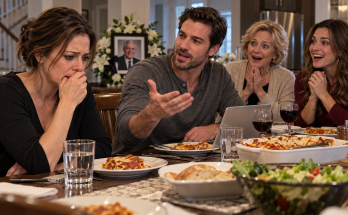
Mark was cutting chicken.
I was washing lettuce.
Ordinary evening.
Then he said, “Today is six weeks.”
“I know.”
He put down the knife.
“What do you want to do?”
I dried my hands.
“I want to stay.”
He closed his eyes.
For one second, relief crossed his face so intensely that I almost felt guilty for causing it.
Then he nodded.
“Okay.”
“That’s all?”
He smiled.
“I’m learning not to turn everything into a ceremony.”
“Good.”
He picked up the knife again.
Then his hands started shaking.
I laughed softly.
“You can hug me.”
He did.
Hard.
Not possessive.
Not desperate.
Relieved.
I cried against his shoulder.
“I’m still scared.”
“Me too.”
“I still don’t trust everything automatically.”
“I know.”
“I don’t want to keep saying that forever.”
“Then don’t.”
I looked up.
“What?”
“You don’t need to remind me every time.”
He swallowed.
“I know what happened.”
That mattered.
Accountability did not require permanent recitation.
It required memory.
The next problem was Dad’s house.
I had avoided deciding because the house had been refuge.
Archive.
Courtroom.
Grief container.
Now that I was home, it stood empty most nights.
Samuel asked whether I intended to keep it.
“I don’t know.”
“The estate can carry expenses.”
“That isn’t the issue.”
“What is?”
“It feels like selling him.”
Samuel looked at me.
“You know better than that.”
“Yes.”
“Knowing and feeling are different.”
Unfortunately.
I discussed it with Mark.
Not because he had a claim.
Because he was my husband and I wanted his opinion.
“I think you should sell,” he said.
My body tightened.
He noticed.
“Too direct?”
“No.”
“Want the reasons?”
“Yes.”
“The house is expensive.”
“True.”
“You don’t want to live there.”
“True.”
“The kids don’t.”
“No.”
“And every time you go there, you become the archivist of Walter’s unfinished life.”
That one hurt.
“What if I regret selling?”
“You might.”
“Helpful.”
“I’m serious.”
He sat beside me.
“There is no decision where regret is impossible.”
I looked at him.
“That sounds like therapy.”
“Expensive therapy.”
I smiled.
“What if keeping it is the wrong decision?”
“Then you can sell later.”
“What if selling is wrong?”
“You can’t buy Walter’s exact house back.”
“Exactly.”
“So the decisions aren’t equal.”
“No.”
He thought.
“Then take more time.”
Old Mark would have interpreted my fear as a problem to overcome.
This Mark let caution remain.
I called Emma.
“What do you think about Grandpa’s house?”
“Sell it.”
“Fast answer.”
“I’ve thought about it.”
“Why?”
“I don’t want it.”
“I know.”
“Luke doesn’t.”
“I know.”
“And Grandpa would hate paying property taxes on an empty building.”
That was painfully true.
Luke’s answer surprised me.
“Keep the garage.”
“What?”
“Can you sell the house and keep the garage?”
“No.”
“Then steal the workbench.”
I laughed.
“I can’t steal something I own.”
“Exactly.”
He wanted Dad’s main workbench.
Not the house.
That helped.
Diane said she had no opinion.
Then corrected herself.
“I think you should sell.”
“Why?”
“Because I measured those windows.”
I went quiet.
She continued.
“I don’t like what that house turned me into for those few days.”
“You didn’t become anything.”
“I became someone imagining what another woman’s father could give me before he was even buried.”
“That isn’t all you are.”
“No.”
“But I don’t want to live with that memory.”
Neither did I.
Melissa wanted one thing from the house.
Dad’s old wooden bread box.
Apparently he had once told her it was the only kitchen storage system superior to plastic bags.
That sounded like him.
I began sorting.
Slowly.
Clothes first.
Dad’s shirts were hardest.
I donated most.
Kept three.
One flannel.
One work shirt.
One old cardigan.
The cardigan smelled like nothing anymore.
That made me cry harder than scent would have.
Mark helped only when asked.
He carried boxes.
Never decided where they went.
One afternoon, I found him in Dad’s garage holding a rusted wrench.
“What?”
He smiled.
“Walter threw this at me once.”
I stared.
“He what?”
“Not at me.”
“Important distinction.”
“He threw it onto the workbench near me.”
“Why?”
“I told him he should invest in crypto.”
I laughed so hard I had to sit down.
“What did he say?”
“That if money needed explaining by a twenty-minute video, he didn’t want it.”
“Sounds right.”
Mark turned the wrench over.
“I think this was the exact one.”
“Keep it.”
He looked surprised.
“You sure?”
“Yes.”
“Why?”
“Because apparently you need a physical reminder of Dad’s investment philosophy.”
He smiled.
“Thank you.”
We hired an estate-sale company.
I hated strangers pricing Dad’s furniture.
A woman placed fifteen dollars on his reading lamp.
I nearly removed it from the sale.
Then stopped.
The lamp was not Dad.
The chair was not Dad.
The house was not Dad.
Objects held memory.
They did not contain people.
I repeated that often.
Then the real conflict arrived.
An offer came in.
Good price.
Cash buyer.
Fast closing.
Samuel said it was reasonable.
Mark thought I should accept.
I thought so too.
Then I discovered the buyer planned to demolish the house.
The property sat on a valuable double lot.
They wanted to build two new homes.
“No.”
Mark looked up from the offer.
“No?”
“I’m not selling.”
“Because of demolition?”
“Yes.”
He was quiet.
Then said, “That doesn’t make financial sense.”
My body tightened.
He saw it.
“I’m allowed to say that.”
“Yes.”
“I’m not telling you what to do.”
“I know.”
“But?”
“But I hate hearing it.”
“Why?”
“Because Dad built half that house himself.”
Mark nodded.
“And?”
“And someone wants to bulldoze it.”
“Yes.”
“I can’t.”
He leaned back.
“Then don’t accept.”
“That simple?”
“It’s your house.”
I stared at him.
“But you think I’m wrong.”
“I think you may be letting grief assign value the market doesn’t.”
“That sounds judgmental.”
“It is a judgment.”
I felt anger rise.
Mark did not retreat.
Good.
“I think preserving a building purely because Walter touched it may cost you a lot of money.”
“I have money.”
“That doesn’t make waste irrelevant.”
I crossed my arms.
“And I think you still see every decision through efficiency.”
“Sometimes.”
“This isn’t an investment.”
“I know.”
“Then stop talking like it is.”
He frowned.
“And stop asking my opinion if you only want agreement.”
That hit hard.
I stood.
“Fine.”
“No.”
He stood too.
“Don’t do that.”
“What?”
“End the conversation because I disagreed.”
I stared at him.
He was right.
I hated it.
“I need a break.”
“That’s different.”
“Yes.”
“Okay.”
I went outside.
Walked around the block.
Angry at Mark.
Angry at myself.
Angry at Dad for building a house anyone could someday destroy.
Then I realized something absurd.
Dad had spent decades repairing furnaces inside buildings other people eventually replaced.
He understood impermanence better than I did.
Still, the house mattered to me.
That was allowed.
I returned.
Mark was in the kitchen.
“I’m not accepting the offer.”
“Okay.”
“I know it might cost me.”
“Yes.”
“I know another buyer may offer less.”
“Yes.”
“I still don’t want to sell to someone who will demolish it.”
He nodded.
“I think that’s emotionally expensive.”
“I know.”
“And financially inefficient.”
“I know.”
“And your choice.”
“Yes.”
He smiled faintly.
“Then we disagree.”
I felt something strange.
Relief.
Nothing collapsed.
No one needed to win.
Three weeks later, another offer came.
A young couple.
Lower price.
They loved the house.
Wanted the garage.
Asked whether I would leave Dad’s workbench.
Luke objected.
We negotiated.
They kept the built-in shelving.
Luke took the workbench.
They agreed not to subdivide the lot for at least ten years.
Probably not legally important beyond the covenant Samuel drafted.
Emotionally, it helped.
I accepted.
Mark never said the lower price was irrational.
I almost wanted him to.
At closing, I cried.
The buyers seemed terrified I would change my mind.
I signed anyway.
Afterward, I drove there alone one last time.
Empty rooms echoed.
Marks remained on a kitchen doorway where Dad measured Emma and Luke as children.
I photographed them.
The buyers had promised not to paint over them immediately.
That was kind.
Not binding.
I walked through Dad’s bedroom.
The place where Mom’s ring had rested.
The drawer that held the safety-deposit clue.
The room where I had found years of my parents’ unfinished story.
Then I stood in the living room.
“Okay.”
My voice echoed.
No answer.
Of course.
I locked the door.
Left the key for the new owners.
And drove home.
Mark was cooking.
He looked at my face.
“Done?”
“Yes.”
He opened his arms.
I stepped into them.
I had sold Dad’s house.
I had not lost him.
That was grief’s strangest lesson.
Letting go of objects did not reduce love.
Sometimes it returned love to memory instead of forcing memory to live inside property.
That evening, Samuel called.
“The closing proceeds hit the estate account.”
“Good.”
“There’s one final personal bequest from the house sale proceeds.”
I almost laughed.
“Dad really did plan everything.”
“This one is simple.”
“How simple?”
“Ten thousand dollars.”
“To whom?”
“Jim Patterson.”
Dad’s neighbor.
“For what?”
“Walter wrote: ‘For all the times Jim pretended not to notice I needed help.’”
I started crying.
Then laughing.
“Send it.”
“I need your trustee approval.”
“You have it.”
Samuel paused.
“One more thing.”
“What?”
“Jim already knew.”
“How?”
“Walter told him.”
“Of course.”
“And Jim says he won’t take it.”
I sighed.
“Why?”
“He says friendship isn’t billable.”
That sounded like Jim.
“What happens if he declines?”
“It goes to the charitable foundation.”
I thought.
“Ask whether he’ll let Dad fund something he cares about.”
Samuel called back twenty minutes later.
Jim had an answer.
The local volunteer fire department needed thermal imaging equipment.
Dad had once complained theirs was outdated.
Of course he had.
The ten thousand went there.
No rescue.
No obligation.
A gift redirected by the person meant to receive it.
Choice again.
Always choice.
Click here to continue reading: PART 35: Mark’s Year at Hail & Morrow Reached Its Hardest Test When a Financial Mistake Tempted Him to Hide One Small Number
Three Days After Dad Died, I Found My Husband Home on a Wednesday and Learned He Had Already Planned Our Future
Part 34 of 47