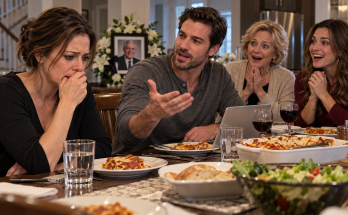
Mark collapsed at Hail Morrow on a Thursday afternoon.
Not dramatically.
No cinematic crash.
Rafael told me later that Mark had been standing beside the dispatch desk arguing about a supplier invoice when he stopped speaking.
Then sat down.
Then slid sideways onto the floor.
Rafael called 911.
He called me second.
By the time I reached the hospital, Mark was awake.
Angry.
That reassured me.
“They won't let me leave.”
“Good.”
“I have a meeting at four.”
“No.”
“They said it might be dehydration.”
“Then drink water.”
“I can drink water at work.”
“Mark.”
He looked at me.
Fear entered his face.
Not about work.
About the fact that his body had become something he could not organize.
Doctors ran tests.
Cardiac enzymes.
EKG.
Imaging.
Mark hated waiting.
Of course.
He asked the nurse three times how long results took.
She eventually said, “Mr. Bennett, asking does not make the lab faster.”
I loved her.
He did not.
Then the cardiologist entered.
Not a heart attack.
A rhythm abnormality.
Likely manageable.
But significant enough to require monitoring, medication, lifestyle changes, and more testing.
Mark stared.
“What caused it?”
“Could be several factors.”
“Work?”
“Stress may contribute.”
“Diet?”
“Possibly.”
“Genetic?”
“Possible.”
“What can I do?”
The doctor smiled.
“Take the medication. Follow up. Sleep. Reduce excessive workload.”
Mark looked offended.
“How much work is excessive?”
“Sixty-plus hours a week is a good candidate.”
He looked at me.
I said nothing.
The doctor continued.
“No guarantees. You can do everything right and still have episodes.”
I saw Mark's face change.
No guarantees.
His least favorite concept.
After the doctor left, he stared at the ceiling.
“I hate this.”
“I know.”
“I did what I was supposed to.”
I sat beside him.
“This isn't punishment.”
“I know.”
“I mean it.”
“I know.”
He looked at me.
“I finally get everything under control and my heart decides to become creative.”
“Apparently.”
He laughed weakly.
Then his eyes filled.
“I don't want to die like Walter.”
The sentence cut through me.
Dad in the garage.
Jim finding him.
The unfinished conversation.
The recorder.
The dinner that never happened.
“You aren't Dad.”
“I know.”
“Different condition.”
“I know.”
“But?”
“I remember that morning.”
Of course he did.
The argument.
Dad angry.
Mark leaving.
Dad dead hours later.
Guilt had softened over the years.
Not disappeared.
“What are you afraid of?” I asked.
“Leaving things unfinished.”
Everything in Mark's life had once been organized around preventing uncertainty.
Now mortality had placed the ultimate uncertainty in front of him.
“What feels unfinished?”
He laughed bitterly.
“Everything.”
“That isn't useful.”
“I know.”
“Try one.”
He looked toward the hospital window.
“Hail Morrow.”
“Okay.”
“Luke.”
“Okay.”
“Emma.”
“Okay.”
“Us.”
I squeezed his hand.
“Okay.”
“My mother.”
“Yes.”
“Melissa.”
“Yes.”
“Basically every relationship.”
“That sounds like being alive.”
He frowned.
“What?”
“Relationships are unfinished until they end.”
“That is profoundly unhelpful.”
“Probably true.”
He looked annoyed.
Good.
Annoyance meant he was still here.
Mark spent one night in the hospital.
The rhythm stabilized.
He went home with medication and a monitor.
The harder part began afterward.
The doctor wanted him to cut hours.
Hail Morrow required leadership.
Mark immediately built a plan.
Delegate dispatch.
Hire operations manager.
Reduce service ride-alongs.
Rafael take more authority.
I watched.
Some planning was appropriate.
Then Mark started assigning responsibilities to people who had not agreed.
I stopped him.
“You're doing it.”
“What?”
“Creating momentum.”
He stared at the whiteboard in our kitchen.
Names.
Roles.
Hours.
He closed his eyes.
“Damn it.”
“You can ask them.”
“Yes.”
“You don't have to solve the entire company tonight.”
“It could affect everyone.”
“Yes.”
“That makes it urgent.”
“No.”
He glared.
“How is it not urgent?”
“You are home. Company operated today without you.”
“That doesn't mean—”
“Mark.”
He stopped.
Fear.
Urgency.
Control.
Same sequence.
He erased the board.
Not dramatically.
Just enough.
“Tomorrow.”
“Good.”
At Hail Morrow, Rafael surprised him.
“No.”
Mark stared.
“What?”
“You want me to run operations too.”
“Yes.”
“No.”
“Why?”
“I don't want it.”
Mark looked wounded.
“You'd be good.”
“Probably.”
“You already do half of it.”
“I like service.”
“Think about it.”
“I did.”
Mark almost argued.
Then stopped.
“Okay.”
Rafael nodded.
“Good.”
That refusal created a real problem.
They needed an operations manager.
Hiring cost money.
Margins tightened.
Mark's ownership distributions would fall.
He hated that.
Not because he needed the income.
Because lower distributions felt like failure.
His therapist pointed that out.
Mark reported the conversation to me.
“She said I still use financial output as self-esteem.”
“She sounds smart.”
“I pay her too much.”
“Worth it.”
The company hired someone.
A woman named Carla Reyes.
Forty-two.
Former logistics manager.
No HVAC background.
Mark disliked that.
Helen loved her immediately.
Rafael respected her after two weeks.
Carla questioned everything.
Why schedules worked a certain way.
Why inventory thresholds were informal.
Why Mark personally approved purchases under five thousand.
He answered because historically I have.
Carla said, “That's not a policy.”
Mark came home furious.
“I hate her.”
“Good hire?”
“Excellent.”
He reduced hours.
At first, he filled the extra time with foundation volunteering.
I stopped him.
“You are replacing work.”
“With community service.”
“Work.”
He looked offended.
“Volunteering isn't work?”
“Not the point.”
He knew.
Then he tried home projects.
Cabinets.
Garage.
Yard.
He reorganized the pantry without asking.
I discovered every canned item labeled.
“Mark.”
He appeared guilty.
“What?”
“Back away from the beans.”
He laughed.
Slowly, he learned to rest.
Badly.
He sat on the porch.
Read.
Walked.
Cooked.
Sometimes did nothing.
That last one nearly broke him.
His health improved.
No major episodes.
But the scare changed us.
Not into frightened people.
More attentive people.
We updated wills.
Powers of attorney.
Medical directives.
Not romantic.
Necessary.
I read every page.
So did Mark.
We discussed funeral wishes.
He wanted cremation.
I wanted burial beside my parents if possible.
Mark frowned.
“That's depressing.”
“It's paperwork.”
“Same thing.”
We laughed.
Then came the hardest discussion.
“What happens to Hail Morrow if you die?”
Mark looked away.
He had avoided it.
“What do you want?”
“I don't know.”
“Who owns what?”
“Me forty-nine. Rafael fifteen. Helen still twenty-five. Small employee pool eleven.”
“Could your share come to me?”
“Yes.”
“Do you want that?”
“No.”
I appreciated the answer.
“Why?”
“You don't want to run an HVAC company.”
“Correct.”
“And I don't want you feeling responsible for preserving my work.”
There it was.
Legacy without burden.
“What happens?”
He built the plan slowly.
Rafael and the employee ownership pool received purchase options.
My estate would receive fair value.
No requirement that family keep the company.
Luke could participate only if he independently wanted and could finance it.
No inheritance of authority by blood.
That impressed me.
“Dad left you a business condition.”
“Yes.”
“You're not doing the same.”
“No.”
“Why?”
“Because it almost made me live Walter's second life instead of mine.”
I stared.
“But you chose it.”
“Yes.”
“Eventually.”
“Yes.”
He smiled.
“That's why choice matters.”
We completed the plan.
Then he asked the question I had avoided.
“What happens to your trust if you die first?”
I was quiet.
The trust terms already covered much of it.
Emma and Luke benefited eventually.
Foundation share.
Some assets remained protected.
Mark received limited income rights from one marital support provision I had established years earlier.
Not ownership.
Enough to prevent vulnerability.
Not enough to convert Dad’s estate into his.
“Are you okay with that?” I asked.
“Yes.”
“Really?”
“Yes.”
“Why?”
“Because I don't need to inherit Walter to know I was your husband.”
My throat tightened.
That sentence might have destroyed me years earlier.
Now it simply felt true.
We signed everything.
No hidden pages.
No rushed tabs.
No “sign here, I'll explain later.”
Documents took hours.
It was one of the most intimate afternoons of our marriage.
Not because death was romantic.
Because trust had become procedural as well as emotional.
Read.
Ask.
Disagree.
Revise.
Consent.
Sign.
Afterward, we went for dinner.
Mark ordered dessert first.
“Heart scare changed you.”
“Life is short.”
“Your cardiologist said less sugar.”
“Life is apparently moderately long.”
I laughed.
Then he became serious.
“If I die before you—”
“No.”
“Clare.”
“I know.”
He waited.
I let him continue.
“Don't turn me into a lesson.”
I looked at him.
“What?”
“Don't make every bad thing I did the moral of my life.”
My eyes filled.
“I won't.”
“And don't make the good things erase the bad.”
“I won't.”
“I want to be complicated.”
I smiled through tears.
“You already achieved that.”
“Excellent.”
He reached across the table.
I took his hand.
That night, lying beside him, I understood something Dad never had time to teach me directly.
The goal was not to leave behind a life simple enough to summarize correctly.
The goal was to live honestly enough that the people who loved you did not have to choose between truth and affection when remembering you.
Click here to continue reading: PART 44: On the Anniversary of Dad’s Death, We Returned to the Place Where Everything Began and Found the Final Meaning of His Estate
Three Days After Dad Died, I Found My Husband Home on a Wednesday and Learned He Had Already Planned Our Future
Part 43 of 47