
The initials C.B. meant nothing to me.
They meant something to Robert Sterling.
He was standing inside the old hotel basement when Tommy read them aloud.
His face changed before he spoke.
“What?” I asked.
“There was a Charles Beaumont.”
“Who?”
Robert looked toward the ceiling, as though the modern hotel above us might hear.
“One of the original Grand Oak investors.”
Brenda frowned.
“I know that name.”
“You should.”
Robert wiped dust from his sleeve.
“The Beaumont family financed the hotel portion.”
The Fairmont.
Or rather, the property that eventually became it.
“Was Charles alive in 1963?”
“Yes.”
“When did he die?”
“1982.”
“Children?”
“Two sons.”
“Company?”
“Beaumont Hospitality.”
David pulled out his phone.
Robert stopped him.
“The company still exists.”
That mattered.
“How connected is it to this hotel?”
Robert hesitated.
“They own a minority interest in the management entity.”
Of course.
History had not merely survived in papers.
It still collected revenue.
“Who runs it?”
“Charles’s granddaughter, Catherine Beaumont.”
“Does she know about Grand Oak?”
“I have no idea.”
Evelyn Shaw joined us downstairs after hearing about the discovery.
She handled Leonard’s records carefully.
The notebook contained payment references.
Dates.
Amounts.
Initials.
H.V.
C.B.
L.M.
Some entries corresponded with invoices already identified as fraudulent.
Others did not.
A second scheme.
Or another layer of the same one.
Tommy looked sick.
“My dad kept books for them.”
“Yes,” I said.
“He knew.”
“Eventually.”
“He knew more than we thought.”
That hurt him.
Each new fact about Leonard complicated the version Tommy had finally begun accepting.
I understood.
We want the dead to become clearer as we learn more.
Instead they often become more human.
Messier.
Leonard’s letter explained that Charles Beaumont supplied investment capital through shell companies.
Harold redirected construction money.
Leonard altered invoices.
Charles received concealed ownership advantages in return.
My father discovered the discrepancy when delivery quantities did not match billed materials.
James Caldwell confirmed electrical work had also been falsely certified.
Samuel Dorsey noticed title irregularities.
Different people saw different fragments.
Edward connected them.
That was why he became dangerous.
“Did Harold chase Dad for himself,” I asked, “or for Beaumont too?”
Nobody could answer.
The question mattered.
Harold’s confession accepted responsibility for following my father.
But he never mentioned Charles.
Why?
Protection?
Fear?
A deal?
We searched Harold’s records Richard had surrendered.
Charles Beaumont appeared repeatedly.
Business letters.
Dinner invitations.
Investment memoranda.
Then one envelope marked PRIVATE.
Inside was a letter from Charles to Harold dated two days after my father’s death.
The language was cautious.
No explicit crime.
But one sentence stood out.
With Higgins no longer creating difficulty, we should make certain the remaining participants understand the value of discretion.
I read it twice.
Brenda whispered, “He knew.”
“Something.”
“More than something.”
“Yes.”
But we had learned not to turn suspicion into certainty.
Evelyn photographed the letter.
Robert looked increasingly uncomfortable.
“What?”
I asked.
“I need to tell the board.”
“Yes.”
“Beaumont Hospitality has two seats.”
“Then tell them before the exhibit opens.”
He nodded.
The exhibit suddenly had a new problem.
We were preparing to display documented history involving a family whose company still held financial interest in the hotel.
That was exactly the kind of conflict institutions preferred to discover after opening night.
I had no intention of helping them avoid it.
Robert called Catherine Beaumont.
She requested a meeting that afternoon.
Not at the hotel.
At her attorney’s office.
I brought Elliot.
Tommy came because Leonard’s records were central.
Evelyn attended as historian.
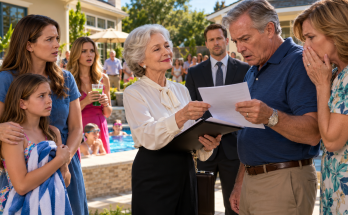
Catherine Beaumont was sixty-one.
Silver hair.
Dark suit.
No wasted movement.
She looked at the copies without visible surprise.
That bothered me.
“You’ve seen these before.”
She looked at me.
“Not these.”
“But something.”
“Yes.”
“What?”
“My grandfather’s private papers.”
The room tightened.
“When?”
“After my father died.”
“How long ago?”
“Eleven years.”
“And you found references to Grand Oak?”
“Yes.”
“Fraud?”
She paused.
“Possible improper payments.”
“Possible?”
“My grandfather’s records were incomplete.”
“Did you investigate?”
“Internally.”
“What does that mean?”
“Our counsel reviewed exposure.”
Not history.
Exposure.
I disliked her immediately.
Then reminded myself I had once disliked Brenda for much less useful reasons.
“What did counsel conclude?”
“That the events were too old for meaningful corporate liability in most areas.”
Tommy stared.
“That’s what you cared about?”
Catherine met his gaze.
“At the time, yes.”
“At the time?”
She looked down at Leonard’s letter.
“I was wrong.”
That answer stopped him.
She continued.
“I treated it as a legacy legal issue. Not as something involving living families.”
“Martin Alvarez is alive,” I said.
“Different incident.”
“The same corporate habit.”
She accepted that without argument.
“Fair.”
I leaned back.
“What did Charles Beaumont do?”
Catherine opened her briefcase.
She had brought documents.
Good.
“My grandfather invested through two entities not disclosed in the public partnership records.”
“Why?”
“Tax avoidance partly.”
“And fraud?”
“Possibly concealment of ownership.”
“Did he know Harold was falsifying invoices?”
She slid a ledger copy toward us.
Payments from one Beaumont entity matched transfers into Harold-controlled accounts.
“Yes.”
Tommy inhaled sharply.
“Did Leonard receive money?”
“Yes.”
“How much?”
She showed us.
Not enormous.
Enough.
Tommy looked away.
“My father.”
“Yes.”
Catherine did not soften it.
I respected that.
“Did Charles order Harold to stop Edward?”
“I found nothing saying that.”
“Did he know Harold followed him?”
“No evidence.”
“Did he know Edward died because Harold confronted him?”
“Possibly afterward.”
“Why possibly?”
She produced a letter.
Harold to Charles.
Dated the day after the crash.
Problem with Higgins resolved badly. No further action required. We need to keep Mercer steady.
My stomach turned.
Resolved badly.
My father reduced to a problem.
Catherine’s expression remained controlled, but her hand tightened around her pen.
“I had not understood what this meant until your records became public.”
“You had the letter.”
“Yes.”
“You never looked up Edward Higgins?”
“No.”
“Why?”
She met my eyes.
“Because I did what wealthy families are very good at doing.”
I waited.
“I assumed anything old and unpleasant was someone else’s problem.”
That was more honest than I expected.
“What are you going to do now?”
“I don’t know.”
“Then decide quickly.”
Her attorney shifted.
“Martha—”
“Mrs. Caldwell.”
He corrected himself.
“Mrs. Caldwell, Beaumont Hospitality is prepared to cooperate.”
“Cooperate is a word people use when they want credit for doing what evidence already requires.”
Catherine almost smiled.
“My grandfather would have hated you.”
“Many dead businessmen seem to.”
Tommy laughed despite himself.
Catherine’s proposal arrived two days later.
Full release of Charles Beaumont’s Grand Oak records to the historical society.
Independent audit of any assets traceable to fraudulent transactions.
Financial contribution to the restitution and scholarship fund.
Public acknowledgment.
No demand for editorial control over the exhibit.
I read the last condition twice.
That mattered most.
“They’re buying forgiveness,” Richard said when Brenda told him.
He had come to the trust office for his first transition meeting.
“No,” I said.
“They’re paying money.”
“Yes.”
“What is the difference?”
“Forgiveness is not for sale.”
He looked at me.
“Then what are they buying?”
“Nothing.”
“Companies don’t give away money for nothing.”
“Then perhaps they are paying a debt.”
He considered that.
Richard’s resignation as CEO had become public.
The local newspaper called it a “leadership transition amid historical property dispute.”
A wonderfully boring phrase.
His criminal case was less boring.
Prosecutors charged him with burglary and theft.
His attorney expected a negotiated resolution because the document was recovered and Richard cooperated.
I still stayed out of it.
He seemed almost irritated by that.
“You could help me.”
“I could.”
“You won’t.”
“I will tell the truth if asked.”
“You keep saying that.”
“Because you keep asking for something else.”
He looked away.
Then said, “Daddy would have destroyed the Beaumont letters.”
“I know.”
“I almost did.”
That surprised me.
“When?”
“Years ago.”
“You knew about Charles?”
“Some.”
“How much?”
“Enough to understand Daddy wasn’t alone.”
“Why keep the records?”
Richard looked embarrassed.
“Insurance.”
Of course.
Harold taught him well.
“You kept evidence so the Beaumonts couldn’t blame everything on your father.”
“Yes.”
“Did they ever try?”
“No.”
“Then why hide it?”
“Because if they fell, we fell.”
There it was.
Mutual silence as business structure.
“Do you still believe that?”
Richard looked toward the trust office window.
“No.”
I was not sure.
But he had said it.
That was a start.
The historical society delayed the exhibit opening by two weeks to incorporate the Beaumont material.
Evelyn hated the delay.
Then loved it because historians apparently enjoyed discovering more work.
She redesigned the central room.
Not around individuals.
Around choices.
One wall showed concealment.
One showed cooperation.
One showed restitution.
One showed inherited consequences.
The title remained:
WHAT WE CHOSE TO KEEP.
When I visited during installation, my mother’s photograph was being mounted.
Eleanor’s curtain fabric.
My dress.
Harold outside.
Arthur sending him away.
A single ordinary afternoon containing half the story without any of us knowing.
I stood before it for a long time.
Then Evelyn approached holding another item.
“We found this in the Beaumont collection.”
“What?”
“A guest register.”
“From where?”
“The Oakridge Country Club.”
I almost lost interest.
Then she showed me the date.
The night before my father died.
Harold Vance.
Charles Beaumont.
Leonard Mercer.
All signed in.
Then another name.
Edward Higgins.
My father.
I stared.
“Dad met them?”
“Apparently.”
“Why?”
“We don’t know.”
The meeting had never appeared in Harold’s confession.
Leonard’s letters never mentioned it.
Charles’s records did not explain it.
My father had been in the same room with all three men less than twenty-four hours before his death.
“What time?”
“Dinner reservation at seven.”
“When did he leave?”
“Unknown.”
“Any staff records?”
“Probably gone.”
“Photographs?”
“Maybe.”
The Beaumont archive included club event photographs.
We searched.
One showed Harold and Charles at a table.
Leonard beside them.
My father standing.
Not seated.
His expression was tense.
Another photograph showed Edward holding an envelope.
Blue.
I felt the old chill.
Another blue envelope.
“What was inside?”
Evelyn whispered.
No one knew.
Then we enlarged the image.
Writing was visible across the front.
Not enough to read completely.
Only two words.
FOR MARGARET.
My father had prepared something for my mother the night before he died.
And whatever it contained had never reached her.
Click here to continue reading: PART 23: My Father’s Missing Envelope Survived in the Beaumont Archive, and His Last Letter Revealed the Choice He Intended to Make After Grand Oak
Fifty-Five Years After Brenda Made Me Run Home Crying, She Put Another Piece of Fabric in My Hands
Part 22 of 24

One Comment on “PART 22 – Leonard’s Hidden Records Named Harold’s Silent Partner, and the Discovery Put the Fairmont’s Celebrated Founding Family Inside the Original Fraud”