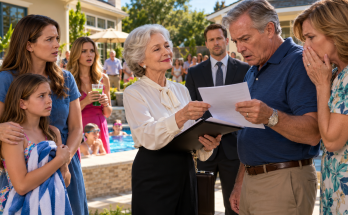
For the next several minutes, Tommy and I sat at my kitchen table staring at the photocopied ledger as if enough attention might force it to explain itself.
It did not.
Old records rarely surrendered meaning politely.
The handwriting was faded.
Some entries used initials.
Others contained descriptions that made sense only to the person who wrote them.
But my father’s name remained unmistakable.
E. HIGGINS.
Delivery.
Receipt confirmation.
Refused second run.
I traced the letters.
My father had been dead for sixty-three years.
Most of what I remembered about him came in fragments.
The smell of motor oil on his coat.
His habit of whistling while making coffee.
A scar across one thumb.
The way he lifted me onto his shoulders during the Fourth of July parade.
I knew he drove trucks.
I knew he sometimes worked nights.
I knew the accident happened on a wet road north of Oakridge.
What I did not know was why his name appeared in the private records of a man later convicted of embezzlement.
“Do you have the police report from my father’s accident?” I asked.
Tommy blinked.
“No.”
“Can we get it?”
“Probably from county archives.”
“We’ll get it.”
His eyebrows rose.
“We?”
“You brought the ledger into my kitchen.”
“Fair.”
I stood.
“I’m calling Brenda.”
Tommy looked uneasy.
“You may want to think about that.”
“I have thought about it for nearly thirty seconds.”
“That is not what most people call thinking.”
“It is at my age.”
I called.
Brenda answered.
“Martha?”
“I need to see you.”
“When?”
“Now.”
Silence.
“Is something wrong?”
“Yes.”
“What?”
“Come to my house.”
“Martha—”
“Bring anything you have that belonged to your father.”
The silence changed.
That was the first clue.
Not confusion.
Recognition.
“Why?”
I looked at Tommy.
He was watching me.
“Because Tommy showed me something.”
Brenda inhaled.
“What did he show you?”
Another clue.
She did not ask what Tommy was doing at my house.
She asked what he showed me.
“A ledger.”
Nothing.
“Brenda?”
“I’ll come.”
She ended the call.
I lowered the phone.
Tommy’s expression told me he noticed the same thing.
“She knows.”
“Something.”
“She sounded frightened.”
“She should.”
“Of you?”
“No.”
I looked at the copied ledger.
“Of this.”
Brenda arrived twenty-six minutes later.
She came without makeup and wore dark trousers with a cream sweater.
For the first time in my life, I saw her look genuinely rushed.
She entered the kitchen.
Then stopped when she saw Tommy.
“I thought you might be here.”
Tommy stood.
“Hello, Brenda.”
She ignored the greeting.
Her attention went directly to the papers on the table.
“Those are copies.”
“Yes,” Tommy said.
“Where are the originals?”
“I don’t have them.”
Her shoulders loosened slightly.
I noticed.
“So you have seen them,” I said.
Brenda looked at me.
“No.”
“That was not convincing.”
“I’ve seen similar records.”
“When?”
She removed her coat but did not sit.
“After my father died.”
“How long ago?”
“Twenty-three years.”
“And you said nothing?”
“To whom?”
“Anyone.”
“About what?”
Tommy pushed the ledger toward her.
“Harold’s involvement with my father.”
Brenda looked at the paper.
Her face hardened.
“I knew there had been business between them.”
“Business?” Tommy said. “Your father let mine take the fall for theft.”
Brenda looked up.
“You don’t know that.”
“My father wrote it.”
“Your father was convicted.”
“So?”
“So perhaps he had reason to blame someone else.”
Tommy stepped forward.
“Do not defend Harold.”
“I’m not defending him.”
“You always defended him.”
“That was fifty years ago.”
“Then stop now.”
I placed my hand on the table.
“Both of you.”
They turned.
“This is my kitchen.”
That ended the argument more efficiently than I expected.
I pointed toward the chairs.
“Sit.”
They sat.
Apparently age had finally given me the authority I had wanted at seventeen.
I placed the ledger between us.
“My father’s name is here.”
Brenda looked down.
“I see that.”
“Did you know?”
“No.”
“Think carefully.”
“I am.”
“Did your father ever mention Edward Higgins?”
Her eyes remained on the page.
“No.”
“Did your mother?”
“No.”
“Did you ever see my father’s name in your father’s papers?”
She hesitated.
Tommy noticed.
“So you did.”
Brenda exhaled.
“Once.”
My heartbeat increased.
“Where?”
“In a file.”
“What kind?”
“I don’t know.”
“Try.”
She rubbed her forehead.
“It was after Daddy died.”
The word Daddy sounded strange from a seventy-four-year-old woman, but grief preserved childhood language.
“I was helping my mother clear his study.”
“And?”
“There were old business documents.”
“What did you see?”
“A folder with several names.”
“One was my father’s.”
“Yes.”
Tommy leaned forward.
“What were the others?”
“I don’t remember.”
“Brenda.”
“I’m not lying.”
“Where is the folder?”
She became silent.
I waited.
Finally, she said, “I burned it.”
No one spoke.
Tommy stood so quickly his chair struck the floor.
“You what?”
Brenda flinched.
“You burned evidence?”
“I didn’t know what it was.”
“You recognized my father’s name.”
“Yes.”
“You knew he went to prison.”
“Yes.”
“And you burned it?”
“My father was dead.”
“That does not answer me.”
Brenda stood too.
“I was trying to protect my mother.”
“From what?”
“Scandal.”
Tommy laughed bitterly.
“Your family protected itself for decades by letting mine carry the scandal.”
Brenda’s face tightened.
“I was not involved in whatever our fathers did.”
“No. You just cleaned it up afterward.”
“I didn’t know.”
“You knew enough to burn papers.”
I stepped between them.
“Sit down.”
Neither moved.
“Sit.”
They did.
I had not spoken that sharply since managing forty employees through a warehouse flood.
It worked.
I looked at Brenda.
“What was in the file?”
“I told you—”
“No. You told us there were names.”
She closed her eyes.
“There were payment receipts.”
“What else?”
“Land documents.”
“Where?”
“Near Oakridge.”
Tommy and I exchanged a glance.
“What land?”
“The original hotel site.”
There it was.
Fairmont.
“Who owned it?”
“Daddy was part of an investment group.”
“What was the group called?”
Brenda thought.
“Oakridge Development Holdings.”
Tommy leaned toward the ledger.
“That name is in my father’s notes.”
“Of course it is.”
Brenda sounded exhausted.
“He invested too.”
“Invested,” Tommy repeated.
“Yes.”
“My father claimed Harold diverted union funds into that development.”
Brenda shook her head.
“I don’t know.”
“Did the file mention the union?”
“Yes.”
The admission came quietly.
Tommy stared at her.
“You knew.”
“I knew there was a union connection.”
“And you burned it.”
“I was forty-nine years old and had spent my entire life being told my father built everything honestly.”
She looked at Tommy.
“Then suddenly I found documents suggesting he had not.”
“So you destroyed them.”
“Yes.”
“Why?”
Her face changed.
“My mother begged me.”
That silenced him.
I watched Brenda.
“What did she say?”
“She said people would misunderstand.”
“What did that mean?”
“I don’t know.”
“Did she know about my father?”
“Yes.”
The room became very still.
“How?”
“I don’t know.”
“Brenda.”
“I truly don’t.”
She pressed both palms against the table.
“She saw the folder in my hands and immediately asked whether there was anything inside with Edward Higgins’s name.”
I felt as if someone had pulled the chair from beneath me.
“Specifically my father.”
“Yes.”
“What did you say?”
“I told her there was.”
“And?”
“She told me to burn everything.”
Tommy whispered something under his breath.
I barely heard him.
“Why?”
Brenda looked at me.
“She said your father had already paid enough.”
My throat tightened.
“What does that mean?”
“I asked.”
“And?”
“She refused to explain.”
“Did you press her?”
“Yes.”
“What did she say?”
Brenda’s eyes filled slightly.
“That some truths don’t rescue the dead. They only punish the living.”
I stood.
“That is convenient.”
“I know.”
“No. It is cowardly.”
Brenda nodded.
“Yes.”
The agreement startled me.
I paced toward the window.
My father.
My mother.
Brenda’s parents.
Tommy’s father.
Everyone seemed to know pieces except me.
Again.
Always me.
The child protected from information.
The teenager protected from apologies.
The wife protected from old shame.
People had loved me by deciding what I did not need to know.
I was tired of it.
“What exactly was my father delivering?” I asked.
No one answered.
I turned.
“Tommy?”
“I don’t know.”
“Brenda?”
“No.”
I pointed at the copied notation.
“Receipt confirmation.”
Tommy studied it.
“Could be money.”
“My father did not handle investments.”
“Could be documents.”
Brenda leaned closer.
“Or cash.”
I looked at her.
“Why would you say that?”
“Because my father used couriers.”
“Professional couriers?”
“No.”
“What kind?”
“People he trusted not to ask questions.”
I thought of my father.
Working-class.
Delivery driver.
A man supporting a wife and child.
Someone wealthy businessmen might consider invisible.
“What company did my father work for?”
Tommy asked.
“Mercer Supply.”
He stared.
“What?”
“Mercer Supply.”
“That was my uncle’s company.”
I blinked.
“Your uncle?”
“My father’s older brother.”
A new connection.
“Did you know my father?”
“No.”
“You’re sure?”
“I was a child when he died.”
“Did your father know him?”
“Apparently.”
Brenda looked between us.
“Mercer Supply delivered construction materials.”
“For the hotel?” I asked.
Tommy nodded slowly.
“Probably.”
He looked at the ledger.
“Maybe Edward wasn’t transporting money. Maybe he was delivering supplies.”
“Then why would he appear in private financial records?”
No answer.
I turned to Brenda.
“You said you burned the file twenty-three years ago.”
“Yes.”
“All of it?”
She looked away.
That was enough.
“What did you keep?”
She reached into her handbag.
Neither Tommy nor I moved.
Brenda pulled out a small black notebook.
Old.
Leather cover cracked.
She placed it on the table.
“My mother stopped me.”
I stared.
“You said she told you to burn everything.”
“She did.”
“Then?”
“I kept this first.”
“Why?”
“I don’t know.”
“Enough with that answer.”
Her eyes lifted.
“Because it scared me.”
That was better.
“What is it?”
“My father’s appointment book.”
Tommy reached for it.
Brenda placed her hand over the cover.
“No.”
He glared.
“This is not yours alone anymore.”
“I know.”
“Then move your hand.”
She did.
Tommy opened the book.
Pages filled with dates, initials, telephone numbers.
Most meant nothing.
Then Brenda turned toward a bookmarked page.
“There.”
The date was the week before my father’s accident.
Three appointments.
One with a banker.
One with someone identified only as L. Mercer.
Tommy’s father was Leonard Mercer.
The third entry read:
E. Higgins — 7:30 — North Quarry Road.
My fingers went cold.
“That is where my father died.”
Tommy looked up.
“What?”
“The accident.”
I pointed.
“North Quarry Road.”
Brenda went pale.
“What time?”
“I don’t know.”
“Find out,” Tommy said.
We stared at one another.
No one needed to explain why.
My father had an appointment with Harold Vance on North Quarry Road one week before dying there.
The ledger said he later refused a second run.
The connection might mean nothing.
Coincidences existed.
Roads were used by many people.
Men who worked in construction and delivery had legitimate reasons to meet.
But after decades of secrets, coincidence had lost some of its comfort.
“What else is in the notebook?” I asked.
Brenda turned pages.
Near the end, several had been torn out.
“Who did that?”
“I don’t know.”
I gave her a look.
“That answer is going to kill me.”
“This time it’s true.”
Tommy studied the torn edge.
“Your father?”
“Possibly.”
“Your mother?”
“Possibly.”
“Anyone else?”
Brenda shook her head.
Then I noticed something.
One remaining page had faint indentations.
Writing pressure from the missing sheet.
“Do either of you have a pencil?”
They looked at me.
“What?” Tommy asked.
“A pencil.”
I found one in the junk drawer.
Arthur had taught David a trick when he was a boy.
Place paper over impressions.
Shade lightly.
Sometimes hidden writing appeared.
I laid a clean sheet over the page.
Then rubbed the side of the pencil across it.
At first, nothing.
Then shapes.
Letters.
Partial words.
Tommy leaned closer.
Brenda held her breath.
I shaded again.
A name appeared.
Not complete.
But enough.
M. Higgins.
I stopped.
“My mother.”
Brenda whispered, “Oh my God.”
I continued shading.
Below her name emerged a time.
9:00.
Then three more words, faint but readable.
Bring blue envelope.
No one spoke.
My mother had always told me my father’s accident was simple.
Wet road.
Lost control.
No mystery.
No hidden history.
Yet here was her name in Harold Vance’s appointment book after my father died.
Bring blue envelope.
I looked at Brenda.
“Did your mother ever mention mine?”
“No.”
“Tommy?”
“No.”
I stood.
There was one person left who might know.
My aunt Ruth.
My mother’s younger sister.
She was ninety-one.
Sharp on good days.
Forgetful on others.
She lived in assisted care thirty miles away.
I had spoken to her two weeks earlier.
We discussed arthritis, television, and whether the facility overcooked vegetables.
Never once had I asked what she knew about my father’s death.
Because I had never imagined there was anything to ask.
I picked up my handbag.
Tommy stood.
“Where are you going?”
“To see Ruth.”
“I’ll drive.”
“No.”
“Martha.”
“I said no.”
Brenda looked at me.
“She may know something.”
“Yes.”
“And if she does?”
“I intend to hear it from her without an audience.”
Neither argued.
For once, people seemed capable of understanding a boundary.
At the door, Tommy handed me the copied ledger.
Brenda handed me the appointment book.
I stopped.
“You trust me with this?”
She looked toward the notebook.
“I should have trusted the truth twenty-three years ago.”
I placed it carefully in my handbag.
The drive to Ruth’s facility took thirty-eight minutes.
Rain began halfway there.
North Quarry Road appeared on the navigation map as an alternate route.
I did not take it.
Not yet.
When I reached the facility, Ruth was sitting by a window knitting something that appeared intended for no recognizable human shape.
She looked up.
“Martha.”
Relief washed through me.
A good day.
I kissed her cheek.
“You came without calling.”
“I needed to ask you something.”
She set the knitting aside.
“That sounds serious.”
“It might be.”
I sat opposite her.
“Do you remember my father’s accident?”
Her face changed immediately.
Not confusion.
Fear.
There it was again.
All these years.
Fear.
“Yes.”
“Was there more to it than Mom told me?”
Ruth stared at her hands.
“Aunt Ruth.”
Her fingers tightened.
“Your mother made me promise.”
My chest tightened.
“She’s been gone twenty-eight years.”
“I know.”
“Then tell me.”
Ruth looked toward the rain running down the window.
“It wasn’t just an accident.”
I stopped breathing.
“What happened?”
She closed her eyes.
“Edward found out they were stealing.”
“Who?”
“The men building the hotel.”
I gripped the arms of my chair.
“What did Dad find?”
“Money.”
“What money?”
“Union money. Construction money. I never understood all of it.”
My father.
The ledger.
Tommy’s father.
Harold Vance.
“What did he do?”
“He told your mother.”
“And?”
“She begged him to stay out of it.”
“Did he?”
Ruth opened her eyes.
“No.”
“What happened?”
“He took proof.”
“The blue envelope?”
Ruth stared.
“How do you know about that?”
My entire body went cold.
“So there was a blue envelope.”
“Yes.”
“What was inside?”
“I never saw.”
“Who did Mom take it to?”
Ruth looked at me for a long moment.
“Harold Vance.”
I inhaled slowly.
“Why?”
“Because after your father died, Harold came to your house.”
I could barely hear her over the rain.
“What did he want?”
“The envelope.”
“And Mom gave it to him?”
“No.”
Ruth’s voice fell.
“She gave him an empty one.”
I stared.
“What happened to the real evidence?”
Ruth looked toward me.
Then she said the last thing I expected.
“Your mother hid it inside the dress she was making for you.”
My hands went numb.
“What dress?”
Ruth’s expression was bewildered by the question.
“The blue one.”
The prom dress.
The dress Brenda bought.
The dress Tommy stored for fifty-five years.
The dress now hanging upstairs in my spare bedroom.
Click here to continue reading: PART 9: Aunt Ruth Said the Evidence Was Sewn Into My Prom Dress, but the Pocket We Opened Had Already Been Emptied
Fifty-Five Years After Brenda Made Me Run Home Crying, She Put Another Piece of Fabric in My Hands
Part 8 of 24