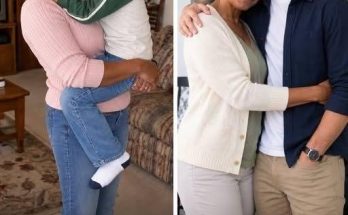
Mom asked me to come shopping.
That was suspicious.
Mom hated shopping with me.
I walk too fast.
She compares six nearly identical shirts.
We irritate each other.
So when she called and said, “Want to come look at furniture?” I knew the furniture was not the point.
“For what?”
“My apartment.”
“You already have furniture.”
“I want a dining table.”
“You own one.”
“A better one.”
“Why?”
Silence.
“Mom.”
“I want to tell you something.”
“There it is.”
We met at a furniture warehouse Saturday morning.
Mom wandered through dining tables with no intention of buying one.
I waited until she stopped beside an absurd glass table.
“You are never buying that.”
“I know.”
“What’s happening?”
She looked around.
“Your father asked me to move back in with him.”
I stared.
“To his rental?”
“He’s moving.”
“Where?”
“Small townhouse.”
“Can he afford it?”
“Yes.”
“Did he ask permission from six agencies and a federal judge?”
Mom smiled.
“Probably.”
“What did you say?”
“I haven’t answered.”
“Do you want to?”
“That’s why I called.”
“No.”
She frowned.
“No?”
“I’m not deciding.”
“I know that.”
“Do you?”
Mom sighed.
“I want to know what you think.”
“That’s different.”
We sat on a display sofa that was far too white for ordinary humans.
“What do you want?”
Mom looked at her hands.
“I love him.”
“That has never been the question.”
“I know.”
“Do you trust him?”
“More than before.”
“That is a very low bar.”
“I know.”
“Do you like who you are around him?”
She went quiet.
That seemed to be the real question.
“I used to become smaller.”
“How?”
“I let him decide because arguing felt exhausting.”
“You also hid things.”
“Yes.”
“Peter.”
“Yes.”
“You were not only passive.”
“I know.”
That mattered.
Mom did not rewrite herself as the innocent wife of a controlling husband.
Dad had dominated.
Mom had adapted through secrecy and complicity.
Both were true.
“I think I became someone who thought quiet deception was better than open conflict.”
“Do you still do that?”
“Less.”
“Would living with him make it worse?”
“I don’t know.”
“Then maybe don’t move in yet.”
Mom nodded.
“That’s what I was thinking.”
“Then why the dining table?”
She laughed.
“Because I realized I want one big enough to host people.”
“Here?”
“In my apartment.”
That was the answer.
Not back to Dad’s house.
Not back to old roles.
She wanted to build a life where she could choose who entered.
Mom bought a wooden table.
Solid.
Six chairs.
No glass.
I helped assemble it.
Badly.
Dad was not invited to the first dinner.
Grandma was.
Rachel.
Lucy.
Noah and Ben.
Me.
Mom cooked too much food.
Halfway through, Lucy said, “This table is better.”
Mom smiled.
“Better than what?”
“The old family one.”
Everyone understood.
The old table had been large.
Formal.
Dad at one end.
Grandma at another.
Rachel and I always somehow positioned according to old alliances.
This table had no head.
Just six equal sides plus two extension leaves.
Mom had chosen it deliberately.
Later, Dad visited her apartment for the first time.
She told me afterward.
“He liked the table.”
“Did he complain you spent too much?”
“No.”
“Did he ask how much?”
“No.”
“Impressive.”
“He asked where I wanted him to sit.”
That made me stop.
Tiny sentence.
Huge history.
Where do you want me to sit?
Mom told him anywhere.
He chose a side chair.
They ate dinner.
Then he left.
No overnight bag.
No implied move.
Weeks later, Mom answered his question.
She would not move in.
Dad listened.
Then asked whether she wanted a divorce.
Mom said no.
“Then what are we?” he asked.
She answered, “Married people who live separately.”
Dad laughed.
“Is that legal?”
“Yes.”
“Apparently.”
They stayed married.
Unconventional.
Maybe temporary.
Maybe permanent.
The key was that neither treated uncertainty as failure.
Dad wanted more.
Mom knew.
He did not pressure.
Mom felt guilty.
She did not surrender the boundary to relieve guilt.
One Sunday, Dad asked me, “Do you think she’ll ever live with me again?”
“I don’t know.”
“Do you think I should keep asking?”
“No.”
He nodded.
“I thought so.”
“Then why ask me?”
“Because I wanted to hear someone else say it.”
That was honest.
“You can want something without repeatedly putting the decision back on her.”
“Yes.”
“I think she knows you want it.”
“She does.”
“Then let her own the answer.”
Dad nodded.
The phrase echoed Grandpa’s principle.
Ownership was not only about objects.
People owned decisions too.
Mom owned hers.
Dad finally stopped trying to lease it from her through persistence.
Rachel faced a similar lesson at work.
Six months into leading Hale Precision, she wanted to acquire a smaller supplier.
The deal looked good.
Profitable.
Strategic.
The board rejected it.
Rachel called me furious.
“They are wrong.”
“Possibly.”
“They’re absolutely wrong.”
“Then resign.”
“What?”
“If you need total authority.”
“I don’t.”
“Then they get to be wrong too.”
Silence.
“I hate you.”
“No, you don’t.”
“I temporarily disagree with your continued existence.”
“Better.”
The board’s objection centered on debt.
Rachel believed the company could handle it.
The audit committee disagreed.
Under Dad, the deal would have happened.
Then the financing would be moved around until everyone accepted it as reality.
Rachel appealed through the formal process.
Lost.
The acquisition died.
Six months later, the supplier lost a major contract.
The board had been right.
Rachel called.
“I have terrible news.”
“What?”
“Governance works.”
I laughed.
“It’s humiliating.”
“Deeply.”
That lesson changed her.
Not because boards were always right.
Because power worked differently when disagreement did not require overthrowing the person in charge.
Grandma observed all this with irritating satisfaction.
“You are enjoying yourself.”
“Immensely.”
“You caused half these structures.”
“And regretted the half that failed.”
The studio expanded.
Children filled the halls.
Instrument lockers lined one wall.
Each had ownership labels.
Loan agreements.
Condition photographs.
Lucy inspected them.
“Grandma, this violin tag says ‘Studio Property.’”
“Yes.”
“Good.”
“You approve?”
“I am trying to prevent another forty-four-part family disaster.”
Grandma had no idea what she meant by that.
Neither did I.
But Lucy laughed at her own joke for an unreasonable amount of time.
She had begun teaching younger students simple cello exercises.
Not formally.
Just helping before lessons.
One child, Maya, struggled with a borrowed cello that was too large.
Lucy complained to Grandma.
“She needs a smaller one.”
“Then tell her teacher.”
“I did.”
“What did she say?”
“The loan program is out.”
Grandma frowned.
“We have a waitlist.”
Lucy thought.
“Can the foundation buy more?”
The Continuity Foundation could fund music access.
But Lucy no longer treated it like invisible money.
She asked Thomas.
A grant process existed.
She filled out an application with the studio administrator.
No family shortcut.
No Grandma override.
It was approved along with funding for six instruments.
Lucy was thrilled.
“See?”
I said.
“What?”
“Rules.”
She rolled her eyes.
“I never said rules were bad.”
“You are genetically confusing.”
The new cellos arrived.
Maya received one.
Lucy helped adjust the endpin.
I watched from the doorway.
Grandma stood beside me.
“She understands.”
“What?”
“What Albert wanted.”
“Maybe better than he did.”
Grandma nodded.
“Probably.”
Dad volunteered at the studio twice a month now.
Chairs.
Basic maintenance.
Scheduling assistance.
No finances.
That was a hard boundary Grandma set.
Dad never challenged it.
One afternoon, a donor recognized him.
“You’re Harold Carter.”
Dad nodded.
“The Hale Precision guy.”
“Used to be.”
“I remember the case.”
Dad went still.
The donor looked awkward.
“I’m sorry.”
Dad shook his head.
“You don’t need to be.”
The man started to leave.
Dad stopped him.
“I did what was reported.”
No attempt to soften.
The donor nodded.
Then stayed.
They talked about manufacturing apprenticeships.
Five minutes later, the donor moved on.
Dad resumed stacking chairs.
I realized he had reached a new kind of freedom.
Reputation no longer required constant defense when the facts were accepted.
Then, two years after the cello sale, Grandma’s health began to change.
Not dramatically.
Small things.
Longer rests.
Shorter days.
More appointments.
She stopped driving at night.
Then during heavy traffic.
Then altogether.
She hated that.
“I have been driving since before seat belts.”
“That is not evidence of competence.”
“Rude.”
“You almost hit a mailbox.”
“The mailbox was badly placed.”
We all laughed.
But the change frightened me.
Grandma had been the engine of the family after the crisis began.
Even at eighty-four, she seemed permanent.
She was not.
One evening, she asked me to come to the studio after closing.
Lucy came too.
Grandma sat beside the cello display case.
Not Lucy’s cello.
That stayed with Lucy.
Inside the case was Grandma’s viola.
Recovered.
Restored.
Documented.
“What’s wrong?”
I asked.
“Nothing.”
“That is suspicious.”
Grandma smiled.
“I want to decide what happens to the viola.”
“You already documented ownership.”
“Yes.”
“Then?”
“I am giving it to the studio trust.”
Lucy frowned.
“You don’t want to keep it?”
“I want it played.”
“Who gets it?”
“Not a person.”
The studio would own it.
Loan it to advanced students.
Proper agreements.
Insurance.
Oversight.
No family heirloom mythology.
No designated descendant carrying emotional burden.
Lucy looked at the viola.
“Can I play it?”
“You play cello.”
“I know. I’m asking.”
Grandma laughed.
“Yes.”
She opened the case.
Lucy lifted the viola.
Smaller.
Lighter.
She tried a scale.
Terrible.
Dad, setting chairs in the next room, heard and entered.
“What is that sound?”
Lucy glared.
“Respect artists.”
Dad saw the viola.
He stopped.
For a moment, the room changed.
That instrument had been the center of one of his oldest betrayals.
Grandma watched him.
“I’m giving it to the studio.”
Dad nodded.
“That’s good.”
“Do you want to say goodbye?”
Lucy looked at Grandma.
I did too.
The question was generous.
Dad approached.
He did not touch it.
He looked at the worn edge.
The bridge.
The reddish varnish.
“I’m sorry,” he said.
Not to Grandma.
To the instrument.
It sounded ridiculous.
It also made sense.
Then he stepped back.
Grandma closed the case.
The transfer papers had already been prepared.
She signed.
The studio representative signed.
Witnesses signed.
Copies distributed.
No mystery.
No hidden compartment.
No future argument.
Grandma looked at Lucy.
“Boring?”
Lucy smiled.
“Perfect.”
Click here to continue reading: PART 39: Grandma’s Final Illness Brought Everyone Back Together, but She Refused to Let Dying Become Another Excuse for Controlling the Family
My Daughter Opened the Empty Cello Case, and My Parents Gave Me an Answer I Could Barely Believe
Part 38 of 40