
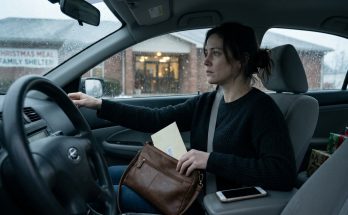
The morning Monica received the bungalow keys, I arrived ten minutes early and stayed in my car.
I could see the house through the windshield—the pale siding, the small porch, the bay window Mom had loved the first time we toured it. For months, every time I looked at that window, I had imagined my parents standing behind it.
That morning, for the first time, I didn't.
The housing organization's case manager arrived first. She carried a clipboard and a canvas bag filled with folders. A maintenance coordinator followed in a white van.
Everything about the process was deliberately ordinary.
There were forms.
Inspections.
Rules.
Signatures.
No emotional promises.
No assumptions about who owed whom what.
After everything that had happened, bureaucracy had become strangely comforting.
Monica's car pulled up a few minutes later.
Laya jumped out before her mother had fully parked.
She wore a purple backpack and the same bright expression I remembered from the parking lot on Christmas morning.
When she recognized me, she stopped.
“Cake lady!”
Monica closed her eyes.
“We've discussed this.”
I laughed.
“I'm starting to think I should accept the title.”
Laya ran toward the porch, then stopped before climbing the steps.
“Can I go in?”
The case manager smiled.
“Not quite yet.”
That question caught me.
Can I?
Not I'm going in.
Not Mom said it's ours.
Not somebody promised me.
Permission asked before action.
Such a small thing.
Such a different foundation.
The case manager reviewed the agreement with Monica inside the front room.
I stayed near the window and listened only because I was supposed to witness part of the intake.
The bungalow was temporary transitional housing.
Monica would contribute according to the program's rules once her income stabilized.
She would work with a case manager.
The organization would handle maintenance.
The trust retained ownership.
No resident accumulated hidden obligations to me.
No favor could later be presented as a debt.
The terms were clear enough to feel almost beautiful.
Monica signed.
Then the case manager placed the keys in her hand.
Monica stared at them.
Her fingers closed slowly.
For a second, I thought she might cry.
Instead she laughed.
It was a short, disbelieving sound.
“These are really mine?”
“For the duration of your placement,” the case manager said.
Monica nodded quickly.
“Yes. I understand.”
She looked at me.
I expected gratitude.
What I saw was relief.
That mattered more.
Laya had been waiting beside the hallway.
“Now?”
Monica laughed.
“Now.”
She disappeared toward the bedrooms.
Her footsteps thundered across the floor.
“There's a desk!”
“We know,” Monica called.
“And a closet!”
“Most bedrooms have those.”
“This one is huge!”
It wasn't.
That made it better.
Monica walked into the kitchen.
Her hand brushed the counter.
Then she turned toward me.
“I don't know how to thank you.”
“You don't have to.”
“I do.”
“No.”
She studied my face, perhaps trying to decide whether I was being polite.
“I mean it.”
I nodded toward the case manager.
“You have an agreement with the program. Follow it. Work your plan. Take care of yourself and Laya. That's enough.”
Monica's eyes filled.
“I can do that.”
“I know.”
That was the entire exchange.
No promise that she would someday repay me.
No speech about deserving the house.
No requirement that she become a symbol of my generosity.
She simply had somewhere safe to live.
I had helped make that possible.
Both facts could exist without turning either of us into something we weren't.
Laya returned carrying a folded sheet of paper.
“I made rules.”
Monica groaned.
“You've lived here four minutes.”
Laya ignored her and read them.
“No shoes on the bed. No leaving cups in bedrooms. Homework before television. Mom has to sleep.”
The last one changed Monica's expression.
Laya continued.
“And cake on Christmas.”
I looked away because suddenly my throat hurt.
Monica crouched beside her.
“That one isn't a house rule.”
“It should be.”
I said, “Strong proposal.”
Laya pointed at me.
“You agree.”
“I'm not on the governing board for cake.”
“You own the house.”
The room went quiet.
Not painfully.
Just enough that I noticed the sentence.
I crouched until I was closer to her height.
“I own the house through the trust arrangement, but while you're living here, this is your home.”
She frowned.
“So you can't just come in?”
“No.”
“What if you want to?”
“I still have to follow the rules.”
She considered this.
“Good.”
Monica covered a laugh.
I stood.
Yes.
Good.
That was exactly the word.
Before leaving, I walked through the bungalow once.
Not inspecting.
Saying goodbye to an idea.
The second bedroom had once been where Mom planned to put her sewing table.
Later it became the room my parents silently promised to Leah.
Now Laya's purple backpack lay on the bed.
The fireplace Dad had imagined decorating held two framed photographs Monica brought from storage.
The refrigerator already had a school calendar attached with a magnet.
A house could survive the collapse of someone's expectations.
It could become something else.
Outside, Dad was waiting near his car.
I hadn't known he was coming.
My body tightened automatically.
Then he held up both hands.
“The program director invited me to drop off tools.”
I looked toward the maintenance coordinator.
She confirmed it with a nod.
Dad smiled faintly.
“I have witnesses now.”
“Probably wise.”
He opened his trunk.
Inside was the toolbox he had once kept in the garage of my parents' old home.
“You're donating all of that?”
“Most.”
“Why?”
“Because the apartment doesn't need six hammers.”
“Debatable.”
He laughed.
Then his expression softened as he looked at the bungalow.
“Are they inside?”
“Yes.”
“How are they?”
“Excited.”
He nodded.
For a moment I expected him to ask whether he could see the house.
He didn't.
Instead he handed the tools to the coordinator.
She thanked him.
Dad said, “If you need volunteers, I can do basic repairs.”
“We have an application.”
“Of course you do.”
“And a background check.”
He looked at me.
“Even better.”
I smiled.
He took the form.
Mom arrived later with household supplies the program had specifically requested.
Not curtains.
Not furniture.
Not things she had chosen because she imagined how the house should look.
Laundry detergent.
Paper towels.
Cleaning supplies.
She handed the bags to the case manager.
“Are these okay?”
“Yes.”
Mom looked relieved.
She didn't ask to enter either.
We stood together on the sidewalk.
Three people who had once treated the bungalow as the center of our family's future.
Now none of us had a key.
The realization should have felt like loss.
Instead it felt clean.
Mom looked at me.
“Does it hurt?”
“A little.”
“Me too.”
Dad nodded.
No one apologized for feeling it.
We were allowed to grieve the future we had imagined even though that future had been built on unhealthy assumptions.
Mom said, “I keep thinking about where we'll live.”
“You have an apartment.”
“I know. I mean long term.”
I waited.
Months earlier, that sentence would have been bait.
I would have started searching listings before she finished speaking.
This time I said, “What are you thinking?”
She smiled.
“We're looking at smaller places.”
Dad added, “Places we can afford.”
Without me.
He didn't say it.
He didn't need to.
Their current apartment was already cheaper than their previous home, but they wanted something more sustainable once Dad reduced his working hours again.
Mom had calculated what they could manage using only their income and savings.
She showed me nothing.
That mattered too.
“You don't want my opinion?”
Dad grinned.
“We might ask later.”
“Suspiciously healthy.”
“Don't get used to it.”
Laya appeared at the bungalow window.
She waved wildly.
All three of us waved back.
Then she held up something round.
A paper plate.
She had drawn a chocolate cake on it.
Mom laughed.
“Is that for you?”
“Apparently my legacy is dessert.”
Dad looked toward the house.
Then he said quietly, “This is better.”
Mom turned.
“Better than us living there?”
Dad nodded.
“Yes.”
I studied him.
He wasn't performing for me.
He looked sad.
But he meant it.
“If we'd moved in,” he continued, “I think every repair would have become another reason to call you. Every tax bill. Every unexpected expense.”
Mom said, “We would have told ourselves the house was free.”
Dad looked at her.
“No house is free.”
I almost smiled.
He was finally learning the most expensive lesson of his life without owning the expensive thing.
We left separately.
I drove home without stopping anywhere.
At my apartment, the cream envelope containing the abandoned transfer papers still sat in my desk.
I took it out.
The documents were no longer useful.
The trust structure had replaced them.
For months, I had kept the envelope because throwing it away felt like admitting something had died.
Maybe it had.
I removed the papers.
Then I found the card I had once written.
You spent your lives giving us a home. Now I want to give one back.
I read it without anger.
The woman who wrote that card wasn't foolish.
She loved her parents.
She wanted to give them security.
Her mistake wasn't generosity.
Her mistake was believing generosity could substitute for conversation.
I shredded the obsolete documents.
I kept the card.
Not as evidence.
As a reminder.
Later that evening, Monica texted me.
A photograph appeared.
Laya sat on the kitchen floor eating pizza from a paper plate.
Behind her were unopened boxes.
The message read:
First dinner at home.
At home.
Not at my house.
Not at the charity house.
Home.
I put the phone down and cried for the first time in weeks.
Not because I regretted anything.
Because I finally understood the difference between giving something away and giving someone room.
The next morning, Leah called.
“Did they move in?”
“Yes.”
“How was it?”
“Good.”
“Are you sad?”
“Yes.”
“Good sad?”
“Mostly.”
She was quiet.
Then she said, “I found an apartment.”
“For you?”
“Yes.”
I sat straighter.
“You're leaving Jenna's?”
“Finally.”
“Do you need—”
I stopped.
Leah laughed.
“That physically hurt you, didn't it?”
“A little.”
“I can afford the deposit.”
“Okay.”
“I can afford the rent.”
“Okay.”
“I may need help moving.”
“That I can do.”
“Pizza and physical labor.”
“Deal.”
She hesitated.
“I wanted to tell you because you're my sister.”
Not because she needed money.
Not because she needed rescue.
Because I was her sister.
“I'm glad you told me.”
After we hung up, I looked again at Monica's photograph.
A year earlier, I would have measured success by whether everyone I loved was safe because I had made them safe.
Now Monica had a program.
Leah had an apartment.
My parents had a budget.
None of them needed me to become the foundation beneath their lives.
I could still help.
I could still love them.
I could still show up.
But I didn't have to hold everything together.
That afternoon, another photograph arrived from Monica.
Laya stood beside the refrigerator holding a sheet of paper.
Across the top, in large uneven letters, she had written:
OUR HOUSE RULES.
At the bottom was the final rule.
Christmas cake every year.
Underneath, Monica had added in smaller handwriting:
Only if we can afford it.
Laya had crossed that out.
Then written:
WE WILL.
I laughed.
For the first time since Christmas, the future felt like something I wanted to see.
Click here to continue reading: PART 18: Leah Refused My Money and Built Her Own Way Forward, While My Parents Learned That Independence Could Be Uncomfortable Without Being Cruel
I Arrived With Christmas Dessert and a Secret House Gift, Only to Learn My Family Had Celebrated Without Me
Part 17 of 31

One Comment on “PART 17 – The First Family Received the Bungalow Keys, and Watching Laya Step Inside Changed What I Thought Giving Was Supposed to Mean”