Samuel Ortega drove faster than I expected from a man who had spent the previous hour arranging papers into precise stacks. His knuckles stayed white against the steering wheel while I sat beside him staring at Officer Rojas’s messages.
Valeria says Teresa is trying to burn papers belonging to Julián.
I read the sentence again.
Then again.
The part of me trained by my mother kept searching for a less serious interpretation. Maybe old receipts. Maybe meaningless copies. Maybe Valeria had panicked.
But Samuel had just shown me a forged signature on a document controlling property connected to my son’s trust.
There was no harmless version left.
“Can she destroy the trust?” I asked.
“No.”
“Can she destroy proof?”
“Yes.”
That answer tightened something in my chest.
Samuel glanced toward me before changing lanes.
“The trust documents at my office are secure. What concerns me are records Julián may have kept separately. He was cautious.”
“You mean suspicious.”
“He had reasons.”
I turned toward the window.
Buildings slid past in bright afternoon glare. People were carrying groceries, walking dogs, waiting for buses. Ordinary life looked almost insulting.
“Did Julián know my mother might forge my name?”
“No. I don’t believe he anticipated that.”
“Then why the box?”
Samuel was quiet for a moment.
“Because he did not trust Teresa to honor informal agreements.”
I looked at him.
“What informal agreements?”
“He told me your mother had asked him to help stabilize the mortgage. He agreed only if his financial contribution was legally protected and eventually benefited Mateo.”
“She told me Julián refused to help her.”
Samuel’s mouth tightened.
“That is not what happened.”
Every answer seemed to revise a memory.
I remembered dinners when my mother accused Julián of being selfish. I remembered her telling relatives he cared only about his own little household. I remembered defending him weakly, privately, then asking him later why he could not make more effort.
Had he gone to sleep beside me knowing he had already risked money to save the same woman who insulted him?
“Why didn’t he tell me?”
Samuel answered carefully.
“He intended to. His notes say he wanted to wait until the mortgage transfer was complete and your mother could not pressure you into undoing it.”
“My husband kept a legal arrangement involving my family from me.”
“Yes.”
The truth hurt even when it defended him.
Before I could answer, Samuel slowed.
Police vehicles were visible at the end of my mother’s street.
So was smoke.
Not thick smoke. Just a gray ribbon drifting from the chimney.
My stomach dropped.
“She lit the fireplace.”
Samuel parked behind an unmarked car.
Officer Rojas was on the front lawn speaking with another officer. Valeria stood near the porch barefoot, her sweatshirt stained at one elbow. Her face was blotchy from crying.
My mother was nowhere outside.
I opened the car door before Samuel killed the engine.
Rojas saw me immediately.
“Clara, stay here.”
“What happened?”
“Your sister called us after an argument.”
“Where’s my mother?”
“Inside.”
“Is she burning documents?”
“We believe she attempted to.”
Attempted.
The word gave me one breath of relief.
Valeria turned when she heard my voice.
For the first time since we were children, she looked at me without first checking our mother’s reaction.
“Clara.”
I walked toward her.
“What did she burn?”
“I don’t know.”
“You called the police.”
“She was feeding papers into the fireplace.”
“What papers?”
“I saw Julián’s name.”
Samuel came up behind me carrying the file.
Valeria recognized him instantly.
Her face changed.
“You came.”
“You contacted my office,” he said.
“I didn’t think you’d call Clara.”
“You asked whether documents could be destroyed.”
“I was scared.”
“Of what?”
She looked toward the house.
Officer Rojas stepped closer.
“Ms. Valeria, we’re going to need you to repeat everything formally.”
She wrapped her arms around herself.
“I went upstairs after Clara left last night.”
“To the box?”
“Yes.”
My throat tightened.
“So you knew where it was.”
“I knew it existed.”
“For how long?”
Valeria swallowed.
“Years.”
The betrayal landed quietly.
Not because she had known one secret.
Because she had watched me struggle in that house for six years while knowing there were papers connected to Julián hidden upstairs.
“What was in it?”
“I never read everything.”
“That isn’t an answer.”
“There were mortgage papers. Letters. Copies of something with Mateo’s name.”
“The trust?”
“I didn’t know what it was called.”
“And the key?”
Her eyes flicked toward me.
“Mateo told you.”
“He saw you take it.”
She looked ashamed.
“I needed to know what Mom was hiding.”
“When?”
“Last Christmas.”
“You’ve known since Christmas?”
“No. I found the key, opened the box, and saw enough to realize something was wrong. Mom caught me.”
“What did she say?”
“That Julián had tried to take the house from us.”
Samuel spoke before I could.
“That is inaccurate.”
Valeria looked at him.
“She said he bought the debt so he could control her.”
“He acquired the distressed mortgage so the lender would not foreclose.”
“She said he planned to throw her out.”
“There is no instruction in the documents I prepared authorizing anything like that during her compliance with the repayment agreement.”
Valeria closed her eyes.
I watched understanding reach her in stages.
My mother had not only lied to me.
She had built separate versions of the same story for each daughter.
“What happened today?” Officer Rojas asked.
Valeria drew in a shaky breath.
“Mom found out Clara was meeting Mr. Ortega.”
“How?”
“I told her.”
I stared at her.
She flinched.
“I’m sorry.”
“You keep saying things after they matter.”
“I know.”
Rojas kept the conversation moving.
“Then what happened?”
“She went upstairs and opened the closet. She brought out the metal box. She started removing papers.”
“Did she say what she intended to do?”
“She said we had to get rid of anything that could be misunderstood.”
Samuel muttered something under his breath.
Valeria continued.
“I told her to stop. She said I was choosing Clara over the family.”
A bitter laugh escaped me.
“Apparently telling the truth is choosing sides.”
Valeria’s eyes filled.
“I tried to take the papers from her.”
“That’s when the argument became physical?” Rojas asked.
“She shoved me.”
“Did you strike her?”
“No.”
“Did she strike you?”
“No. She pushed past me and went downstairs.”
“To the fireplace.”
Valeria nodded.
“It already had a small fire. She threw in a stack.”
My breathing changed.
“How much burned?”
“I grabbed some out with the tongs. Then she tried to take them back. That’s when I called emergency services.”
Samuel stepped closer.
“Where are the papers now?”
Rojas pointed toward the house.
“On the dining table. We preserved what we could.”
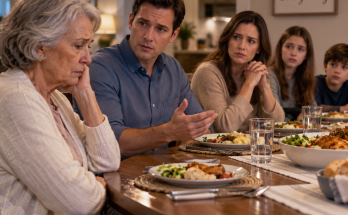
My mother had turned the same dining room where she slapped Mateo into a place filled with police photographs, evidence bags, and half-burned documents.
The symmetry felt cruel.
“Can I see them?” I asked.
“Not yet.”
“Why?”
“Because some may become evidence.”
“Evidence of what?”
Rojas looked at Samuel.
The lawyer answered.
“Potential fraud. Forgery. Possibly interference with trust property. We don’t know enough yet.”
The words sounded enormous.
My mother had always made wrongdoing inside the family seem small.
A slap.
A missing document.
A lie.
A signature.
Separated, each could be explained away.
Together, they were beginning to look like a system.
The front door opened.
Teresa appeared between two officers.
She was not handcuffed.
Some irrational part of me had expected her to be.
Instead she looked like my mother.
Her hair was pinned neatly.
Her blouse was buttoned.
Only her face betrayed the strain.
She saw Samuel first.
Then me.
Her eyes hardened.
“You brought him here.”
“No,” I said. “You brought him here six years ago when you started hiding his letters.”
She descended one step.
“You have no idea what that man helped your husband do.”
Samuel’s voice remained level.
“I helped Julián document an agreement you signed.”
My mother turned on him.
“That agreement was coercion.”
“You were represented by separate counsel.”
“You took advantage of me.”
“You were facing foreclosure.”
“And my son-in-law saw an opportunity.”
I stepped between them.
“Stop.”
She looked at me.
“No more versions. No more stories about what everyone else did to you.”
Her mouth tightened.
“You think he was some saint?”
“No.”
That surprised her.
I surprised myself too.
“Julián hid things from me. I’m angry about that. But he’s dead. You are not going to use his mistakes to erase yours.”
My mother stared at me for several seconds.
Then she said quietly, “You always chose him.”
The old accusation.
A daughter’s disobedience converted into betrayal.
“I married him.”
“You abandoned your family.”
“I built one.”
Her gaze shifted toward the police car where Mateo had sat the night before, though he was not there now.
“And now you’re teaching your son to hate us.”
“You did that yourself.”
She flinched as though I had struck her.
For a second I saw something beneath the anger.
Fear.
Not of losing the house.
Of losing authority.
Officer Rojas stepped forward.
“Mrs. Robles, we need to continue inside.”
She ignored him.
“Clara, tell them this is a family matter.”
“No.”
One syllable.
Nothing dramatic.
Yet I felt six years move beneath it.
“No,” I repeated.
She looked at Valeria.
“Tell her.”
My sister’s hands trembled.
Our mother waited.
We both knew the script.
Valeria would soften things.
She always had.
Instead my sister shook her head.
“I’m not fixing this for you.”
Teresa’s face emptied.
“What did you say?”
“I said I’m not fixing it.”
“You called police into my home.”
“You were burning documents.”
“They were mine.”
“They had Julián’s name on them.”
“He is dead.”
“And Mateo isn’t.”
The silence afterward was absolute.
My mother looked from one daughter to the other.
For the first time in my life, she seemed to understand that neither of us was stepping back into place.
Officer Rojas guided her inside.
Valeria covered her face.
I did not comfort her immediately.
There were limits to how quickly betrayal could become sisterhood again.
Samuel touched my shoulder.
“Clara.”
He held a clear evidence sleeve.
Inside it was a burned sheet.
Only the lower half remained legible.
At the bottom, beneath charred edges, was Julián’s handwriting.
A short sentence.
If anything happens to me, the original recording is in Box 17.
My skin went cold.
“Recording?”
Samuel looked as shaken as I felt.
“I have never seen that note.”
“Recording of what?”
“I don’t know.”
Valeria lowered her hands.
“What is Box 17?”
I turned toward the house.
Behind my father’s photograph was a key stamped with the same number.
Whatever Julián had hidden in that bank box had frightened my mother enough to burn the clue pointing to it.
And suddenly I knew one thing with complete certainty.
The key could not stay in that house another night.
Click here to continue reading: PART 6: The Key Marked Seventeen Opened More Than a Bank Box, and Julián’s Recorded Voice Changed What I Believed About His Death
The Red Car Was the Only Thing Mateo Had Left of His Father, Until One Dinner Changed Everything
Part 5 of 27