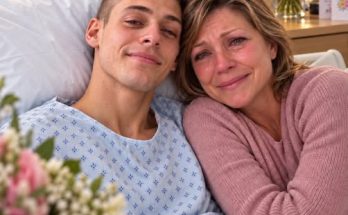
Emily asked to meet in early spring.
By then, nearly seven months had passed since Caleb’s death.
Enough time for weather to change twice.
Not enough time for anything important to feel old.
She chose a park.
Not the botanical garden.
Different place.
Good.
I arrived first.
She came walking from the parking lot alone.
No Laura hovering nearby.
No mask outdoors.
Her hair had grown longer.
She looked stronger.
Not dramatically transformed.
Real recovery had been gradual.
She tired.
She had medication side effects.
Some days were good.
Some days were not.
But she was living.
We walked to a bench beside a pond.
She sat.
I noticed she did not need to catch her breath immediately.
I did not mention it.
Progress did not need witnesses every time.
“How’s school?”
“Good.”
“Freud?”
“Still terrible.”
“Excellent.”
She smiled.
Then grew serious.
“I need to ask you something.”
“Okay.”
“You can say no.”
That phrase usually meant difficult.
“What?”
She looked at her hands.
“Do you want to hear it?”
My heart knew before my brain.
Caleb’s heart.
Inside her.
The question I had refused to ask.
The thing everyone expected me to want.
The television producer’s disgusting request.
The symbolic moment.
I had avoided it because Caleb had warned me.
Because I was afraid I would collapse.
Because I was afraid I would turn Emily into a vessel.
Because some part of me did want it.
And shame had grown around that desire.
Emily continued.
“Not for cameras.”
“I know.”
“Not because I think you need to.”
“I know.”
“I’m asking because I want to offer once.”
I looked at her.
“Why?”
“Because I used to think letting you would mean admitting the heart was still his.”
My throat tightened.
“And now?”
She placed one hand over her chest.
“It’s mine.”
The confidence mattered.
“So I can share the sound without giving it away.”
I looked toward the pond.
Wind moved small waves across the surface.
“What if I say yes?”
“Then you listen.”
“What if I cry?”
“You probably will.”
“What if I make it weird?”
She smiled faintly.
“I’ll tell you.”
“What if I say no?”
“Then I never ask again.”
Choice.
Caleb’s lesson everywhere.
I breathed.
“Yes.”
Emily nodded.
No drama.
She reached into her bag and took out a stethoscope.
I laughed.
“You planned this.”
“I brought the option.”
“That sounds suspiciously like Caleb.”
“I’ve been told.”
She handed it to me.
My hands shook.
For months, I had imagined this moment.
In the worst versions, I expected some mystical recognition.
A sign.
Caleb returning through sound.
I now understood how unfair that expectation would be to both of us.
Emily opened her jacket slightly over her shirt and placed the diaphragm where her doctors had shown her.
I put the earpieces in.
Then listened.
A heartbeat.
Strong.
Regular.
Fast because she was nervous.
My knees weakened anyway.
I closed my eyes.
Not Caleb.
Not exactly.
The organ had once been inside him.
That fact was real.
Now it worked inside Emily.
Also real.
I heard no voice.
No message.
No memory hidden in muscle.
Only blood moving.
Life happening.
I cried.
Emily waited.
I listened for maybe twenty seconds.
Then removed the stethoscope.
“Thank you.”
She zipped her jacket.
“You okay?”
“No.”
She laughed softly.
“Good?”
“Yes.”
“What did it feel like?”
I thought carefully.
“Sad.”
She nodded.
“And?”
“Good.”
Another nod.
“And?”
“Like I expected it to mean more.”
Her face changed.
“Bad?”
“No.”
I laughed through tears.
“Better.”
“How?”
“Because it’s a heartbeat.”
“Yes.”
“Not a message.”
“Yes.”
“It doesn’t tell me what Caleb wanted.”
“No.”
“Or who he was.”
“No.”
“It keeps you alive.”
“Yes.”
“That’s enough.”
Emily began crying too.
We sat there.
No cameras.
No speeches.
Just two women on a bench with a stethoscope between them.
After a while, Emily said:
“I worried you’d hear him.”
“I worried too.”
“Would that have been comforting?”
“For five minutes.”
“And then?”
“I might have spent the rest of my life trying to keep him inside you.”
She nodded.
“That is what I was afraid of.”
“I know.”
“Are you glad you listened?”
“Yes.”
“Will you want to again?”
I considered.
“No.”
She exhaled.
Relief.
Good.
“One time?”
“One time.”
“Okay.”
I smiled.
“And if you ever offer it because you think I need it, don’t.”
“I won’t.”
“Good.”
She looked toward the pond.
“I’m dating someone.”
I turned.
There it was.
Future.
“Okay.”
“His name is Aaron.”
“Is he annoying?”
“Moderately.”
“Good.”
“He knows about the transplant.”
“Of course.”
“He doesn’t know everything about Caleb.”
“Also good.”
Emily looked at me carefully.
“You’re really okay?”
I felt the old reflex.
Protect her from my reaction.
Then Caleb’s lesson.
Truth.
“I’m sad.”
She nodded.
“A little jealous of a future he doesn’t get.”
Her eyes filled.
“Yes.”
“And happy for you.”
She cried.
“Both.”
“Both.”
“Do you want to meet him?”
Not yet.
My answer came clearly.
“Someday.”
She smiled.
“That’s fair.”
Progress.
Not performing closeness.
Not forcing family.
Someday.
We walked another lap.
She told me Aaron was studying civil engineering.
Caleb would have made jokes about bridges.
She had not told Aaron that yet.
Good.
Some jokes could remain Caleb’s.
At the parking lot, Emily handed me the stethoscope.
“Keep it?”
I shook my head.
“No.”
She looked surprised.
“Why?”
“It’s yours.”
Good.
She smiled and put it back in her bag.
Before leaving, she said:
“I read Dad’s letter again.”
Thomas.
“How was it?”
“Different.”
“How?”
“The first time, all I saw was apology.”
“And now?”
“He was trying to tell me who he was.”
“Do you forgive him?”
She thought.
“Some things.”
Not all.
That answer felt healthier than total absolution.
“I’m still angry.”
“Good.”
“I also love him.”
“Yes.”
“That’s exhausting.”
“Very.”
She laughed.
Then:
“I think Caleb would approve.”
“Caleb had too many opinions.”
“True.”
She hugged me.
Then walked to her car.
No wave from Laura because Laura was not there.
Emily drove herself away.
I stood until the car disappeared.
Not because Caleb’s heart was leaving.
Because someone I cared about was.
That was simpler.
I drove to Helen’s facility afterward.
She was asleep.
I almost left.
Then she woke.
“Claire.”
“Yes.”
“You look like you cried.”
“I did.”
“David?”
“Caleb.”
She nodded as though that made perfect sense.
“I heard his heart today.”
Helen stared.
“In the girl?”
“Yes.”
“What did it say?”
I smiled.
“Nothing.”
She frowned.
“Then you need a better doctor.”
I laughed so hard the nurse looked in.
Helen smiled, pleased with herself.
Then she said:
“That’s good.”
“What?”
“Nothing.”
I understood.
Maybe.
Nothing was good.
A heartbeat did not need to perform memory.
Later that week, I listed the house.
Not sold.
Listed.
The decision came quietly.
No Caleb unlock.
No instruction.
I called an agent.
She walked through rooms.
Suggested paint.
Repairs.
Decluttering.
I almost threw her out when she called Caleb’s room “the secondary bedroom.”
Then realized she was not wrong.
To her, it was.
That hurt.
Still okay.
I kept the maple-tree photograph.
David’s paper airplane.
Caleb’s blue notebook.
The mug.
Letters.
A small box of ordinary things.
Shoes did not make the cut.
That surprised me.
I photographed them.
Then donated them.
The hallway dent stayed.
Buyer could paint it.
I did not repair everything.
On closing day two months later, Daniel helped load the final boxes.
The house looked wrong empty.
Smaller.
Every room echoed.
I stood in Caleb’s doorway.
No bed.
No posters.
No notebook.
Just sunlight across carpet.
I expected collapse.
Instead, grief came quietly.
“Bye.”
That was all.
Downstairs, I touched the kitchen counter.
David had leaned there.
Caleb had eaten there.
Frank lied at that table.
Holt opened files there.
Thomas’s card had been read there.
The room held too much.
And now it belonged to someone else.
Daniel waited by the door.
“Ready?”
“No.”
“Good enough?”
“Yes.”
We left.
My new apartment was twelve minutes from the college.
Third floor.
Elevator.
Bad parking.
Caleb would have been intolerably pleased.
The kitchen was small.
No slope to mow.
Two bedrooms.
One became an office.
Not a shrine.
I put David’s photograph on a shelf.
Caleb and Emily under the maple tree beside it.
The paper airplane in a glass dish.
The tolerable-son mug held pens.
Life repurposed.
Weeks later, a letter arrived from Victor Hale.
Prison mail.
I almost threw it away.
Opened it instead.
Not apology.
He had already done that.
A short note.
He wrote that he had begun participating in a restorative-accountability program.
I disliked the phrase.
He said they were asked to identify the first moment they knew a choice was wrong but made it anyway.
His was not Bellwater.
It was years earlier.
The first time he saw a family’s medical debt profile and decided usefulness mattered more than privacy.
He wrote:
I thought the terrible choice came later. It started when I trained myself not to see the person.
That sentence stayed with me.
Systems do not become cruel only at dramatic moments.
They become cruel through small habits of abstraction.
Profiles.
Risk.
Containment.
Useful.
Candidate.
Patient.
Donor.
Recipient.
Words can hide people.
Caleb had spent months putting people back into the story.
Emily.
Rachel.
Marcus.
Helen.
Thomas.
Even Hale.
Not to excuse.
To assign choices correctly.
I kept the letter.
Not on display.
In the case file.
Where it belonged.
That summer, the first annual report from the Extra Chair Fund arrived.
Families assisted: forty-three.
I stared at the number.
Forty-three.
The same number of parts I now mentally divided this whole impossible year into.
Ridiculous coincidence.
Still made me laugh.
Hotel nights.
Gas cards.
Caregiver meals.
Temporary medication coverage.
Parking vouchers.
No inspirational slogans.
Good.
One recipient family had written:
Thank you for paying for my sister’s hotel so she could stay near me.
That was enough.
I forwarded it to Nina.
She replied:
Caleb would like this one.
Probably.
Then one evening, Emily called.
“Can I tell you something weird?”
“Yes.”
“My transplant anniversary is next month.”
I knew.
Of course I knew.
I had been trying not to mark it.
“I don’t want to celebrate Caleb’s death.”
“Good.”
“But I want to celebrate being alive.”
“Good.”
“Mom wants cake.”
“Obviously.”
“Aaron wants to take me hiking.”
“Can you?”
“Doctor says easy trail.”
“Good.”
“Would it hurt you if I call it my heart birthday?”
I breathed.
“No.”
“Sure?”
“Yes.”
“It isn’t his death day.”
“No.”
“It’s my survival day.”
“Yes.”
She exhaled.
“Okay.”
“Get cake.”
“I knew you’d say that.”
“What kind?”
“Chocolate.”
“Approved.”
“No cilantro.”
“I raised you well.”
She laughed.
Then corrected:
“You did not raise me.”
I smiled.
“No.”
Important.
“You didn’t.”
We stayed quiet for a moment.
Then I said:
“But I’m glad I know you.”
“Me too.”
That was enough.
Not daughter.
Not replacement.
Emily.
Claire.
Connected.
Free.
Click here to continue reading: PART 43: One Year After Caleb’s Death, We Returned to the Garden Where He Met Emily and Finally Let His Story Belong to the Living
At My Son’s Funeral, a Stranger Handed Me a Letter He Had Written for a Girl I Had Never Met
Part 42 of 43