Saturday morning was sharp and clear, the kind of Ohio cold that made the air feel like glass. I left Sophie with Rachel and drove to my grandmother’s house with Daniel in the passenger seat and a realtor meeting us there at ten-fifteen. My hands were steady on the wheel. That surprised me more than anything. For most of my life, a text from my father could turn me back into a nervous teenager before I had even opened it. But once you hear your child ask if she is embarrassing, something inside you rearranges permanently.
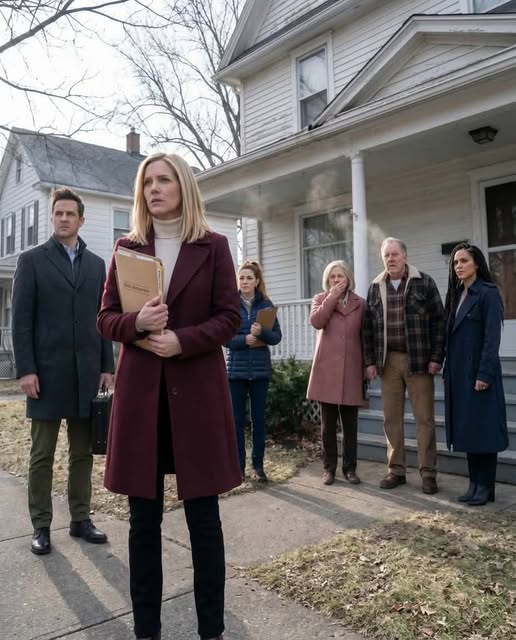
My parents were already on the front porch when we pulled up. My mother wore a camel coat, arms folded tightly. My father stood beside her in a flannel jacket, jaw clenched, trying to project outrage before the facts arrived. Natalie’s SUV was in the driveway too. So was Eric’s.
The moment Daniel stepped out carrying a leather file case, both of my parents visibly shifted. That was when their faces went pale. Not because I had returned. Because I had returned prepared.
My father spoke first. “What is this?”
“This,” Daniel said calmly, “is a formal notice. Ms. Bennett is demanding reimbursement for her share of the taxes and repairs she has paid on this property, along with either a buyout at current appraised value or a sale.”
My mother gave a soft, wounded laugh. “Over one misunderstanding? Claire, this is insane.”
I looked at her. “You told me not to come for Thanksgiving because my six-year-old daughter embarrassed you.”
“We were trying to keep the day calm,” she snapped. “You know how Sophie gets.”
“No,” I said. “I know how adults in this family get when a child says something inconvenient.”
Behind them, Natalie had gone pale. Eric stood two feet away from her, hands in his coat pockets, staring at the porch floor. He looked up only when I mentioned Sophie.
“Did you ask them to uninvite her?” he said to Natalie.
Natalie’s eyes flashed. “I asked for one holiday that wasn’t chaos.”
Eric let out a short breath that held more disappointment than anger. “She’s six.”
“You weren’t there at Easter.”
“No,” he said. “But I’m here now.”
My father turned on him. “This is a family matter.”
Eric replied without raising his voice. “You made it my business when you lied and said Claire canceled. My little brother is autistic. If my parents ever called him embarrassing, I’d walk out too.”
That dropped the porch into silence.
Daniel handed my father the packet. The realtor, Denise Holloway, arrived right on time and stood by the walkway with a clipboard, professional and unbothered, which somehow made everything feel even more real. She explained the next steps: valuation, listing options, market estimates. My parents listened with stunned expressions, like people hearing consequences spoken plainly for the first time.
Then my mother tried a different tactic. Tears. “After everything we’ve done for you.”
I almost laughed. Instead, I said, “You used my money to stay in this house. You tried to refinance without my consent. You called my daughter embarrassing. If you had apologized and changed, we would not be standing here.”
Natalie crossed her arms. “So you’re blowing up the family.”
“No,” I said. “I’m refusing to keep carrying it.”
The deadline Daniel gave them was thirty days. They could buy out my half, reimburse what I had paid, and put the agreement in writing, or we would force a sale. My father blustered for another minute about betrayal and greed until Daniel mentioned court costs. Then he stopped. Numbers had always succeeded where emotions failed.
Three weeks later, they admitted they couldn’t buy me out. The house went on the market in January.
Eric postponed the wedding. Rachel later told me he moved into his brother’s place for a while. My mother sent me a three-page email full of phrases like regret how things were said and hurt on all sides, but not one sentence that simply read, I was wrong about Sophie. I didn’t answer. Not yet.
In March, the house sold. My share paid off the last of my legal bills, funded Sophie’s college account, and covered the down payment on a small townhouse outside Seattle with a fenced yard and a bright yellow front door. The first night there, Sophie ran from room to room choosing where to put her books. Then she came back to the kitchen and asked, “Do we ever have to go somewhere people don’t want us?”
I knelt so we were eye level.
“No,” I said. “We don’t.”
And for the first time in my life, that wasn’t something I hoped.
It was something I knew.