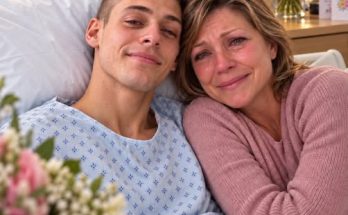
A year after Caleb died, I woke before sunrise.
For one disorienting second, I did not know the date.
Then I did.
The body remembers before calendars sometimes.
September.
One year.
In my old house, I would have walked past his bedroom.
In the apartment, there was no room to avoid.
Just my own bedroom.
Small kitchen.
Coffee maker.
The maple-tree photograph.
David’s picture.
Paper airplane.
I stood in front of them.
No speech.
“Morning.”
That was all.
I made coffee.
Too much.
Some habits survive grief.
My phone had messages.
Daniel:
Thinking of you. No need to answer.
Marcus:
He would hate the project I’m working on. Sending pictures later.
Rachel:
No obligation to reply. I’m grateful he called me.
Margaret:
Lantern archive transferred to permanent legal preservation today. Patient identities remain sealed.
Holt:
No updates. Intentionally.
That made me smile.
Then Emily:
Garden at 2?
We had planned it weeks earlier.
Not memorial.
Not ceremony.
A walk.
The botanical garden where Caleb and Emily met in person.
One year ago, I might have refused.
Too symbolic.
Today, it felt okay.
I worked that morning.
Deliberately.
Two students had registration problems.
One had accidentally dropped a required course.
Another needed transcript verification.
Ordinary.
At lunch, Janine left a cupcake on my desk.
No note.
She knew better.
I ate half.
Caleb would complain I wasted the rest.
At two, I drove to the garden.
Emily was already there.
Aaron stood beside her.
First meeting.
He looked terrified.
Good.
“Claire.”
“Emily.”
She gestured.
“This is Aaron.”
He held out his hand.
“Nice to meet you.”
“You too.”
I did not evaluate him for Caleb.
That was my private achievement.
He was not competing with a dead nineteen-year-old.
He was simply Aaron.
Tall.
Nervous.
Kind eyes.
Civil engineering student.
He carried water for Emily but did not hand it to her every three minutes.
Good sign.
We walked.
At the maple tree from the photograph, Emily stopped.
“This is it.”
I knew.
Marcus had given me coordinates like a ridiculous archivist.
But seeing the real tree felt different.
Bigger.
The bench had been replaced.
That irritated me irrationally.
“Wrong bench.”
Emily laughed.
“The old one was falling apart.”
“They should’ve consulted me.”
Aaron looked uncertain whether I was joking.
Emily saved him.
“She’s joking.”
“Mostly.”
We sat.
Aaron eventually wandered toward a greenhouse after Emily gave him a look.
He understood.
Another good sign.
For a while, Emily and I watched people pass.
Children.
Older couples.
A woman walking a tiny dog in a sweater despite warm weather.
Then Emily said:
“I brought something.”
My stomach tightened.
Old reflex.
“Not evidence.”
I laughed.
“Everyone says that.”
She handed me a small envelope.
Inside was a photograph.
Not Caleb.
Not David.
Emily.
On a trail.
Yellow socks visible above hiking shoes.
Aaron beside her.
She looked happy.
Not survivor-happy.
Not inspirational.
Ordinary happy.
On the back she had written:
FIRST HIKE.
I stared.
“For me?”
“Yes.”
“Why?”
“Because the mantel picture is me with Caleb.”
“Yes.”
“I wanted you to have one where my life kept going.”
My throat tightened.
That was one of the most thoughtful gifts anyone had ever given me.
“Thank you.”
She looked nervous.
“I worried it might be weird.”
“It is.”
She laughed.
“But good.”
I placed it back in the envelope.
“I’ll put it up.”
“Really?”
“Yes.”
Not next to Caleb necessarily.
Maybe.
I would decide later.
Emily looked toward the tree.
“I don’t know what to do today.”
“You don’t have to do anything.”
“I know.”
“It isn’t an exam.”
“I know.”
“Good.”
She laughed.
Then became quiet.
“One year ago today, I didn’t know whether I would live long enough for the transplant.”
I nodded.
“Caleb was still alive.”
“Yes.”
“He was scared.”
“Yes.”
“So was I.”
“Yes.”
She looked at me.
“Do you think he knew it was almost over?”
“Yes.”
That answer no longer frightened me.
“He knew enough.”
“Did he accept it?”
“No.”
She seemed relieved.
“He hated it.”
“Yes.”
“Good.”
Not because suffering was good.
Because reality mattered.
He wanted to live.
That truth protected the donation story from becoming sacrifice mythology.
Emily said:
“I think people still think it’s romantic.”
“What?”
“His heart.”
“Yes.”
“I hate that.”
“So did he.”
“They say things online sometimes.”
“Stop reading.”
“You sound like Mom.”
“Smart woman.”
Emily rolled her eyes.
“I know people mean well.”
“Meaning well has caused enough damage in this story.”
She laughed.
True.
“What do you say?”
“When?”
“When someone says Caleb lives on in me.”
I looked at her.
“What do you want to say?”
“That he doesn’t.”
I nodded.
“Then say that.”
“People think it’s harsh.”
“It isn’t.”
“He died.”
“Yes.”
“I live.”
“Yes.”
“His heart helps me.”
“Yes.”
“But he isn’t inside me.”
“No.”
She breathed out.
“That’s what I say.”
“Good.”
Then:
“Do you believe that?”
I thought.
One year ago, I did not.
Not fully.
Today?
“Yes.”
Emily smiled.
We walked again.
At the small café, I ordered tea.
Actually remembered to drink it.
Progress.
Emily had coffee.
Her doctors allowed one small cup now.
She treated it like victory.
Aaron returned.
He told a terrible joke about bridge load calculations.
I pretended to understand.
Caleb would approve.
Later, Daniel joined us.
Then Marcus.
Not planned.
Apparently Emily had invited them.
I looked suspiciously at her.
She shrugged.
“Not a ceremony.”
“Mm-hm.”
Marcus brought no flowers.
Good.
Daniel brought pastries.
Better.
We sat at two tables pushed together.
No speeches.
No empty chair.
That mattered.
David did not need a chair anymore.
Caleb either.
Absence did not require furniture.
We told stories anyway.
Marcus confessed another crime.
The garage window Caleb admitted breaking?
Marcus had been there.
“He threw the baseball.”
I stared.
“Caleb said he did it.”
“He took the blame because my dad would kill me.”
I laughed.
“Dead for a year and still covering for you.”
“Apparently.”
Daniel told the worm story again.
Emily heard it for the first time.
She nearly choked laughing.
Then asked:
“Was Caleb always like this?”
“Yes.”
All of us answered.
That felt good.
Eventually Marcus and Daniel left.
Aaron drove Emily home.
Before she got in the car, she hugged me.
“See you next week?”
“Maybe.”
She grinned.
“Good answer.”
Choice.
No obligation.
After they left, I remained in the garden alone.
The maple tree cast longer shadows.
I sat on the replacement bench.
From my bag, I took one thing I had brought.
The copy of Caleb’s final message transcript.
Not the video.
Just words.
I did not read it.
I had read it enough.
Instead, I turned the paper over and wrote on the blank back.
Caleb,
I went to Maine.
I sold the house.
I went back to work.
Emily is doing well.
Marcus is annoying.
Grandma thinks Dad was an astronaut sometimes.
Daniel’s chili remains terrible.
I stopped.
What else?
The big things were easy.
Legal outcomes.
Sentences.
Investigations.
But Caleb had spent the final parts teaching me life was not built only from big outcomes.
So I wrote:
I bought bananas yesterday.
Still too many.
I laughed alone.
A woman passing with the tiny sweater dog glanced at me.
I did not care.
Then:
I miss you.
That was the only sentence that still had no solution.
Good.
It did not need one.
I folded the page.
For one moment, I considered leaving it beneath the tree.
Then stopped.
No.
The garden staff did not need my litter.
Caleb would mock me.
I put it back in my bag.
Memory carried home.
Not abandoned symbolically.
At sunset, I drove to Helen’s facility.
She was awake.
“Claire.”
“Yes.”
“You saw Caleb today.”
Not a question.
I had stopped trying to understand how her mind moved.
“In a way.”
“Was he taller?”
I smiled.
“No.”
“Still skinny?”
“Yes.”
“Tell him to eat.”
“I will.”
She seemed satisfied.
I told her the worm story.
She interrupted halfway.
“That happened to David.”
“No. Caleb.”
“David.”
“Okay.”
We let David have the worms this time.
She laughed.
Then suddenly looked directly at me with complete clarity.
“Is the girl okay?”
My throat tightened.
“Emily?”
“Yes.”
“She’s good.”
“Heart?”
“Good.”
Helen smiled.
“Then Caleb did something good.”
I chose my words carefully.
“He made a good choice.”
Not his death.
His choice.
“Yes.”
Then Helen frowned.
“David?”
“Still dead.”
She nodded sadly.
“I forget.”
“I know.”
“Did we find out?”
“What happened?”
“Yes.”
“Yes.”
“What?”
I gave her the simplest truth again.
“He was hurt. People should have called for help sooner. They didn’t.”
“Bad people?”
I thought.
“People who made bad choices.”
She considered.
“That’s worse.”
I stared.
Maybe she was right.
Calling someone bad can create distance.
Bad choices are available to ordinary people.
That was the whole point.
“Yes.”
She squeezed my hand.
“Did David make bad choices?”
“Yes.”
“Good.”
I laughed.
“Why good?”
“Means he was real.”
My eyes filled.
“Exactly.”
She forgot the conversation ten minutes later.
I did not.
That night, back in my apartment, I received the final annual notice from Lantern.
Not a file.
The system itself was shutting down.
Margaret had warned me.
Caleb configured the private message layer to expire after one year.
Evidence archives remained preserved legally.
Personal triggers deleted.
No more posthumous instructions.
The screen showed:
PERSONAL LANTERN INSTANCE — SCHEDULED DELETION COMPLETE.
Then:
NO FURTHER MESSAGES.
My chest tightened.
I expected another joke.
None came.
Good.
He had meant it.
Leaving means leaving.
I closed the laptop.
No backup of the trigger system.
I still had videos Caleb explicitly allowed me to keep.
Photos.
Letters.
Ordinary files.
But the mechanism that made him appear at milestones was gone.
I sat in silence.
For a few minutes, I wanted it back.
Then I understood why he deleted it.
A dead person should not keep controlling a living calendar.
The next morning, I woke without an instruction.
That was the true ending.
Not Hale’s sentence.
Not Northbridge shutting down.
Not Thomas’s letter.
Not hearing Caleb’s heart inside Emily.
No prompt.
No condition.
No clue.
A day nobody had planned for me.
I made coffee.
One cup.
Progress.
Went to work.
A student was waiting before the office opened.
She had missed a deadline and looked close to tears.
“Please,” she said. “I know I messed up.”
I looked at the form.
Small problem.
Solvable.
“Sit down.”
She did.
We fixed it.
It took twelve minutes.
When she left, she said:
“You saved my life.”
I smiled.
“No.”
Important word.
“No, I fixed a registration problem.”
She laughed.
“Still.”
“Still.”
After work, I stopped at the grocery store.
Bananas.
I bought three.
Exactly three.
In the parking lot, my phone buzzed.
Emily.
A photograph.
Chocolate cake.
Yellow candles.
Caption:
HEART BIRTHDAY.
Aaron’s hand was visible holding a knife.
Laura had clearly bought too much cake.
I smiled.
Typed:
Happy heart birthday.
Then paused.
Added:
Happy life.
She replied:
Same thing today.
Maybe.
For her, today, yes.
I put the phone away.
Drove home.
On the shelf, David’s photograph stood beside Caleb’s.
Nearby, Emily’s hiking picture now had its own frame.
Not arranged by death.
Arranged by people I cared about.
I warmed leftovers.
Opened the window.
A neighbor somewhere below was arguing about parking.
Caleb would have approved.
The apartment did not contain everything I lost.
It did not need to.
That was what I had misunderstood about home.
Home was not the place where nothing disappeared.
It was the place where you stopped demanding that loss return what it took.
David was dead.
Caleb was dead.
Thomas was dead.
The truth did not change those sentences.
It changed what the living carried because of them.
Emily no longer carried blame for David.
Rachel no longer carried Frank’s cowardice.
Marcus no longer carried one deleted message as proof he failed his friend.
Helen’s fear had been named without letting it become her whole life.
Margaret stopped carrying her father’s crimes in silence.
Even those who caused harm had been forced to carry their own choices rather than hiding them inside families, systems or good intentions.
And me?
I still carried grief.
That was mine.
Not guilt.
Not duty.
Grief.
Love with nowhere physical to go.
Some days it was heavy.
Some days almost quiet.
Both were allowed.
Before bed, I took Caleb’s blue notebook from the shelf.
Opened to the page:
Things I want if treatment works.
Road trip.
Ocean.
Emily.
Mom.
Then the correction:
Nineteen is not enough. I am allowed to be mad.
I touched the words.
“You were right.”
No answer.
Good.
I turned the page.
Blank.
For months, blank space had frightened me.
Now it looked useful.
I picked up a pen.
At the top I wrote:
Things I want next.
Then:
See Maine again someday.
Keep working.
Learn something useless.
Maybe Italy.
Dinner with Daniel next week.
Ask Emily about school, not her heart.
Visit Helen.
Buy better coffee.
Leave room.
I stopped.
That last one felt right.
Leave room.
For grief.
For people.
For mistakes.
For plans changing.
For a life nobody dead had scheduled.
I closed the notebook.
Turned off the light.
And for the first time since Caleb died, I went to sleep without waiting for something from the past to tell me what happened next.
The End
Read more original stories on Feel Every Story.
At My Son’s Funeral, a Stranger Handed Me a Letter He Had Written for a Girl I Had Never Met
Part 43 of 43