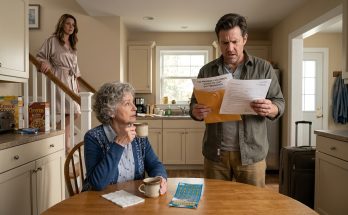
For several seconds, I thought I had misheard her.
“Owen?”
Paige nodded.
“He saw the photographs on my phone.”
“When?”
“June.”
My chair felt suddenly too hard beneath me.
“How?”
“He was using my phone to send himself a soccer video. The pictures were still open in my recent files.”
“And he understood them?”
“Enough.”
“He knew I won the lottery.”
“Yes.”
“He knew how much?”
“He saw eleven million.”
I stared at her.
“Did you tell him not to say anything?”
“No.”
“Then why didn’t he?”
Paige looked down.
“I asked him what he had seen. He said nothing.”
“That isn’t an answer.”
“I panicked. I told him the documents were private and that he shouldn’t have opened them.”
“They were private because you stole them.”
“I know.”
“You made him responsible for protecting your theft.”
Her eyes filled.
“Yes.”
Anger shot through me.
I stood.
“This conversation is over.”
“Evelyn—”
“Leave.”
“Please.”
“You involved my grandson in an adult secret created by your decision to invade my privacy.”
“I know.”
“Do not keep saying you know as though knowledge repairs it.”
She flinched.
I did not care.
At least not in that moment.
“I never asked him to lie to you.”
“You did not have to.”
“I know.”
“There it is again.”
She closed her eyes.
I walked to the door.
“Go home.”
Paige stood.
Before leaving, she said, “You should ask him why he stayed quiet.”
I almost shut the door.
“What does that mean?”
“He wasn’t protecting me.”
I stared at her.
“Then who?”
“You.”
She left.
I remained beside the closed door.
My first impulse was to call Graham.
I stopped myself.
Owen had already been placed in the middle of too many adults.
I would not turn him into evidence.
Instead, I called Martin.
Not because this was a legal problem.
Because I needed someone who would not tell me what I wanted to hear.
He listened.
Then said, “Do nothing for one hour.”
“That is useless advice.”
“It is excellent advice.”
“I want to speak with Owen.”
“Then speak with him when you can listen instead of interrogate.”
I hated him a little.
Which usually meant he was right.
I took my coat and walked.
The neighborhood road curved past bare trees and narrow yards.
I walked farther than usual.
By the time I returned, anger had not vanished, but it had lost its sharp edges.
Graham called shortly after noon.
“Paige said the meeting went badly.”
“Yes.”
“She told me about Owen.”
“You didn’t know?”
“No.”
“I need to speak with him.”
“I understand.”
“Not today.”
A pause.
“Okay.”
“I want him to choose when.”
“Okay.”
“And I do not want you questioning him first.”
“I won’t.”
“Promise me.”
“I promise.”
The speed of his answer eased something inside me.
That evening, Owen texted.
Grandma can I come tomorrow
I stared at the message.
Yes.
Dad can drop me at 10
That’s fine.
A minute later:
Please don’t be mad
My heart broke.
I typed slowly.
I’m not angry with you.
Three dots appeared.
Disappeared.
Appeared again.
Okay.
The next morning, Graham brought him.
Owen stepped out carrying his backpack though he was not staying overnight.
Graham approached the porch.
“I’ll be back at noon.”
“Make it one.”
He looked at Owen.
“Okay.”
Then he left.
My grandson stood in the kitchen with his hands in his sweatshirt pocket.
He was tall enough now that I had to tilt my head slightly to look at him.
“Hot chocolate?”
He nodded.
I made two cups.
We sat.
Owen stared at the marshmallows.
“Mom told you.”
“Yes.”
“I didn’t mean to see it.”
“I know.”
“She left her phone open.”
“I know.”
“I wasn’t snooping.”
“I believe you.”
His shoulders relaxed slightly.
“Did she tell you what you saw?”
“The lottery thing. And something about money for me and Chloe.”
“The trust draft.”
“Yeah.”
“Did you read it?”
“Not really. I just saw our names.”
He looked miserable.
“I thought maybe you were dying.”
The statement stunned me.
“What?”
“It said trust and beneficiary and stuff. I thought people only did that when they were sick.”
“Oh, Owen.”
“I got scared.”
“Why didn’t you ask me?”
“I was going to.”
He rubbed his thumb against the mug.
“Then Mom told me you didn’t know she had the pictures.”
Understanding began to form.
“So you realized she had opened my things.”
“Yes.”
“And?”
“I thought if I told you, Mom would get in trouble.”
“That was not your responsibility.”
“I know.”
“Did you?”
He looked down.
“No.”
I waited.
He whispered, “Then Pine Harbor happened.”
I stayed very still.
“Go on.”
“Dad and Mom kept talking about your room.”
“My room?”
“Yeah.”
“They talked in front of you?”
“They thought I had headphones on.”
A cold feeling entered my chest.
“What did they say?”
“Dad said you might be happier somewhere with people your age. Mom said it would make everything easier.”
“Easier how?”
“For space. Rides. Stuff.”
He wiped his nose with his sleeve.
“Then Mom said something like, if you really hated it, you could afford another place.”
There it was.
Confirmation.
Paige had known exactly what she was doing.
“What did your father say?”
“He asked what she meant.”
My breath caught.
“Graham didn’t know?”
“No.”
“He never knew about the lottery?”
“Not then.”
“What did Paige say?”
“That you probably had more savings than Dad thought.”
I closed my eyes briefly.
She had given him part of the truth.
Enough to justify her logic.
Not enough to expose her violation.
Owen continued.
“I thought maybe you didn’t tell anyone because you wanted to know if we loved you when you weren’t rich.”
My eyes opened.
“What made you think that?”
“Movies.”
Despite everything, I almost smiled.
“And did you think that was what I was doing?”
“At first.”
“Then?”
He looked toward the yellow wall.
“Then I remembered stuff.”
“What stuff?”
“You always paid for my cleats when Dad said we should wait until payday.”
“I helped occasionally.”
“You bought Chloe’s science camp.”
“That was a birthday gift.”
“You gave Dad money when his car broke.”
I had forgotten that.
“You always did stuff.”
He looked directly at me.
“So I thought maybe you weren’t hiding money to test us.”
“What did you think?”
“That you were scared.”
The answer reached a place nobody else had touched.
I swallowed.
“Scared of what?”
“Us knowing.”
I could not speak.
He continued, embarrassed now.
“I don’t know. It sounds stupid.”
“No.”
“I thought maybe if people knew, they’d act weird.”
“That was part of it.”
His eyes widened.
“I was right?”
“Yes.”
“Then when Mom showed you Pine Harbor, I wanted to tell Dad.”
“Why didn’t you?”
“Because if I told, I’d have to say how I knew.”
“You could have told me.”
“I almost did.”
“When?”
“The day we made grilled cheese.”
I remembered.
He had been at school that day.
No.
That was Chloe.
I corrected myself silently.
“When else?”
“Your birthday after dinner.”
“My birthday?”
“Not your real birthday. The lunch at school for grandparents.”
Months earlier, Owen’s school had hosted a family day. I had attended alone because Graham and Paige were working.
“I remember.”
“You asked if I was okay.”
“Yes.”
“I wanted to say something.”
“Why didn’t you?”
His face crumpled slightly.
“Because you looked happy.”
I stared.
“You were sitting outside with coffee and talking to that other grandma. You looked like you had friends and stuff.”
I smiled sadly.
“I did.”
“And I thought if you wanted us to know, you’d tell.”
That simple reasoning carried more respect for my choices than most adults around me had shown.
I reached across the table.
“Owen, listen to me.”
He looked up.
“You should never have been carrying that secret.”
“I know.”
“No. I need you to really hear me. What your mother did was an adult mistake. What I did by hiding the money was an adult decision. What your father did with Pine Harbor was an adult mistake. None of those things were yours to manage.”
He nodded, tears gathering.
“You do not protect this family by keeping dangerous or frightening secrets.”
“It wasn’t dangerous.”
“You were frightened.”
He looked down.
“That counts.”
A tear fell onto his sleeve.
I moved around the table and hugged him.
At fourteen, he had become awkward about affection.
This time, he held me hard.
“I’m sorry.”
“You have nothing to apologize for.”
“But I knew.”
“You were a child trying to avoid hurting people you loved.”
“I’m not a child.”
“You are when this is the alternative.”
He laughed into my shoulder.
When he pulled away, I handed him a napkin.
“You still wipe your nose on your sleeve.”
“That doesn’t prove anything.”
“It proves several things.”
He smiled.
The tension eased.
At one o’clock, Graham returned.
He stayed in the car until Owen came outside.
Owen hugged me again.
Then he paused.
“Grandma?”
“Yes?”
“Are you dying?”
The question was so sincere that I almost laughed.
“No.”
“Good.”
“Very much not, as far as I know.”
“Okay.”
He went to the car.
Graham approached.
“Did it go all right?”
“Yes.”
“Can I ask what he said?”
“No.”
He nodded.
“That’s fair.”
“If Owen wants to tell you, he will.”
“Okay.”
I studied my son.
“He protected me better than any of us protected him.”
Graham’s face changed.
“I know.”
“No. You know now.”
He closed his eyes.
“You’re right.”
Then he walked back to the car.
That afternoon, Paige telephoned.
I considered ignoring it.
I answered.
“How is he?” she asked.
“Better.”
“Does he hate me?”
“I won’t answer for him.”
She breathed in.
“Fair.”
“I am angry with you.”
“I know.”
“I am not ready to forgive you.”
“I know.”
“And you will never again involve those children in my finances.”
“I won’t.”
“You will never ask them what happens in my house.”
“I won’t.”
“You will never use them to find out whether I changed my will, spent money, bought property or said anything about you.”
“I won’t.”
Her voice shook.
“I promise.”
I sat at the table.
“One more thing.”
“Anything.”
“No. Not anything.”
She went quiet.
“I will not be giving you or Graham access to the trusts.”
“I understand.”
“The children receive what those documents allow when they reach the appropriate ages.”
“Okay.”
“You may receive information needed for tuition administration when the time comes. Nothing more.”
“Okay.”
I waited for resistance.
None came.
Then Paige said, “I’m sorry I called you selfish.”
“You never said that to me.”
“I wrote that I thought it.”
“Yes.”
“I did.”
“I know.”
“I was angry because you had enough money to fix problems I was tired of carrying.”
“That does not make the problems mine.”
“No.”
She sounded exhausted.
“I understand that now.”
I was not sure I believed her.
But I believed she understood the sentence.
That was a beginning.
Weeks passed.
The children settled into the rental.
Graham and Paige began counseling.
He did not share details.
I did not ask.
That restraint became its own strange exercise.
Martin helped me update security around every account.
I made no major change to the will.
Not yet.
Then January first arrived.
The day Graham and Paige had once selected for my move to Pine Harbor.
Instead, I woke in my cottage.
I made coffee.
I stood beside the yellow wall.
Outside, frost covered the garden.
At eleven, a car pulled into the drive.
Graham, Paige, Owen and Chloe stepped out together.
I had invited the children for lunch.
I had not invited their parents.
Graham held up both hands from the walkway.
“Before you panic, we’re only dropping them off.”
Paige stayed near the car.
Then she called, “Evelyn?”
I waited.
She walked toward the porch.
Not all the way.
Just close enough to speak without raising her voice.
“I wanted to tell you something.”
“All right.”
“We got the Pine Harbor deposit back.”
“I’m glad.”
“I donated it.”
I frowned.
“To where?”
“A local program that helps seniors stay in their homes.”
For several seconds, I did not know what to say.
“That was your money.”
“Yes.”
“You didn’t have to do that.”
“I know.”
There was no performance in her voice.
No invitation for praise.
She turned back toward the car.
Then Graham said, “Wait.”
He opened the trunk.
Inside stood a large cardboard box.
“What is that?” I asked.
He carried it toward me.
On the side, in black marker, someone had written:
MOM’S STUFF – ASK BEFORE MOVING
I laughed before I could stop myself.
“What’s inside?”
“Things from the old house we realized belonged to you.”
“There shouldn’t be much.”
“There’s more than we thought.”
He set the box on the porch.
Paige said, “We went through everything together.”
“Thank you.”
The children ran inside.
Graham and Paige returned to the car.
I carried the box into the living room.
Inside were old cookbooks.
A scarf.
Two framed photographs.
A ceramic bowl.
Thomas’s screwdriver set.
At the bottom was a thin envelope.
No writing on the front.
I opened it.
Inside was a bank statement.
Old.
Very old.
Thomas’s name appeared at the top.
So did another name.
Not mine.
I stared at it.
A joint investment account opened sixteen years before his death.
The second account holder was Graham Mercer.
The balance on the final line was large enough to make my hands shake.
Nearly nine hundred thousand dollars.
I read the date again.
The statement had been issued only three months before Thomas died.
Yet that account had never appeared in the estate documents Martin handled.
Never appeared in the beneficiary paperwork.
Never appeared in any conversation Thomas had with me.
I sat down.
For months, Paige had searched for hidden money that did not exist.
Now, inside a box none of us had considered important, I was holding proof that at least one hidden account had existed after all.
And according to the statement, my husband and my son had owned it together.
Click here to continue reading: PART 9: The Forgotten Account Changed What We Thought Thomas Had Left Behind and Forced Graham to Confront a Secret He Swore Was Never His
A Two-Dollar Birthday Joke Left Me Holding a Fortune While My Family Went Back to Dinner Without Looking Twice
Part 8 of 44