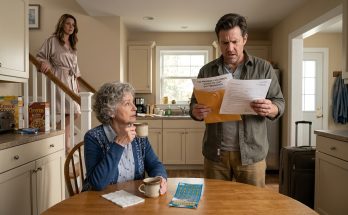
Owen asked for ten thousand dollars on a Tuesday.
Not casually.
Not cleverly.
He called and said, “Grandma, can I come over by myself?”
That alone told me something serious was happening.
Graham dropped him off at four.
He did not come inside.
Owen carried his backpack and looked nervous.
“Hot chocolate?”
“No thanks.”
That was worse.
We sat at the kitchen table.
He kept his hands folded.
Finally he said, “I need money.”
I did not react.
“How much?”
“Ten thousand.”
A year earlier, I might have asked why before anything else.
Now I asked, “Do you want advice, money, or help figuring something out?”
He blinked.
“I don’t know.”
“That’s fine.”
He swallowed.
“It’s for school.”
“Tuition?”
“No.”
“Then tell me.”
Owen and two friends had entered a youth engineering competition.
They designed a low-cost water-monitoring device for local streams.
Their prototype worked.
Barely.
A regional competition offered scholarships and internships.
But to build the improved version they imagined, they needed equipment and materials.
“Ten thousand?” I asked.
“That’s the full budget.”
“Who made it?”
“Ben’s brother helped.”
“How old is Ben’s brother?”
“Nineteen.”
I smiled.
“Promising.”
Owen flushed.
“We looked up prices.”
“Does your school sponsor projects?”
“Some.”
“Have you asked?”
“No.”
“Why?”
He looked embarrassed.
“Because I knew you could pay.”
There it was.
He said it without entitlement.
Which made it more important.
I leaned back.
“Do your parents know you’re asking me?”
“No.”
“Why not?”
“Dad will make it complicated.”
I almost laughed.
“Meaning?”
“He’ll want spreadsheets.”
“That sounds likely.”
“And Mom will say ask the school first.”
“That also sounds likely.”
“Grandma.”
I waited.
“Ten thousand is nothing to you.”
The sentence landed differently coming from him.
Not cruel.
Mathematically accurate.
Still dangerous.
“You’re right.”
He looked relieved too quickly.
“But that doesn’t answer whether I should give it.”
His shoulders fell.
“Why not?”
“Because the size of my bank account does not determine whether your idea is good.”
He frowned.
“It is good.”
“Maybe.”
“You don’t believe me?”
“I believe you believe in it.”
“That’s not the same.”
“No.”
He looked hurt.
I remembered Graham standing in my cottage asking whether I believed him.
Money had a way of making trust feel measurable.
I reached across the table.
“I am not rejecting you.”
“Feels like it.”
“I know.”
He looked toward the window.
“What would you do if you didn’t have a rich grandmother?”
The question irritated him.
“That’s not fair.”
“Why?”
“Because I do.”
I smiled slightly.
“Good point.”
He noticed.
“So?”
“Then having me available is part of reality. But it shouldn’t erase every other step.”
He sighed.
“What do I have to do?”
“That sounds like you’re trying to unlock a reward.”
He groaned.
“Then what do you want me to do?”
“Tell me what you want the money to accomplish.”
He opened his backpack.
There were drawings.
Circuit diagrams.
Costs.
A schedule.
More preparation than I expected.
He explained everything.
Not perfectly.
But seriously.
The ten thousand included tools the school already owned.
Travel costs the competition might cover.
A contingency line of two thousand “in case stuff goes wrong.”
I pointed.
“What stuff?”
“I don’t know.”
“Then that is not a budget.”
He smiled reluctantly.
We spent an hour cutting assumptions.
By the end, the real need was closer to four thousand.
“See?” I said.
“You enjoyed that way too much.”
“I did.”
“Are you giving us four thousand?”
“Not yet.”
He groaned loudly.
“What now?”
“School.”
“Grandma.”
“Ask what resources they provide.”
“They’ll say no.”
“You don’t know.”
“I know my school.”
“You sound like every adult in this family before being proven wrong.”
He glared.
Then laughed.
“Fine.”
Two days later, he called.
“The school has three thousand.”
I smiled.
“For your project?”
“For teams that qualify.”
“And?”
“We qualify.”
“Excellent.”
“They also have the sensor kit we were going to buy.”
“How much does that save?”
“Eight hundred.”
“So what do you actually need?”
“Maybe twelve hundred.”
“Ask again.”
“Grandma.”
“What?”
“There is no one else.”
“Are you sure?”
He was quiet.
“The competition has mini-grants.”
There it was.
“How much?”
“One thousand.”
“Apply.”
He groaned.
“Applications are annoying.”
“Yes.”
“Dad would love this.”
“Probably.”
A week later, Owen received the mini-grant.
The team’s remaining need was two hundred and seventy dollars.
He called me.
“So are you finally going to help?”
“Yes.”
“With two hundred seventy?”
“Yes.”
“You made me do all that for two hundred seventy?”
“No.”
“What?”
“You did all that for your project.”
Silence.
Then he said, “That sounds like something Grandpa would say.”
I winced theatrically.
“Take it back.”
He laughed.
I transferred three hundred dollars to Graham for approved project expenses.
Not ten thousand.
Owen’s team built the prototype.
They won second place regionally.
No grand scholarship.
No national competition.
But one of the judges connected them with a local environmental lab.
Owen began volunteering there twice a month.
Months later, he told me that opportunity mattered more than winning.
I did not remind him that ten thousand dollars would not have bought it.
Growth sometimes deserved privacy.
Graham, of course, learned the whole story.
Owen told him.
He called me.
“You made him apply for a grant?”
“Yes.”
“I’m proud of you.”
“Be careful.”
“I mean it.”
“You would have done worse.”
“I would have made the spreadsheet before asking what the device did.”
“That is true.”
He laughed.
Then he became serious.
“Thank you for not just giving him the money.”
I looked toward the Open Hand documents.
“That was harder than giving it.”
“I know.”
And I did.
Money had always made yes easy.
No required confidence.
Ask first required patience.
Helping without taking over required discipline.
A few days later, Chloe created her own crisis.
She announced that she needed eighty dollars for a class trip and had forgotten to tell her parents until the deadline.
Graham said no.
Not because they lacked eighty dollars.
Because she had hidden the form for three weeks.
She called me.
“Grandma, Dad is being unfair.”
I listened.
Then asked, “What do you want from me?”
“I need eighty dollars.”
“Do your parents know you called?”
Silence.
“Chloe.”
“No.”
I closed my eyes.
The temptation to rescue her was almost physical.
Eighty dollars.
Nothing.
One click.
Problem solved.
Also lesson destroyed.
“I’m not giving it to you.”
“That’s so unfair.”
“Probably.”
“You have millions!”
Apparently both grandchildren had learned the same argument.
“I do.”
“So why not?”
“Because this isn’t a money problem.”
“It literally is.”
“No. It’s a deadline problem.”
She became quiet.
I continued.
“If your parents said no, you cannot come to me secretly for yes.”
“But Mom might say yes.”
“Then ask your mother.”
“Dad already said no.”
“Then they should discuss it.”
“You’re supposed to be the fun grandma.”
“I was not informed.”
She hung up.
Five minutes later, Graham called.
“Did Chloe ask you for money?”
“Yes.”
“You said no?”
“Yes.”
A pause.
“Who are you and what have you done with my mother?”
“Very funny.”
He told me the school allowed late payment with a small penalty.
Chloe had known.
She hid that too.
Paige eventually decided Chloe could attend if she paid the penalty from her allowance and completed the missing permission paperwork herself.
That solution had never occurred to Graham.
He had wanted a hard no.
Paige wanted a conditional yes.
They discussed it.
Imagine that.
Chloe went on the trip.
She remained furious for three days.
Then recovered.
The world did not end.
My understanding of generosity changed further.
Sometimes love meant paying.
Sometimes not paying.
Sometimes paying only after someone had done their part.
Sometimes money was irrelevant.
The challenge was refusing to create one rule for every person simply because rules felt safer.
Martin hated this philosophy.
“Discretion creates inconsistency.”
“People are inconsistent.”
“Institutions need predictable standards.”
“Then help me build standards that still ask questions.”
We spent weeks revising the Open Hand Fund structure.
Not because it needed complexity.
Because I wanted it to survive me without becoming another Thomas maze.
The board would eventually include three people.
One family member.
One independent professional.
One community representative.
Decisions required at least two votes.
Potential recipients had to be consulted.
Emergency exceptions were possible.
Conflicts of interest had to be disclosed.
No board member could approve money for themselves.
“No secret managers?” I asked.
“No.”
“No handwritten amendments in fishing jackets?”
“No.”
“No instruction to wait until someone is emotionally ready?”
“Absolutely not.”
“Excellent.”
Melissa agreed to serve only if she could step down at any time.
I agreed.
Martin suggested a nonprofit administrator named Dana Choi as the independent professional.
I met her.
She asked more questions than I did.
That impressed me.
The community position remained open.
Then Paul Bennett surprised us.
He called after hearing about the fund through a mutual acquaintance.
“You’re building a charity?”
“Something like that.”
“You need someone who distrusts Mercers?”
I laughed.
“Apparently.”
“I’m available.”
At first, I thought he was joking.
He was not.
Paul had served on a local trade association board for years.
He understood small-business grants.
He understood what public humiliation could cost.
More importantly, he disagreed with me easily.
I invited him to meet Melissa and Dana.
Within twenty minutes, they argued over whether the fund should ever pay personal debt.
I watched happily.
Martin looked concerned.
“This pleases you?”
“Very much.”
“Why?”
“They’re disagreeing.”
“That usually complicates governance.”
“Exactly.”
No one would become Leonard easily in a room where disagreement was expected.
Paul eventually accepted the community seat.
The Open Hand Fund moved from my private repair project into something more durable.
That required me to surrender control.
I hated it.
Which was exactly why it was probably healthy.
One night, I told Ruth.
“You appointed Paul?”
“Yes.”
“The man Thomas wrongly fired?”
“Yes.”
“That is poetic.”
“It was not chosen for poetry.”
“Everything in your life has become suspiciously symbolic.”
“I blame the lottery ticket.”
Ruth drank tea.
“How much money remains outside all these funds?”
“Enough.”
“That is not a number.”
“Correct.”
“What are you going to do with it?”
“Live.”
“Extravagantly?”
“I bought expensive olive oil yesterday.”
“Scandalous.”
I laughed.
Then Ruth became serious.
“You know you’re allowed to spend money on yourself.”
“I know.”
“Do you?”
“Yes.”
“What have you bought that you didn’t need?”
I thought.
The cottage.
Maybe that was need.
A new coat.
Needed.
A better mattress.
Definitely needed.
“Nothing.”
“Exactly.”
“What should I buy?”
Ruth sighed.
“You missed the point.”
“I’m asking.”
“Then buy something you want.”
That was harder than expected.
For days, I could not think of anything.
Then I remembered Thomas and I once planned to take a train across Canada.
We postponed it.
Daniel needed help.
Then Graham had a new baby.
Then Thomas’s health changed.
Eventually the dream became a story we told instead of a trip we took.
I researched it.
Private sleeper cabin.
Long route.
Mountains.
Meals.
No one needed me during those days.
The price would once have seemed outrageous.
Now it was easily affordable.
Still, I hesitated.
I called Melissa.
“Do you like trains?”
“Why?”
“I might take a trip.”
“Take it.”
“I didn’t ask whether I should.”
“You were about to.”
She knew me too well.
“Would you want to come?”
A pause.
“Is this a gift?”
“Yes.”
“What strings?”
“None.”
“Do I have to talk about Dad?”
“No.”
“Do I have to admire scenery with you?”
“Occasionally.”
“Can I pay part?”
“If you want.”
She thought.
“I want to pay for my own flight.”
“Fine.”
“And you cover the train?”
“Yes.”
“Then yes.”
We booked it for autumn.
My first major pleasure purchase after becoming wealthy was not jewelry.
Not a car.
Not luxury furniture.
A train trip with the niece I had lost for years.
That felt extravagant enough.
Meanwhile, Paige’s job changed her.
Not dramatically.
Gradually.
She came home tired from problems that belonged outside the family.
She earned money that entered her own account.
She complained about a coworker.
She made friends.
Graham adjusted to not knowing every detail of her schedule.
He occasionally failed.
One evening, Paige called me laughing.
“He put my shifts on the shared calendar without asking.”
“What did you do?”
“Deleted them.”
I laughed.
“What did he do?”
“Apologized.”
“That sounds almost disappointingly healthy.”
“I know.”
Then she added, “He asked whether I wanted them on the calendar.”
“And?”
“I said some.”
Progress.
Messy.
Ordinary.
The family was no longer orbiting my money constantly.
That might have been the greatest change.
Then, in early spring, I received a certified letter.
I assumed legal paperwork.
Instead, it came from Pine Harbor Senior Living.
They were returning records connected to my never-completed admission.
Medical forms.
Deposit receipt.
Tour notes.
One page had been written by staff after speaking with Graham and Paige.
Prospective resident may resist transition. Family believes she has increasing difficulty managing independently.
I stared.
Increasing difficulty.
Managing independently.
I had never had such difficulty.
No doctor had diagnosed it.
No incident supported it.
The phrase sat there in black ink.
I called Graham.
“Did you tell Pine Harbor I had difficulty managing independently?”
Silence.
“Graham?”
“I don’t remember.”
“That is not good enough.”
His voice tightened.
“What exactly does it say?”
I read it.
He inhaled sharply.
“I might have said you were struggling after Dad.”
“That was years earlier.”
“I know.”
“Did you tell them I had cognitive problems?”
“No.”
“Memory problems?”
“No.”
“Could they have interpreted something?”
“Maybe.”
I felt anger returning.
Old.
Sharp.
But this time, I did not let it choose the next move.
“Come over tonight.”
He arrived with Paige.
I had not invited her.
“She was part of those conversations,” he said.
Fair.
We sat at my table.
The Pine Harbor paper lay between us.
Paige read it.
Her face went pale.
“I think I know.”
I looked at her.
“What?”
“When I toured, they asked why you weren’t there.”
“And?”
“I said you were resistant.”
“That is true.”
“I also said we handled most things for you.”
My stomach sank.
“What things?”
“Transportation. Shopping. Appointments.”
“You did not.”
“I know.”
“Why would you say that?”
“Because I wanted them to believe the arrangement made sense.”
There it was.
Not malice.
Narrative.
She had shaped facts to justify a decision.
Graham looked horrified.
“Paige.”
“You did too.”
He turned.
“What?”
“You told them Mom had become dependent on us.”
Graham’s face changed.
Memory.
“I said she depended on us after Dad died.”
“You didn’t specify when.”
He covered his face.
I sat very still.
For months, I had focused on Pine Harbor as a symbol of being pushed aside.
Now I understood another danger.
They had begun creating a written record describing me as less capable than I was.
Not intentionally preparing to control me.
But intention would not have changed what that record could have become.
“Do you understand how serious this is?”
“Yes,” Graham said.
Paige whispered, “Yes.”
“If I had become ill later, those notes could have been used as evidence that I couldn’t manage myself.”
Neither answered.
“I need this corrected.”
Graham nodded immediately.
“How?”
“We contact Pine Harbor together.”
Paige said, “I’ll tell them I gave inaccurate information.”
I looked at her.
“Not inaccurate.”
She frowned.
“What?”
“Exaggerated. Contextless. Say exactly what happened.”
She nodded.
“Yes.”
Graham added, “I’ll do the same.”
We drafted a letter.
Not Martin.
Us.
Graham and Paige both signed statements clarifying that I had no known cognitive impairment, managed my own finances, transportation and decisions, and had never consented to admission.
Pine Harbor added the correction to the file and sent written confirmation.
Nothing dramatic happened.
But I kept a copy.
Not because I expected conflict.
Because agency sometimes depended on records.
That discovery led to another decision.
I created advance medical directives.
Power of attorney.
Clear instructions.
Not because I feared Graham.
Because I refused to leave ambiguity where someone else might feel forced to guess.
I named Graham as one healthcare proxy.
Melissa as alternate.
For finances, I chose Martin’s firm with Melissa as personal oversight.
Graham read the documents.
“You don’t trust me with money.”
“I trust you enough to tell you clearly.”
He absorbed that.
Then nodded.
“That’s fair.”
I touched his hand.
“I trust you as my son.”
His eyes filled.
“That matters more.”
Good.
It should.
When all the paperwork was complete, Martin handed me the final binder.
“Now if something happens, fewer people will need to interpret your wishes.”
“Exactly.”
He smiled.
“You know what you’ve done?”
“What?”
“You created structure.”
“That sounds ominous.”
“Without secrecy.”
I laughed.
“Thomas would be offended.”
“Thomas would be relieved.”
Maybe.
That night, I placed the binder in my desk.
Then I wrote a simple note for Graham, Paige, Owen, Chloe and Melissa.
Not a secret letter to be revealed at the perfect dramatic moment.
Just a note telling them where the documents were.
I emailed everyone.
No timing.
No mystery.
No emotional test.
Five minutes later, Owen replied:
why am i on this email
I laughed.
Then Chloe:
Does this mean I get the yellow kitchen someday
Graham:
Absolutely not.
Paige:
Your grandmother is alive.
Melissa:
I call the train tickets.
The messages kept coming.
Ridiculous.
Ordinary.
Alive.
I sat in the middle of my cottage reading them and realized that transparency, for all its discomfort, had one unexpected advantage.
It could be funny.
Click here to continue reading: PART 20: A Sudden Emergency Tested Every Promise We Had Made, and Graham Had to Choose Whether to Respect My Wishes When Fear Told Him Not To
A Two-Dollar Birthday Joke Left Me Holding a Fortune While My Family Went Back to Dinner Without Looking Twice
Part 19 of 44