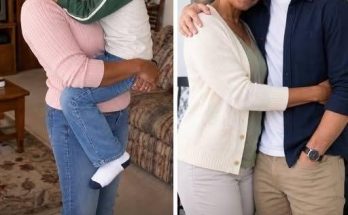
Dad came home on a Thursday.
Not home to the old house.
That had been sold.
Not home to Mom.
They were still writing, still talking, still undecided about what their marriage meant after everything.
Not home to Hale Precision.
Rachel had been CEO for more than a year by then, and Dad no longer had an office, a title, or a badge.
He came home to a small furnished rental arranged through his reentry plan.
Two bedrooms.
Beige carpet.
A narrow balcony overlooking a parking lot.
The kind of place Dad once would have dismissed as temporary.
Now temporary was honest.
Grandma asked whether we should meet him there.
I said no.
Rachel said no.
Mom said no.
Not because nobody wanted to see him.
Because showing up as a group felt too much like staging a restoration ceremony.
Dad had served his sentence.
That did not automatically restore his place in anyone’s life.
So he arrived alone.
His attorney drove him.
A case manager met him.
The family did not.
That evening, he called me.
“I’m out.”
“I know.”
There was a pause.
“This feels strange.”
“What does?”
“Everything.”
I could hear traffic through his open window.
“Do you have food?”
“Yes.”
“Did they set up your medication?”
“Yes.”
“Phone?”
“Working.”
“Then you’re okay for tonight.”
“That sounds practical.”
“You asked.”
“I didn’t.”
“You were about to.”
He laughed softly.
That sound was familiar.
More familiar than the man.
“Can I see Lucy?”
There it was.
Not a demand.
A question.
“I’ll ask her.”
“Okay.”
I found Lucy at her desk working on geometry.
She had grown another inch while Dad was away.
Thirteen now.
Not eleven.
The cello stood in the corner beside a newer music stand.
“Grandpa wants to know if you want to see him.”
She kept looking at the page.
“When?”
“He didn’t ask for a specific day.”
“That’s good.”
“Why?”
“He used to ask things like the answer was already yes.”
That was true.
“What do you want?”
Lucy set down her pencil.
“I think I want to.”
“Okay.”
“But not at his place.”
“Okay.”
“And not Grandma’s studio.”
“Why not?”
“That place has too much family stuff.”
I smiled.
“Fair.”
“And not dinner.”
“Why?”
“Dinner makes people stay too long.”
That made sense too.
“So what?”
She thought.
“Coffee shop.”
“You don’t drink coffee.”
“Hot chocolate shop, then.”
“There is no hot chocolate shop.”
“Cafe.”
“Better.”
“And you stay.”
“I can.”
She shook her head.
“No. Nearby.”
I understood.
Present enough to feel safe.
Far enough to let the conversation belong to them.
I told Dad.
He accepted every condition.
No complaint.
No suggestion that he deserved privacy.
That mattered.
We met Saturday afternoon at a cafe near the park.
Dad arrived ten minutes early.
He looked thinner.
His hair had gone mostly gray.
Not prison gray.
Time gray.
He stood when Lucy entered.
Then stopped himself from approaching.
“Hi.”
“Hi.”
They sat opposite each other.
I chose a table across the room.
Close enough to see them.
Too far to hear unless voices rose.
They did not.
Dad spoke first.
Then listened.
Lucy talked longer.
At one point he wiped his eyes.
At another, she laughed.
That surprised me.
After forty minutes, she stood.
Dad stood too.
He did not reach for her.
Lucy paused.
Then hugged him.
Not long.
Not reluctant.
Intentional.
When she came back to my table, I asked nothing until we were outside.
“How was it?”
“Fine.”
“Only fine?”
She gave me a look.
“Do you want a report?”
“No.”
“Good.”
We walked toward the car.
Then she said, “He apologized differently.”
“How?”
“He didn’t explain.”
That was a bigger change than it sounded.
“What did you talk about?”
“The piano book.”
“Anything else?”
“School.”
“The cello?”
“A little.”
“And?”
She shrugged.
“I told him I don’t want him asking how much anything costs when I tell him about music.”
I looked at her.
“He does that?”
“He used to.”
“Did he agree?”
“Yes.”
Another boundary.
Small.
Clear.
Dad respected it.
For now.
A week later, Grandma agreed to see him.
Not at the studio.
At her house.
Her actual current home.
A modest condo she had moved into after selling another property.
Dad looked surprised when I told him the address.
“You moved?”
“She did.”
“When?”
“Eight months ago.”
“Why didn’t anyone tell me?”
I waited.
He caught himself.
“Sorry.”
“You were informed of the things relevant to you.”
He nodded slowly.
That would have enraged him once.
Now he said, “Right.”
Grandma invited him for one hour.
He stayed fifty-three minutes.
I was not present.
Neither was Rachel.
Afterward, Grandma called me.
“He looks old.”
“So do you.”
“Rude.”
“What happened?”
“He apologized again.”
“And?”
“I told him apologies do not require repetition once the person has understood them.”
“That sounds like you.”
“He asked if I wanted the viola back in my home.”
“What did you say?”
“No.”
The viola had been recovered, authenticated, and returned to Grandma months earlier.
She kept it at the studio under documented ownership and secure conditions.
She no longer played much.
Arthritis.
But she visited it.
“Why not bring it home?”
“Because I do not want to live beside evidence of what he did.”
That made sense.
“Did that hurt him?”
“Yes.”
“Do you feel bad?”
“Yes.”
“Did you change your answer?”
“No.”
That mattered too.
Accountability without cruelty did not mean removing every painful boundary.
Dad began working.
Not at Hale Precision.
Not through a family company.
A nonprofit manufacturing training program hired him part-time to teach operations planning.
When he told me, I laughed.
“What?”
“You teaching people about internal controls is ambitious.”
“I teach production scheduling.”
“Safer.”
“They made the same joke.”
“Good people.”
His income was modest.
He had financial restrictions.
Restitution continued.
His lifestyle changed dramatically.
For the first time in decades, he budgeted.
Actually budgeted.
Not moved assets.
Not borrowed.
Not redirected.
Budgeted.
He complained once about grocery prices.
I laughed for an unreasonable amount of time.
“I deserved that.”
“Yes.”
Rachel saw him later than the rest of us.
She avoided the meeting for months.
Not because she hated him.
Because her relationship with him had been the most entangled with approval.
Dad knew that.
He never pressed.
Then Hale Precision received an industry award for its employee ownership expansion.
Rachel’s photo appeared in a local business magazine.
Dad mailed her a handwritten note.
No advice.
No correction.
No mention that he built the company.
Just:
You earned this.
Rachel stared at the note for a long time.
Then called him.
Their first conversation lasted twelve minutes.
She did not tell me what they said.
Good.
We had finally learned not every family interaction needed committee review.
Mom’s relationship with Dad remained the most uncertain.
They met weekly.
Walks.
Coffee.
Sometimes dinner.
No one called it reconciliation.
Mom still lived in her apartment.
Dad remained in his rental.
They had not filed for divorce.
They had not moved back together.
When I asked Mom how she felt, she said, “I am trying to find out whether I like him without needing him.”
That sentence was more honest than anything she had said during my childhood.
Dad said something similar.
“I’m trying to talk to your mother without solving her life.”
“How’s that going?”
“Badly.”
I laughed.
“At least you know.”
He smiled.
“Apparently listening takes practice.”
Grandma’s studio changed too.
The charitable trust was formally established.
The first floor remained rehearsal space.
Upstairs rooms became classrooms.
A small archive room was built with fire protection and proper cataloging.
No hidden doors.
No false panels.
Lucy personally inspected.
“I approve.”
Grandma bowed.
“Thank you.”
A vending machine appeared beside the student lounge.
Lucy took full credit.
Grandma denied she had ever resisted.
She had.
A plaque near the entrance listed the studio’s mission.
Music should be practiced, shared, preserved, and passed forward without becoming a tool of control.
Grandma thought the last phrase was too specific.
I thought it was exactly specific enough.
Dad saw the plaque during his first visit.
He stood in front of it for a long time.
Then said, “Subtle.”
Lucy answered, “We considered putting your name under it.”
Dad laughed.
So did Grandma.
That was the first time the three of them laughed together after his release.
I watched from across the room.
Something shifted.
Not repaired entirely.
But alive.
Then Dad noticed the old piano.
The one from his childhood photograph.
He touched a key.
Out of tune.
“Still terrible.”
Lucy appeared beside him.
“You played this?”
“Yes.”
“Show me.”
He shook his head.
“I haven’t played in fifty years.”
“Perfect.”
“For what?”
“For being bad at something.”
Dad looked at her.
Then sat.
His hands hovered over the keys.
He played three notes.
Wrong.
Lucy burst out laughing.
Dad did too.
He tried again.
A simple scale.
Then part of an old exercise.
Grandma stood in the doorway.
Her face changed.
She had not heard him play since he was fourteen.
“Harold.”
He turned.
“What?”
“You remember.”
“Some.”
Lucy pulled up a chair.
“Again.”
Dad played.
Badly.
Slowly.
Without trying to impress anyone.
That may have been the most unfamiliar thing I had ever seen him do.
The room filled with imperfect music.
Grandma sat.
Lucy corrected his hand position.
Dad listened.
Actually listened.
For once, nobody cared what the instrument was worth.
No trust schedule.
No appraisal.
No transfer.
Just an old man at a piano and a teenager telling him his thumb was wrong.
Afterward, Dad asked whether he could volunteer at the studio.
Grandma said no.
Immediately.
Dad looked hurt.
Then nodded.
“Okay.”
That surprised Grandma.
I saw it.
She softened.
“Not yet.”
Dad looked at her.
“Okay.”
“Maybe later.”
He smiled faintly.
“Your decision.”
“Yes.”
Another boundary respected.
The next week, Grandma called me.
“I think he can help with chairs.”
“Chairs?”
“For recitals.”
“You denied a former CEO access to volunteer labor and then reconsidered him for chair placement?”
“Yes.”
“That seems appropriately humbling.”
“I thought so.”
Dad accepted.
No complaint.
At the first event, he unfolded sixty chairs.
Nobody gave him a microphone.
Nobody introduced him.
Nobody asked his opinion on finances.
He carried chairs.
Then stacked them afterward.
Lucy saw.
She smiled.
Not because he had been punished.
Because he had shown up where no power was available.
That mattered.
Then, three months after Dad’s release, a letter arrived from the federal restitution office.
One final account had been located.
Not Peter’s.
Not Michael’s.
Dad’s.
An investment account he had genuinely forgotten.
Established thirty-two years earlier.
Value: $412,000.
Dad was legally entitled to a portion after restitution claims.
He called me.
“I want to give it to the studio.”
“No.”
He went quiet.
“Why?”
“Because you just got released and immediately found money and decided to redirect it somewhere emotionally meaningful.”
He laughed weakly.
“That sounds bad when you say it.”
“It sounds familiar.”
“So what should I do?”
I almost answered.
Then stopped.
“What does your financial supervisor say?”
Dad laughed harder.
“Right.”
Ask.
Not decide.
The supervisor advised that restitution should be completed first.
Taxes reserved.
Emergency savings established.
Only then could Dad consider charitable gifts.
He followed the plan.
Months later, after all required payments were made, a smaller amount remained.
Dad asked Grandma if the studio accepted donations.
“Yes.”
“Any amount?”
“Yes.”
“Can it be anonymous?”
“Yes.”
He donated.
No plaque.
No named room.
No influence.
Lucy eventually learned.
“How much?”
Dad smiled.
“I thought you didn’t want me asking about prices.”
“That’s when I tell you about music.”
“Fair.”
He told her.
She shrugged.
“That’s nice.”
Dad laughed.
All those years believing money could guarantee emotional response.
Now he gave it.
Lucy said that’s nice.
And moved on.
He looked almost relieved.
Click here to continue reading: PART 38: Mom Chose Whether to Rebuild Her Marriage, and Her Decision Proved That Forgiveness Could Exist Without Returning to the Old Life
My Daughter Opened the Empty Cello Case, and My Parents Gave Me an Answer I Could Barely Believe
Part 37 of 40