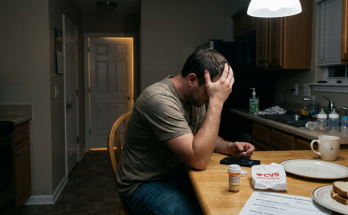
I slept badly and woke before sunrise with the uncomfortable certainty that my family had been discussing me while I slept.
The house looked exhausted after Christmas. Half-empty glasses stood beside the fireplace. A blanket had fallen onto the floor. The tree leaned slightly because somebody had bumped it during a late-night argument about music. Beyond the windows, fresh snow covered the terrace.
Megan was already awake.
She found me making coffee.
“You look terrible.”
“Thank you.”
“You’re welcome.”
She opened the refrigerator and stared inside. “Are we pretending last night didn’t happen?”
“That depends.”
“On?”
“Whether pretending works.”
“It never has.”
I handed her coffee.
My phone remained silent until 8:12.
Then Linda called.
Linda lived two houses from my parents and possessed the neighborhood intelligence network of a minor government. She remembered birthdays, divorces, roof replacements, graduations, illnesses, and which families had stopped speaking before the families themselves admitted it.
I answered cautiously.
“Merry Christmas, one day late.”
“Miranda, are you sitting down?”
I looked at Megan.
“She asked if I’m sitting down.”
Megan pulled out a chair.
I sat.
“What happened, Linda?”
“I spoke to your mother this morning.”
That immediately had my attention.
“About what?”
“Your house.”
I tightened my grip on the mug.
Linda continued. “I told her I’d seen the television program. I said the place looked beautiful.”
“And?”
“She didn’t understand what I meant.”
My pulse quickened.
“What exactly did she say?”
“She asked me which house I was talking about.”
I stared toward the living room.
Linda sounded embarrassed now, as though she had accidentally stepped through a door nobody wanted opened.
“I told her yours.”
Silence stretched between us.
“What happened?”
“She thought I was mistaken.”
Of course she did.
“She asked whether I was certain that was your home. I told her half the neighborhood knew. Your company has been in the local business pages. People have seen photographs.”
I closed my eyes.
My parents lived less than two hours away.
Strangers knew more about my life than they did.
Linda lowered her voice. “Your mother started crying.”
The information gave me no satisfaction.
I had imagined moments like this in uglier years. Some public proof that would force my parents to realize I had not failed simply because my life had taken a form they never bothered to understand.
Now that it had happened, victory felt remarkably similar to grief.
“Did she say anything else?”
Linda hesitated.
That hesitation mattered.
“Tell me.”
“She said they thought you were struggling.”
The coffee suddenly tasted bitter.
“Struggling how?”
“With your company. Money. Everything.”
I looked around at the kitchen I had designed, the company Christmas cards stacked on the counter, the view beyond the windows.
“Why would they think that?”
“I assumed you knew.”
“Knew what?”
Another pause.
“Your sister has apparently been telling them that.”
I stopped moving.
Megan saw my face and put down her cup.
“What did Linda say?” she whispered.
I raised a finger.
“Linda, how long?”
“I don’t know.”
“Months?”
“I really don’t know.”
“Years?”
“I’m sorry.”
That answer was enough.
After we hung up, I remained at the table.
Megan sat opposite me.
“Tell me.”
“Brooke told them I was struggling.”
“With what?”
“My business.”
Megan actually laughed.
It was a short, incredulous sound.
“Holt Ridge employs thirty-seven people.”
“I know.”
“You turned down two projects this year because you didn’t have capacity.”
“I know.”
“You own—”
“I know.”
She stopped.
I looked at the Christmas tree.
“What I don’t know is why.”
Megan leaned back.
“You need to ask her.”
I had spent most of my life avoiding confrontations with Brooke because confrontations with Brooke never remained between two people. They spread. Mom intervened. Dad tried to calm everyone down. Brooke cried. By the end, the original disagreement vanished beneath accusations about tone, timing, childhood, and loyalty.
For once, none of that mattered.
I called her.
She answered after four rings.
“Hey.”
Her voice was so casual that it sharpened my suspicion.
“Why did you tell Mom and Dad I wasn’t having Christmas?”
Silence.
Then, “What?”
“You heard me.”
“I never said that.”
“Mom says you told them I was going away.”
“I said you might be busy.”
“That’s different.”
“You’re making this dramatic.”
I stood and walked toward the windows.
“No. I’m asking a simple question.”
“They decided to stay.”
“To help you buy groceries.”
“So?”
“You live eleven minutes from them.”
“What does that have to do with anything?”
“They could have helped you and still come here.”
Brooke exhaled loudly.
“You always do this.”
The phrase was so familiar that I nearly smiled.
“Do what?”
“Turn everything into some referendum on whether Mom and Dad love you.”
I watched snow slide from the roof.
“My graduation.”
“Oh, God.”
“My birthday.”
“Miranda.”
“The Holt Ridge award.”
“Are we seriously doing this?”
“No. We’re doing Christmas.”
“You’re thirty-five.”
“And?”
“Maybe stop acting like Mom and Dad choosing to help me is some childhood betrayal.”
I lowered my voice.
“Did you know about the television program?”
She went quiet.
That silence was different.
Not irritated.
Caught.
“Brooke.”
“I saw something online.”
“When?”
“A few days ago.”
“And you knew my house was being featured?”
“Yes.”
“Did you tell Mom and Dad?”
“No.”
“Why?”
“They didn’t ask.”
I almost admired the answer.
It was technically true in exactly the way people lie when they want to preserve deniability.
“Did you tell them I wasn’t having Christmas before or after you learned about the special?”
“Why does that matter?”
“Answer me.”
She did not.
I knew.
“After.”
“Miranda—”
“You knew.”
“So what?”
The words landed harder than a denial.
I sat down.
“Why didn’t you want them here?”
“I never said that.”
“Then explain.”
Brooke’s breathing changed.
For the first time, she sounded less angry than tired.
“You have everything.”
I frowned.
“What?”
“The business. That ridiculous house. People constantly telling you how impressive you are.”
“My house isn’t ridiculous.”
“That’s what you care about?”
“No. I’m trying to understand what any of this has to do with Christmas.”
“Every time you accomplish something, Mom looks at me differently.”
I said nothing.
Brooke continued.
“You don’t notice because you’re the one succeeding.”
“That isn’t my fault.”
“I didn’t say it was.”
“You’ve spent years telling them I’m failing.”
“I did not.”
“Linda says Mom thought my business was barely surviving.”
“Linda needs to mind her own business.”
“Did you tell them?”
Another pause.
“I said you were having a difficult time.”
“When?”
“Different times.”
“For years?”
“Stop interrogating me.”
My anger became strangely calm.
“Did you tell them I borrowed money from you?”
Silence.
I had not known enough to ask that question logically.
Something about her reaction told me I had hit something real.
“Brooke?”
“You’re insane.”
“You didn’t answer.”
“I’m hanging up.”
“Before you do, tell me one thing.”
“What?”
“Were you invited here for Christmas?”
“No.”
That surprised me.
“Yes, you were.”
“No, Miranda. I wasn’t.”
“Mom said she told you.”
“Well, she didn’t.”
I stared at Megan.
Megan mouthed, What?
I shook my head.
Brooke continued. “Maybe your perfect Christmas was meant for your business friends.”
“I asked Mom to invite you when you stopped answering my messages.”
“She told me you didn’t want me there.”
Now I was standing again.
“Who told you that?”
“Mom.”
I ended the call without saying goodbye.
Then I called my mother.
She answered immediately.
“Miranda?”
“Did you invite Brooke to my house for Christmas?”
“Yes.”
“When?”
“The day we told you we couldn’t come.”
“Did she refuse?”
Mom became quiet.
“What?”
“Did Brooke tell you she didn’t want to come?”
“She said you didn’t want her there.”
I closed my eyes.
“Mom, I invited her.”
“What?”
“I texted her twice. She never answered. Then I specifically asked you to tell her she was welcome.”
Nothing.
“Mom?”
“I told her.”
“And what did she say?”
“She said you were only inviting her because you felt obligated.”
I gripped the back of a chair.
“And you believed her.”
“I didn’t know what to believe.”
“You could have asked me.”
“I know.”
“No, you don’t. You could have asked me at any point.”
Her voice cracked. “Miranda, we thought—”
“That’s the problem. You kept thinking whatever Brooke told you instead of asking me.”
Dad said something in the background.
I heard Mom tell him to wait.
Then I asked the question that had been bothering me since Linda called.
“What else has Brooke told you?”
Mom did not answer.
My stomach tightened.
“What else?”
“She said you were having money problems.”
“I’m not.”
“We know that now.”
“She said Holt Ridge was struggling?”
“Yes.”
“How long have you believed that?”
“I don’t know.”
“Mom.”
“A few years.”
I sat slowly.
Years.
Not weeks.
Not one misunderstanding.
Years.
“How?”
“She said you had borrowed money.”
“From whom?”
Mom’s voice became barely audible.
“From Brooke.”
I laughed once.
Megan stared at me.
“How much?”
“I don’t know.”
“You do.”
“Miranda—”
“How much?”
“Thirty thousand.”
I stopped breathing.
I had never borrowed thirty thousand dollars from Brooke.
I had never borrowed three thousand.
I could not remember borrowing thirty.
“Did she show you proof?”
“Something from a bank.”
My skin prickled.
“What kind of proof?”
“I don’t remember.”
“Find it.”
“Miranda—”
“Find whatever she showed you.”
Dad’s voice came closer.
Then he was on the phone.
“Your mother is upset.”
“I’m aware.”
“Maybe we should talk later.”
“No.”
“Miranda.”
“Dad, Brooke told you I borrowed thirty thousand dollars from her. That never happened.”
Silence.
“Do you understand what I’m saying?”
“Yes.”
“Then find the documents.”
His voice changed.
“We will.”
I almost hung up.
Then another thought occurred to me.
“Why did Brooke need groceries?”
Dad did not answer.
“Dad?”
“She’s having money trouble.”
“How much?”
“We don’t know.”
“Did she ask you for money?”
“Yes.”
“How much?”
A long pause.
“More than groceries.”
The room seemed to narrow.
“How much?”
“We need to look at some things first.”
That was the second time one of my parents had refused to give me a number.
I hated how quickly the pieces were beginning to resemble something larger.
“Call me when you know.”
I ended the conversation.
Megan stood by the island.
“What was that?”
“Brooke told them she loaned me thirty thousand dollars.”
Megan stared.
“What?”
“She apparently showed them bank records.”
“That’s impossible.”
“Yes.”
“You’d know if she gave your company thirty thousand.”
“Yes.”
Megan’s expression sharpened.
“Pull your records.”
I opened my laptop.
Holt Ridge had thousands of transactions, but our accounting software was clean. I searched Brooke’s full name.
Nothing.
I searched her known bank.
Nothing.
I searched deposits near thirty thousand dollars.
Several appeared, none connected to her.
Then I searched smaller amounts.
Still nothing.
“No payments from Brooke.”
Megan came around the counter.
“Could she have altered statements?”
“Maybe.”
My phone buzzed.
A text from Dad.
Don’t contact Brooke again tonight. We found something.
I read it twice.
Megan leaned over my shoulder.
“What does that mean?”
“I don’t know.”
Another message appeared.
I’m coming tomorrow morning. Alone.
Then a third.
Please don’t call your mother until I get there.
The unease I had been carrying all morning hardened into fear.
Dad was the person in our family who hated confrontation most. He did not drive through mountain snow to deliver difficult news. He postponed difficult news until it became easy or irrelevant.
If he was coming alone, something had frightened him more than conflict.
I closed the laptop.
Megan looked toward the dark windows.
“You want me to stay?”
“Yes.”
The answer came immediately.
She nodded.
Neither of us discussed it further.
That night, I checked the locks twice.
I told myself I was being ridiculous.
Brooke was jealous.
Brooke lied.
Neither fact meant I was in danger.
Still, before going upstairs, I opened the security application for the property.
There had been motion near the south terrace on Christmas Eve.
The camera had recorded only twelve seconds before snow obscured the lens.
I played the clip.
At first, I saw nothing except darkness and flakes crossing the infrared image.
Then a figure moved between two trees.
Someone had been standing beyond the terrace.
Facing the house.
I replayed it.
Megan came beside me.
“Who is that?”
“I don’t know.”
The figure disappeared before the camera caught a face.
I checked the timestamp.
10:43 p.m.
Christmas Eve.
My parents had already canceled.
Brooke knew about the television special.
And someone had been outside my house watching through the windows.
I saved the recording.
Then I locked my phone.
For years, I had treated my sister’s behavior as exhausting family drama.
For the first time, I wondered whether that assumption had protected her more than it had protected me.
Click here to continue reading: PART 3: The Christmas Special Forced My Parents to See My Real Life, and One Phone Call Revealed Who Had Kept It Hidden
My Parents Canceled Christmas for My Sister, but Their Message Arrived While Twenty Guests Were Already Driving Toward My House
Part 2 of 26