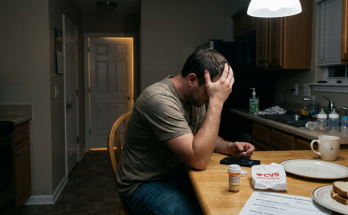
Mom called me at 9:17 the next morning.
I knew from the time that their meeting with Brooke had ended early.
I let the phone ring twice before answering.
“Are you okay?”
The question came out automatically.
I almost resented myself for it.
Mom heard something in my voice anyway.
“Yes,” she said. “We’re okay.”
Not good.
Not fine.
Okay.
That was probably more honest.
I sat on the edge of my desk.
“What happened?”
“She asked us for money.”
Of course.
“How much?”
“Twenty thousand.”
“For the attorney?”
“And other expenses.”
“Did you give it to her?”
“No.”
The answer came immediately.
I looked through the office window at the pale winter sky.
“What did she do?”
“She cried.”
I waited.
“She said we were abandoning her.”
I closed my eyes.
There it was.
The oldest lever.
Not disagreement.
Not consequence.
Abandonment.
“What did Dad say?”
“He told her we loved her.”
“And?”
“And that loving her didn’t mean paying.”
The sentence was so simple that I almost missed how extraordinary it was.
My father had spent decades treating money as a substitute for boundaries.
“How did she respond?”
“She said you did this.”
I laughed softly.
“Of course.”
“She said you turned us against her.”
“I didn’t ask you not to pay.”
“I know.”
“She asked you to come. I didn’t.”
“I know.”
“Then why are you calling me?”
Mom became quiet.
I regretted the sharpness.
Not because the question was unfair.
Because I already knew the answer.
She wanted someone to tell her she had done the right thing.
For once, I refused the role gently.
“Mom.”
“Yes?”
“You don’t need me to grade how you handled Brooke.”
“I’m not asking you to.”
“You are a little.”
She exhaled.
“Maybe.”
“You have to decide what kind of parents you’re going to be even if I never forgive you.”
The words hurt to say.
Probably because they were true.
“I understand.”
There was a long pause.
Then Mom said, “She told us something else.”
I waited.
“She said she never thought she was stealing from you.”
My jaw tightened.
“She took money from my company.”
“I know.”
“She used my identity.”
“I know.”
“She planned to put a false lien on my house.”
“I know.”
“What else would she call it?”
“She said she was correcting something.”
Grandma’s prediction.
Taking became permissible after Brooke convinced herself she deserved what she took.
“What did she think she was correcting?”
Mom’s voice became unsteady.
“She says everything started when Grandma paid for your college apartment.”
I frowned.
“My college apartment?”
“Yes.”
“Grandma paid part of my rent for one year.”
“I know.”
“She also paid Brooke’s tuition deposit when she transferred schools.”
“I told her that.”
“And?”
“She said it wasn’t the same.”
Of course it was not.
Nothing was ever the same once Brooke needed it to be evidence.
“What did she say happened?”
Mom hesitated.
“She says Grandma promised her the lake house.”
I sat straighter.
“What?”
“She said Evelyn told her she would get it someday.”
“Did Grandma?”
“I never heard that.”
“Dad?”
“No.”
“Arthur?”
“We haven’t asked.”
My mind jumped immediately to the ledger.
Grandma’s lake property had been sold before the trust was funded.
If Brooke believed the house had been promised to her, then the sale itself could have become the original injury.
“What happened to the sale proceeds?”
Mom answered quietly.
“Some funded your trust.”
There it was.
I stood.
“How much?”
“I don’t know.”
“Find out.”
“Miranda—”
“No. If Brooke believed Grandma sold something promised to her and used part of that money to fund my trust, then that matters.”
“It doesn’t excuse anything.”
“I didn’t say it did.”
The distinction mattered.
Understanding was not absolution.
Evidence was not sympathy.
But if I wanted the truth, I could not reject facts simply because they complicated my anger.
“I’ll ask Arthur,” Mom said.
“I’ll do it.”
After the call, I sat for several minutes without moving.
The lake house.
I remembered it in fragments.
The warped dock.
Grandma shouting at us not to run barefoot because of splinters.
Brooke and me sleeping in bunk beds beneath a ceiling fan that clicked all night.
She loved that place.
So did I.
But Brooke had loved it possessively.
She called the upstairs bedroom hers even though we shared it.
When Grandma discussed repainting, Brooke picked colors as though ownership had already been decided.
At seventeen, she had driven there after an argument and watched from the road while Grandma and I worked inside.
Maybe the lake house had become symbolic long before money entered the story.
I called Arthur.
He answered after several rings.
His voice sounded tired.
“Miranda.”
“I need to ask about the lake house.”
A silence.
“What about it?”
“Did Grandma promise it to Brooke?”
Arthur took his time.
“No.”
The answer was firm.
“Did Brooke believe she did?”
“That is a more complicated question.”
I leaned back.
“Tell me.”
Arthur remembered a conversation from when Brooke was about fifteen.
Grandma had joked that if Brooke kept loving the lake so much, she might someday become its caretaker.
“Caretaker.”
“Yes.”
“Not owner.”
“Correct.”
“Could a teenager hear that as a promise?”
“Possibly.”
“Did Grandma clarify later?”
“Yes.”
“When?”
“When she decided to sell.”
Brooke had been eighteen.
Grandma wanted to reduce property obligations after health problems.
Brooke objected strongly.
“She said the house was supposed to be hers?”
“Yes.”
“What did Grandma say?”
“That no promise had been made.”
I closed my eyes.
“Did they argue?”
“Several times.”
Arthur continued.
Grandma sold the property.
After taxes and expenses, she divided proceeds among investments.
A significant portion helped fund both granddaughters’ trusts.
“Both?”
“Yes.”
That mattered.
“How much went to Brooke’s?”
“Approximately fifty thousand.”
“And mine?”
“Approximately seventy.”
The difference was real.
Not enormous.
Enough for Brooke to notice.
“Why more to mine?”
“Because Brooke’s trust already contained other assets.”
“So overall?”
“Her original trust was approximately eighty thousand. Yours began around one hundred twenty.”
A forty-thousand difference.
Brooke had apparently converted that into evidence of preference.
“Did Grandma explain?”
“Yes.”
“What did she say?”
“That Brooke had already received other assistance.”
“What assistance?”
Private-school tuition for two years.
A car after college.
Help with medical expenses.
A paid certification program Brooke abandoned.
I knew some.
Not all.
Arthur’s records showed Grandma had tried to balance support across time rather than equalize every check.
Brooke apparently counted only the final numbers.
“Did Grandma ever acknowledge the trusts weren’t equal?”
“Yes.”
“Why?”
“Because your circumstances weren’t equal.”
That sentence would have infuriated Brooke.
I could already hear it.
“She thought I deserved more.”
“No.”
Arthur’s voice sharpened.
“That is not what I said.”
I stopped.
He continued.
“Evelyn did not allocate money as a prize for virtue. She looked at what she had already given each granddaughter, what she believed each might need, and what assets remained.”
“So not a ranking.”
“Exactly.”
I appreciated the correction.
Even now, I was tempted to turn money into proof of love because Brooke had taught the entire family to speak that language.
Arthur did not allow it.
“Did Brooke know this?”
“She knew the explanation.”
“Did she accept it?”
“No.”
I asked whether Grandma’s records included anything about the supposed lake-house promise.
Arthur did.
A letter written after the sale.
He emailed it.
Grandma addressed Brooke directly.
The tone was affectionate but unmistakably firm.
She acknowledged Brooke’s attachment to the property and apologized if an earlier joke had sounded like a promise.
Then she wrote:
A place cannot be owed simply because you loved it.
I read the sentence twice.
Below it, Grandma explained that the lake house had become too expensive and physically demanding.
She had chosen to sell.
Not to punish Brooke.
Not to favor me.
To simplify her life.
Then one line stood out.
Do not make Miranda responsible for a decision that is mine.
I stopped reading.
Brooke had done exactly that.
For years.
Arthur said, “There is something else you should know.”
“What?”
“Brooke responded.”
“You have the letter?”
“Yes.”
He sent that too.
Brooke had been eighteen.
The handwriting was hurried.
The anger unmistakable.
She accused Grandma of always defending me.
She wrote that I would eventually “get everything” because adults liked me better.
Then:
One day Miranda will have everything, and you’ll all pretend it just happened.
The phrase struck like a bell.
She has everything again.
The photograph from the storage unit.
The resentment had survived almost word for word for fifteen years.
“I thought this started with the trust.”
“No,” Arthur said.
“It started with the lake house?”
“I would be careful saying anything started with one event.”
He was right.
Patterns rarely had clean beginnings.
Maybe the lake house was simply the first documented version.
A story Brooke told herself whenever disappointment arrived.
Miranda gets chosen.
Brooke loses.
Evidence could change.
The conclusion remained fixed.
I thanked Arthur and hung up.
Megan arrived around noon with lunch.
I showed her the letters.
She read them without comment.
Then she said, “This explains the word again.”
“Yes.”
“Does it change anything?”
I considered that.
“It changes how long this has been happening.”
“Not what she did.”
“No.”
We ate in silence for a while.
Then I received an email from Brooke’s attorney.
Not from Brooke.
A formal request.
She wanted me to preserve all communications regarding the trust, lake property, and Grandma’s estate.
I forwarded it to my attorney.
The message did not surprise me.
Brooke was building a defense.
That was her right.
I did not have to like it.
My attorney, Rachel Kim, called twenty minutes later.
“I want you to stop discussing the financial details directly with family.”
“Even my parents?”
“Yes.”
“Why?”
“Because they are potential witnesses and may face separate civil liability.”
The phrase sounded colder than Mom and Dad.
Witnesses.
Liability.
But that was the point.
The family vocabulary had hidden too much.
Rachel asked whether I wanted to pursue the successor-trust claim.
“I haven’t decided.”
“You should decide based on recovery, accountability, and your long-term interests. Not on whether anyone cries.”
I almost laughed.
“You’ve met families before.”
“A few.”
She explained the options.
Demand full accounting.
Seek restoration.
Negotiate repayment.
Petition for formal findings.
Each carried costs.
Money.
Time.
Relationship.
No path restored seven years.
“I don’t want to destroy my parents.”
“That is not a legal objective.”
“I know.”
“Then don’t frame accountability as destruction.”
The sentence landed.
I had grown up in a family where consequences were described as cruelty.
No wonder boundaries felt violent.
Rachel continued.
“You can choose a less adversarial route without pretending nothing happened.”
That sounded closer to what I wanted.
“I need the final accounting first.”
“Good.”
Evidence before decision.
Mercer called that afternoon.
Brooke had made another statement.
“She claims Thomas originated the false lien plan.”
“Does evidence support that?”
“Partially.”
“Meaning?”
“He drafted templates.”
“Brooke?”
“Provided property information and valuations.”
“So both.”
“That is where current evidence points.”
“What about the four-hundred-thousand-dollar credit application?”
“Thomas created the application file. Brooke supplied identity documents.”
Again.
Both.
The temptation to assign a single mastermind was weakening.
Maybe there wasn’t one.
Maybe two people had spent years handing each other excuses.
“Did she admit using my identity?”
“She admits giving Thomas documents containing your information.”
“Knowing what he would do?”
“She disputes that.”
Of course.
“Anything about the thirty-thousand-dollar fake loan?”
“She admits creating the narrative.”
“That’s something.”
“Yes.”
Then Mercer said, “Brooke asked to give you a message.”
“No.”
He stopped.
I surprised myself.
“I don’t need messages passed through investigators.”
“Understood.”
“She has an attorney. I have an attorney. If something matters legally, send it there.”
“Understood.”
After we hung up, I felt something I had not expected.
Relief.
For years, every crisis arrived directly.
Brooke called.
Mom called.
Dad called.
Everyone recruited everyone else.
No walls.
No lanes.
No boundaries.
Now there were attorneys.
Investigators.
Processes.
Cold, perhaps.
Also clean.
That evening, Dad texted.
Brooke asked us to tell you something. We said no.
I stared at the screen.
Then replied:
Thank you.
He sent back:
That felt terrible.
I smiled sadly.
I typed:
It can still be right.
Several minutes passed.
Then:
I know.
That was new too.
The next morning, a courier delivered documents from Arthur’s archive.
Among them were records of Grandma’s lake-house sale.
I spent an hour tracing the proceeds.
Everything matched.
Taxes.
Closing costs.
Trust contributions.
Charitable gifts.
Then I found one unfamiliar payment.
$15,000.
Recipient: Brooke Hale.
Date: two weeks after the sale.
I frowned.
Brooke had received fifteen thousand directly in addition to the money placed in her trust.
The memo read:
Personal transition assistance.
I called Arthur.
“What was this?”
He remembered.
Brooke had been furious about the lake house.
Grandma gave her fifteen thousand to help with an apartment deposit and professional training.
“Did she complete the training?”
“No.”
“What happened to the money?”
“I don’t know.”
I did the arithmetic.
Brooke’s narrative had always centered on what she did not receive.
She never mentioned what she did.
Fifty thousand of lake proceeds into her trust.
Fifteen thousand cash.
Other assistance.
The house was not taken from her and handed to me.
It was sold.
Both of us benefited.
The difference was that I had never known enough to keep score.
Brooke had kept score obsessively.
My phone buzzed with an alert from the property gate.
A vehicle had arrived.
Not police.
Not family.
A courier van.
I watched through the camera as the driver placed a padded envelope inside the secure delivery box and left.
No sender appeared on the label.
I called Mercer before touching it.
An officer came.
The envelope contained no hazardous material.
Inside was a single photocopy.
An old photograph.
Brooke and me at the lake house.
I was maybe thirteen.
She was eleven.
We stood barefoot on the dock, sunburned, holding fishing rods.
On the back, someone had written:
You promised we’d always share everything.
The handwriting was Brooke’s.
I stared at it.
I remembered the day.
Not the promise.
Maybe we had made it.
Children promised impossible things constantly.
Best friends forever.
Never move away.
Share everything.
Brooke had carried childhood language into adult accounting.
Beneath the photograph was a second note.
Not handwritten.
Typed.
Ask her what she took from me first.
No signature.
Mercer examined it.
“You think Brooke sent this?”
“Probably.”
“We’ll verify.”
“What could she mean?”
“I don’t know.”
That evening, Mom called my attorney rather than me.
Rachel relayed the message.
Brooke was claiming there had been one event nobody had discussed.
Something involving a college scholarship.
Mine.
And hers.
I remembered both.
I won a regional academic scholarship at eighteen.
Brooke applied two years later.
She did not receive it.
I had never considered the events connected.
Apparently Brooke did.
Rachel sent me a copy of Brooke’s statement through counsel.
She claimed she had been denied because the scholarship committee believed our family had already received enough support through me.
That sounded implausible.
Also verifiable.
I searched my records.
Then contacted the scholarship foundation.
The program still existed.
Its current director located archived materials.
What he sent me made my stomach tighten.
Brooke had not merely applied.
She had reached the finalist stage.
Then someone submitted an anonymous letter accusing her of plagiarism.
The foundation investigated.
They found copied material in her essay.
She was disqualified.
Brooke apparently believed I sent the accusation.
I stared at the file.
I had never seen her essay.
Never knew she was a finalist.
Never knew any accusation existed.
But one detail explained why she might suspect me.
The anonymous letter had been mailed from my college town.
The town where I lived.
Fifteen years of resentment suddenly acquired another foundation.
Not because I had betrayed Brooke.
Because she believed I had.
The foundation still had the envelope.
And according to the director, investigators at the time had preserved a handwritten draft submitted with it.
The handwriting was not mine.
I recognized it immediately anyway.
It belonged to our mother.
Click here to continue reading: PART 14: The Betrayal Brooke Blamed on Me Was Real, but the Person Who Exposed Her Plagiarism Had Been Our Mother All Along
My Parents Canceled Christmas for My Sister, but Their Message Arrived While Twenty Guests Were Already Driving Toward My House
Part 13 of 26