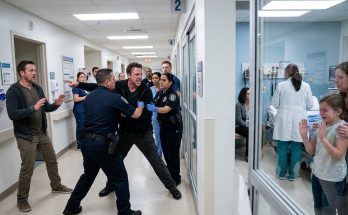
Maya did not let him leave.
Not physically.
She simply asked the supervisor to keep the meeting going.
Mark stood beside his chair, one hand resting on its back.
“You said there's something after Lake Norman.”
He looked toward his attorney.
His attorney quietly advised him that he did not have to continue.
Maya noticed.
“So that's it?”
Mark's face tightened.
“You wanted to explain.”
“I do.”
“Then explain.”
He sat.
For the first time since entering, he seemed less like the father who controlled every room and more like a man trapped inside his own chronology.
“At the lake, you were doing well.”
Maya waited.
“Better than we'd expected.”
“We?”
“Me. Kessler. Your grandmother.”
“Did Dr. Kessler think I was recovering?”
“Yes.”
The admission was plain.
Maya absorbed it.
“Did you?”
“Yes.”
Sarah closed her eyes.
I felt something inside me settle.
For all the qualifications, all the variable-function language, Mark had finally said it.
He believed Maya was recovering.
“What happened?”
“You wanted everything back immediately.”
“I wanted school.”
“You wanted school, sports, your phone, your mother.”
“My life.”
“You were still medically vulnerable.”
“Maybe.”
Maya did not fight that part.
“But you knew I was getting better.”
“Yes.”
“What happened after I got dizzy?”
Mark rubbed his forehead.
“You fell.”
“Was I injured?”
“No.”
“Then why did we leave?”
“Because you became unstable.”
“Physically?”
He hesitated.
“Emotionally.”
Maya's expression hardened.
“What did I do?”
“You accused me of keeping you sick.”
Everyone went silent.
Maya stared.
“I said that then?”
“Yes.”
“Why?”
“You found something.”
“What?”
Mark looked at his attorney again.
Maya almost laughed.
“You keep doing that.”
His attorney spoke.
“My client is trying to answer carefully.”
Maya replied, “He's had three years to practice.”
Mark closed his eyes.
Then he continued.
“You found emails on my laptop.”
Maya leaned forward.
“From Mom?”
“Some.”
“What else?”
“Fundraising correspondence.”
The memory returned in fragments.
Maya whispered, “I saw a picture.”
“What picture?”
“Me.”
Her hand trembled.
“Standing.”
Mark said nothing.
“I remember asking why you were telling people I couldn't walk when you had pictures of me walking.”
“Yes.”
“What did you say?”
“That the photographs didn't represent your normal condition.”
“What did I say?”
“You called me a liar.”
“Was I wrong?”
Mark's jaw worked.
“No.”
Sarah inhaled sharply.
Maya remained perfectly still.
“What happened next?”
“We argued.”
“And?”
“You said when we got home, you were calling Sarah.”
Maya's eyes filled.
“I remember.”
“You said you were going to tell everyone.”
“What did you do?”
Mark's hands clasped together.
“I panicked.”
The word was almost inaudible.
“What did you do?”
“I gave you your medication.”
“How much?”
“Your prescribed dose.”
“Which prescribed dose?”
He looked up.
“The higher one.”
The room changed.
“After Kessler told you to reduce it?”
“Yes.”
“Why?”
“Because you were hysterical.”
“I was angry.”
“You were screaming.”
“Because I'd discovered you were lying.”
“I know that now.”
“No.”
Maya's voice sharpened.
“You knew it then.”
Mark looked at her.
She continued.
“You knew what I found.”
“Yes.”
“You knew why I was angry.”
“Yes.”
“You gave me medication anyway.”
“Yes.”
Maya swallowed.
“Did I consent?”
Mark did not answer.
“Dad.”
“No.”
Sarah made a strangled sound.
The supervisor told everyone to remain seated.
Maya's face had gone almost expressionless.
“What happened after?”
“You slept.”
“For how long?”
“Most of the afternoon.”
“And the next morning?”
“You were groggy.”
“Could I walk?”
“Not well.”
“Then?”
“We went home.”
“What did you tell people?”
“That you'd had a setback.”
Maya stared at him.
“A setback you caused.”
“I did not know the medication would affect you that strongly.”
“Kessler warned you.”
“He warned me about sedation.”
“And heaviness.”
“Yes.”
“And told you to reduce it.”
“Yes.”
Maya's hands curled into fists.
“Then you knew.”
“I knew there was a risk.”
“What happened when we got home?”
Mark's voice became quieter.
“You were still angry.”
“Did I ask for Mom?”
“Yes.”
“Did you let me call?”
“No.”
“Why?”
“Because I thought Sarah would take you and turn the entire situation into a custody war.”
“She was my mother.”
“I was afraid.”
“Of losing me?”
Mark looked at her.
“At first.”
The answer was so unexpected that nobody moved.
Maya whispered, “At first?”
Mark's face crumpled.
“Then I became afraid of everything else.”
There it was.
The point where protection changed into self-preservation.
“The donations?” Maya asked.
“Yes.”
“Your job?”
“Yes.”
“The medical records?”
“Yes.”
“Grandma?”
“Yes.”
“Being exposed?”
“Yes.”
Each answer became quieter.
Maya looked at him with something beyond anger now.
Understanding.
Not forgiveness.
Understanding the machinery.
“You thought if I stood up and told everyone I was getting better, they'd ask how long you'd known.”
“Yes.”
“And they'd find out you'd exaggerated.”
“Yes.”
“And Mom would reopen custody.”
“Yes.”
“And people might ask about the money.”
“Yes.”
“So what did you do?”
Mark looked down.
“I kept telling myself you weren't fully recovered.”
Maya waited.
“I told myself one good week didn't erase your illness.”
“Then one month?”
No answer.
“One year?”
He closed his eyes.
Maya's voice broke.
“Two years?”
“I know.”
“No, you don't.”
She stood.
“You got to walk around knowing.”
Mark looked up.
“You got to go to work.”
Her voice rose.
“Go on vacation.”
I flinched.
“Talk to people.”
She pointed toward herself.
“I had to sit in that chair while everyone praised you for taking care of me.”
Mark began crying.
Maya did not stop.
“You took my phone.”
“Yes.”
“You stopped therapy.”
“Yes.”
“You kept Mom away.”
“Yes.”
“You let people think I couldn't understand them.”
“Yes.”
“You let Grandma feed me.”
His face twisted.
“Yes.”
“You watched me pretend not to be able to speak.”
“I couldn't undo it.”
“You could have told the truth.”
“I thought I'd lose everything.”
Maya stared at him.
“You chose everything over me.”
Mark shook his head.
“No.”
“That is exactly what you just said.”
“I loved you.”
“Maybe.”
That word hurt him more than accusation.
Maya continued.
“But you loved the life built around my illness too.”
Mark covered his face.
Nobody rescued him.
After a long silence, Maya asked about the medication.
“How long did you keep giving me the higher dose?”
“Months.”
“How many?”
“I don't remember.”
“You have records.”
“Yes.”
“Did you ever give me more than prescribed?”
“No.”
The answer came quickly.
Maya looked toward the investigator.
The emergency-department toxicology result remained unexplained.
“What about the night I was hard to wake?”
Mark shook his head.
“I made a mistake.”
“What mistake?”
“I gave you your evening medication.”
“And?”
“Your grandmother had already given it to you.”
Barbara had never mentioned that.
“Did Grandma know?”
“She realized afterward.”
Maya looked stunned.
“So that overdose really was accidental?”
“I believe so.”
The investigator interrupted.
“We will verify that separately.”
Maya nodded.
She did not need every terrible event to be intentional.
The truth was enough.
“Why did you keep the dose high after that?”
“I didn't.”
Mark said the dose was reduced temporarily after the hospitalization, then later increased again when he reported agitation.
“Was I agitated?”
“Yes.”
“Because?”
“You wanted your mother.”
Maya closed her eyes.
The word agitation had been built from resistance.
The word confusion from contradiction.
The word instability from anger.
Every reasonable response to confinement had been translated into a symptom supporting more confinement.
“What about guardianship?” she asked.
Mark looked exhausted.
“I was afraid when you turned eighteen you'd leave.”
“That was the point.”
“I know.”
“You wanted a court to stop me.”
“I wanted time.”
“For what?”
“To figure out how to fix this.”
“You had years.”
“I know.”
“You were going to tell a judge I couldn't make decisions.”
“Yes.”
“Did you believe that?”
Mark did not answer.
Maya repeated the question.
“No.”
Sarah turned away.
Even Daniel, trained to remain neutral, lowered his eyes.
Maya stood completely still.
The central lie was finally spoken without medical language around it.
Mark knew Maya could think.
He knew she could communicate.
He knew she could walk.
He knew the guardianship description was false.
And he intended to use it anyway.
“Why?” Maya whispered.
Mark's answer was broken.
“Because once you became legally independent, I couldn't control what you told people.”
No one moved.
Mark seemed to hear himself only after the words were out.
His attorney leaned toward him.
“We should stop.”
Maya shook her head.
“No. I have one more question.”
Mark looked at her.
“If nobody had found out this week, would you ever have told the truth?”
His face answered before his mouth did.
Maya waited anyway.
“I don't know.”
She nodded.
That was enough.
The meeting ended.
Mark was escorted through another exit.
Maya remained in the conference room.
For several minutes, she said nothing.
Then she sat down.
Sarah approached slowly.
“Can I hug you?”
Maya nodded.
Sarah wrapped both arms around her.
I looked away.
Daniel spoke quietly with the investigator.
Mark's admissions would need to be evaluated formally. His attorney might later dispute context or characterization. The investigation would continue. Medical experts still needed to separate the effects of Maya's original illness from medication and deconditioning.
Nothing was magically finished.
But something fundamental had changed.
The question was no longer whether Mark knew.
He had answered that himself.
Outside the building, Maya stopped on the sidewalk.
Sunlight hit her face.
She closed her eyes.
“What now?” I asked.
She opened them.
“I don't know.”
It was the first time those words sounded free rather than frightening.
She did not have to know.
Nobody had to decide her entire future that afternoon.
Sarah unlocked the car.
Maya did not move.
“There is something I want to do first.”
“What?”
“School.”
Sarah looked confused.
“Today?”
“I want to see it.”
Her old high school was fifteen minutes away.
The place she had been removed from when she became ill.
The place Mark told everyone she could never safely return.
We drove there.
Classes had ended, but students still crossed the parking lot after sports practice.
Maya remained in the car at first.
Then she opened the door.
She walked toward the front entrance.
Not dramatically.
No cameras.
No investigators.
No doctors.
Just a seventeen-year-old girl crossing a parking lot.
At the locked glass doors, she stopped.
Her reflection stared back.
Sarah joined her.
“So this is what you want?”
Maya looked through the glass toward the hallway.
“I don't know if I can come back before graduation.”
“We'll ask.”
“I might be behind.”
“We'll find out.”
“I might hate it.”
Sarah smiled through tears.
“You're allowed.”
Maya laughed.
That sound was new.
Not because she had never laughed before.
Because nobody immediately interpreted it.
On the drive back, Daniel called.
The county had received notice from Mark's guardianship attorney.
The planned petition would not be filed in its current form.
Maya listened.
“Does that mean it's over?”
“No,” Daniel said. “Not yet.”
Mark could change counsel.
Revise the petition.
Fight the child-protection findings.
Contest custody.
There were still medical, financial, and legal investigations ahead.
“But the document claiming you're profoundly incapacitated is no longer moving forward as drafted.”
Maya exhaled.
For seven weeks, her eighteenth birthday had been a deadline she feared.
Now it became something else.
A date approaching on the calendar.
Her date.
That evening, we returned to Sarah's house.
Maya stood in front of the wall of childhood photographs.
She touched the picture of herself in a volleyball uniform.
“I used to hate running drills.”
Sarah smiled.
“You complained every practice.”
“I thought you said I loved volleyball.”
“You loved games. You hated conditioning.”
Maya laughed.
“That's more believable.”
Then she noticed an empty space between two frames.
“What was there?”
Sarah's expression changed.
“A picture from your fourteenth birthday.”
“Where is it?”
“In one of the court boxes.”
“Why?”
“Your father claimed it showed how sick you were before he took full custody.”
Maya frowned.
“Can I see it?”
Sarah found the box.
The photograph showed Maya sitting on the back porch six weeks after her illness began.
Thin.
Pale.
Wrapped in a blanket.
But beside her was Sarah.
And Maya was smiling.
On the back, Sarah had written a date and four words.
Getting stronger every day.
Maya traced the handwriting.
For years, Mark's story had begun with a sick girl whose mother abandoned her and whose father alone understood her condition.
This photograph did not disprove the illness.
It disproved the simplicity.
Sarah had been there.
Recovery had begun.
Other people had seen it.
Mark had not created every falsehood at once.
He had built them gradually, whenever the truth threatened something he wanted to keep.
Maya placed the photograph beside the one from Lake Norman.
Two images.
Two recoveries.
Two moments when her body had tried to move forward while the adults around her pulled the story backward.
She stared at them.
Then her expression changed.
“What?”
I followed her gaze.
The Lake Norman photograph.
Dr. Kessler stood behind Maya.
Something hung from his neck.
A conference badge.
Maya picked up the image.
“That wasn't just a weekend trip.”
Daniel had told us Kessler described it as personal.
Mark had described it as informal rehabilitation observation.
But the badge contained printed words.
The photograph was too small to read clearly.
Sarah enlarged the digital original.
The lettering sharpened.
CAROLINA CAREGIVER FOUNDATION.
Annual Family Resilience Retreat.
Maya stared.
“It was a charity event.”
I felt cold.
The investigator had said fundraising could establish motive.
Now the Lake Norman weekend had another context.
Mark had taken Maya to an event connected to caregivers and charitable support.
He had photographed her walking there.
Yet publicly, he continued presenting her as wheelchair dependent.
Sarah searched the foundation name.
An archived event page appeared.
The retreat had hosted selected families receiving caregiver grants.
A familiar surname appeared among the beneficiaries.
Bennett Family.
Maya read it.
Then the amount.
Fifteen thousand dollars.
Purpose:
Respite and adaptive-care support for a family managing a child's profound long-term mobility impairment.
Maya's face became still.
The grant had been awarded the same weekend she walked down the dock.
Sarah whispered, “He knew.”
Maya shook her head.
“No.”
Her voice was steady now.
“We already know he knew.”
She pointed to the photograph.
“The question is who else saw me.”
In the background stood at least twenty people.
Foundation staff.
Other families.
Volunteers.
People who had attended the retreat.
People who might remember a supposedly nonambulatory girl walking beside the lake.
Maya looked at me.
“For three years, Dad controlled everyone who got close enough to see.”
She touched the photograph.
“But he couldn't control all of them.”
The next phase would not depend only on Mark's records.
For the first time, there were witnesses he had never expected Maya to find.
Click here to continue reading: PART 13: The Charity Retreat Had Been Built Around Maya’s Disability, Yet More Than a Dozen Witnesses Remembered Seeing Her Walk
The Morning My Husband Left Town, His Silent Daughter Stood Up and Asked Me Not to Call Him
Part 12 of 47