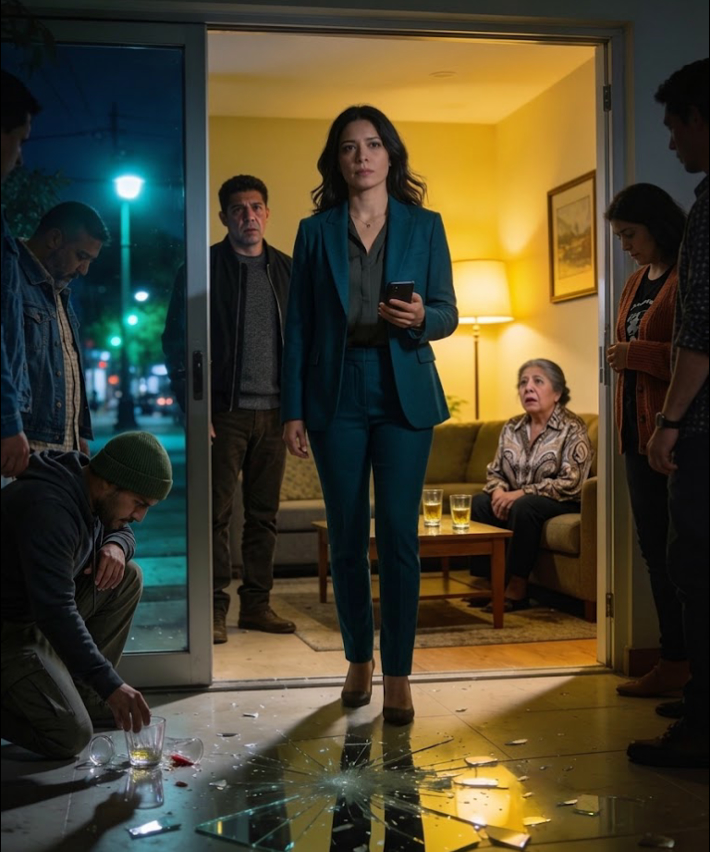
The night was warm, almost like summer, even though the calendar already showed late September in Mexico City.
Friends had gathered in our apartment—those same people who called themselves “almost family,” drank tequila from our glasses, and always thought they had the right to tell us how we should live.
I was sitting in an armchair by the window, holding a pot of coffee in my hands, as if it could warm me up a little from the inside.
And Alejandro… my husband Alejandro was standing in the middle of the room, erect, as if he were about to announce something triumphant.
“I’m going to file for divorce,” he said calmly, almost with a smile. “I’m tired of pretending everything is fine between us.”
Silence fell over the room.
One of her friends—Fernanda, the same one who always looked at me with a hint of disdain—let out a small sigh. But it wasn’t surprise. More like satisfaction. As if she’d been waiting for that moment for a long time.
And his mother… his mother, Doña Patricia —a woman who never hid that she considered me unworthy of her son— began to laugh out loud.
A loud, resounding laugh, as if she had just heard the best gossip of the year.
“Finally!” she exclaimed, clapping her hands. “I thought you were going to get stuck in that cage!”
I didn’t move.
I didn’t jump up.
I didn’t scream.
I didn’t cry.
I just looked at them.
To Alejandro.
To his mother.
And to those “friends” who were now watching my reaction with anxious curiosity, as if they were watching a soap opera.
They expected a scene.
They expected humiliation.
They expected her to fall to her knees and beg him to stay.
But I knew it: today wasn’t my day to fall. Today was his.
Because two days earlier I had received a message from my father.
My father died five years ago. Quietly, in a private hospital, after a long illness. I was by his side until the end. He held my hand and whispered:
— You’re going to get through this, daughter. You’re stronger than you think.
Then I cried. Not because I was afraid of death, but because I understood that I was going to be left alone.
My mother had died when I was a child. I had no other close relatives. Only my father. And his will.
He left me everything.
The house on the outskirts of the city, the apartment in Polanco, investments, bank accounts in Mexican pesos… and a company —a small but very profitable construction company that he had built from scratch.
I didn’t want to go into business. But my father asked me to:
— Don’t sell it. Let what I built live on.
And I accepted.
I hired an administrator, entrusted matters to trusted people—my health didn’t allow me to attend meetings frequently, and Alejandro always said:
— You’re a woman, you don’t need to get involved in business.
It was naive of me to believe him. But I did.
Because she loved him.
Or at least she thought she loved him.
Then strange things began.
The accounts began to dwindle. The company lost contracts. And Alejandro increasingly mentioned that “it was better to sell the inheritance before it lost value.”
I refused.
He got angry.
His mother—even more so.
“You’re sitting on that money like it’s your treasure!” she yelled at me once. “Alejandro deserves much more!”
Further?
The truth is that he didn’t even deserve half of what I had.
But I remained silent.
She didn’t want any fights. She believed that family was sacred. That if you forgive, endure, and try to understand, everything can be resolved.
How wrong I was.
That night, when Alejandro announced the divorce in front of everyone, I already knew the truth.
And my father too.
Or rather, his last will and testament.