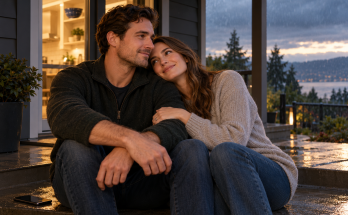
Olivia arrived on a Thursday afternoon carrying one suitcase and a rain jacket she had apparently decided proved she now belonged to Seattle.
I waited outside baggage claim instead of circling the terminal like an anxious teenager. Growth, apparently, could be measured in parking fees.
She spotted me first.
“You cut your hair.”
“You left the state.”
“Both facts are true.”
We hugged.
Not tentative.
Not desperate.
Long enough to acknowledge four months.
Short enough not to turn an airport into a declaration.
When she stepped back, I noticed she looked different.
Not dramatically.
More rested.
There was color in her face I had not realized Phoenix had taken from her.
“You look good.”
“So do you.”
“You’re lying.”
“Moderately.”
She smiled.
We walked to the car.
For the first ten minutes, conversation stayed safe.
Flight.
Weather.
Seattle traffic.
Carlos’s belief that rain would destroy any vehicle not serviced personally by him.
Then silence arrived.
Not awkward.
Charged.
Olivia looked out the window.
“Phoenix feels smaller.”
“Did it shrink?”
“No.”
“Then maybe you expanded.”
She turned.
“That sounded suspiciously thoughtful.”
“I’ve been reading.”
“Dangerous.”
I laughed.
At the apartment, she stopped in the doorway.
The new couch.
Different coffee table.
Fresh locks.
No wedding photograph.
No Marjorie key.
No boxes.
The place looked like a home I had built after she left, not a museum preserving the possibility she might return.
Olivia noticed that too.
“You changed it.”
“I needed to.”
She walked slowly through the living room.
“You kept the blue bowl.”
I looked toward the kitchen shelf.
She had bought it at a street market during our first year of marriage.
“I like the bowl.”
“You hated the bowl.”
“I resented how easily it chipped.”
“That is not the same as hating it.”
“Apparently I contain nuance now.”
She laughed.
Then became quiet.
“I’m glad you didn’t leave everything exactly the same.”
“So am I.”
She set her suitcase near the guest room.
Not our old bedroom.
That mattered.
We had discussed it before she arrived.
No assumptions.
No pretending divorce disappeared because a plane landed.
I had clean sheets ready.
That was all.
We went to dinner at a small Mexican place near the shop.
Carlos joined for twenty minutes, mostly to interrogate Olivia about whether Seattle mechanics understood engines.
She assured him combustion remained legal in Washington.
He left unconvinced.
Afterward, Olivia and I walked.
Warm evening.
Dry air.
The smell of creosote after somebody watered landscaping nearby.
Phoenix felt like itself again instead of evidence.
“Did you miss it?” I asked.
“Some things.”
“Such as?”
“Tacos.”
“Good answer.”
“Rebecca.”
“She visits.”
“Carlos.”
“Regrettably permanent.”
She smiled.
Then:
“You.”
There it was.
Simple.
“I missed you too.”
We kept walking.
No expansion required.
The next day she visited Hale Automotive.
Employees remembered her.
Some hugged.
Some pretended not to know our history.
One young mechanic asked if she was back permanently.
Olivia answered:
“Just visiting.”
No one died from the clarity.
I watched her talking with Carlos beside the alignment rack and remembered how often I used to translate her boundaries for other people.
She did not need translation.
She never had.
That afternoon we drove to Dad’s grave.
Olivia suggested it.
I had not visited since Arthur’s trial.
The cemetery looked ordinary.
That felt right.
We brought nothing elaborate.
No flowers.
Dad was never a flowers person.
I carried a cup of bad gas-station coffee because it amused me.
Olivia read the marker.
ROBERT HALE.
Beloved husband and father.
The first phrase felt complicated.
“Should they change that?”
“What?”
“Beloved husband.”
I thought.
“No.”
“Even after everything?”
“He was.”
Olivia nodded.
Beloved did not mean healthy.
Innocent.
Simple.
Just loved.
I poured a little coffee into the grass.
Olivia raised an eyebrow.
“He would complain about waste.”
“Exactly.”
We sat beneath a nearby tree.
I told Dad aloud that restitution was moving.
Shop survived.
Marjorie took the plea.
Arthur convicted.
Olivia moved to Seattle.
Speaking to the dead felt less ridiculous after hearing so many of their recorded voices.
Then Olivia said:
“He’d be proud of you.”
I looked at her.
“I used to need that.”
“And now?”
“I hope he would be. But I’m okay if some choices would disappoint him.”
She smiled.
“That’s probably healthier.”
We sat in silence.
Then I asked something I had promised myself I would not force.
“What do you want from this visit?”
Olivia leaned back on her hands.
“I don’t know exactly.”
“Okay.”
“I wanted to see whether missing you meant missing the life we had.”
“And?”
“It doesn’t.”
That hurt briefly.
Then she continued.
“I don’t want that life back.”
“Neither do I.”
“I miss you.”
“I know.”
“I miss who you are now.”
My chest tightened.
She looked toward Dad’s grave.
“But I don’t know if that means I should move back. Or remarry you. Or date you. Or keep loving you from another state like two emotionally overeducated idiots.”
I laughed.
“That last one has charm.”
“It does.”
Then she looked directly at me.
“What do you want?”
Months earlier I would have answered:
You.
Now the question required more care.
“I want to be with you.”
Her eyes shifted.
“But?”
“But not if being with me costs you the life you’re building.”
She swallowed.
“I don’t want you to move back because I finally became less terrible.”
“You weren’t terrible.”
“Debatable.”
“Derek.”
“Okay.”
I breathed.
“I want whatever we do next to be a choice neither of us has to defend.”
Olivia stared for a long moment.
Then said:
“I want to date you.”
I almost laughed from relief.
“We’re divorced.”
“I am aware.”
“So we date?”
“Yes.”
“Long distance?”
“For now.”
“No secret automatic engagement timeline?”
“No.”
“No treating every visit like a referendum?”
“No.”
“No asking your mother?”
Olivia gave me a look.
“Never again.”
“Good.”
She reached for my hand.
We sat beside Dad.
Two divorced people deciding to date.
It was probably not the ending anyone would have predicted from our wedding photographs.
That made it better.
We kissed later that evening.
Not in front of Dad.
I had some dignity.
Barely.
The weekend moved quickly.
Dinner.
A movie.
Breakfast at a place Olivia used to like.
One night she slept in my room.
We discussed it first.
That felt awkward.
Also right.
Intimacy after divorce carried strange gravity.
Nothing belonged by default.
Everything had to be chosen again.
In the morning, Olivia lay beside me watching sunlight reach across the wall.
“This is dangerous.”
“What?”
“I could get used to you asking questions before assuming things.”
“I can stop.”
“Don’t.”
We laughed.
Then the laughter faded.
She touched my shoulder.
“I’m still going back.”
“I know.”
“You okay?”
“Sad.”
“And?”
“Okay.”
“Still hate that answer.”
“It’s a good answer.”
“It is.”
At the airport two days later, the goodbye hurt more than the first one.
Because now possibility existed.
Olivia hugged me.
“Next month?”
“I can come there.”
She nodded.
“Good.”
“I’ve never been to Seattle.”
“You’ll hate the rain.”
“I plan to complain professionally.”
She kissed me.
Then walked inside.
No turning back this time.
Did not need to.
We had plans.
Not guarantees.
Plans.
Two weeks later I booked the ticket.
Then Marjorie wrote.
Not about Olivia.
Not about Arthur.
About Margaret Hale.
The restitution office had notified her that Margaret’s surviving brother accepted the corrected identity record.
Marjorie wrote:
I spent forty years thinking the first lie was harmless because the girl was dead.
I understand now that dead people still belong to themselves.
I read that twice.
Then:
I started by taking a name because I thought no one could object. After that it became easier to believe everything belonged to whoever could take it.
There was the connecting line.
Identity.
Money.
Documents.
Homes.
Children.
Love.
Access.
Everything became property.
She ended:
I hope you never confuse loving someone with having a claim on them again.
I placed the letter in Dad’s AFTER folder.
Not because Marjorie belonged inside his story.
Because the sentence belonged in mine.
That night Olivia called from Seattle.
“What are you doing?”
“Packing.”
“For?”
“Visiting my girlfriend.”
She went silent.
Then:
“Girlfriend?”
“Too soon?”
“No.”
Pause.
“I like it.”
“Good.”
“Boyfriend?”
“I’ll allow it.”
“Generous.”
We talked for an hour.
Work.
Rain.
Cars.
Nothing about murder.
Nothing about fraud.
Nothing about evidence.
Ordinary conversation.
At some point I realized Dad’s final instruction had quietly come true.
Go live somewhere outside the investigation.
I had assumed he meant geographically.
He didn’t.
He meant inside my own head.
The case could be part of my life without being the shape of every day.
I was finally learning how.
Click here to continue reading: PART 46: Restitution Brought the Last Known Victim to My Shop, and Her Question Made Me Choose What the Hale Name Would Mean
My Mother’s Furious Phone Call Forced Me to Notice the Question I Had Spent Three Years Refusing to Ask
Part 45 of 47