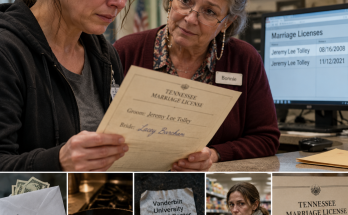
Sophie was eleven when she asked the question Karen had been dreading.
“Was Grandpa Mark in love with Lacey?”
Karen called me immediately afterward.
“She asked that exactly?”
“Exactly.”
“Why?”
“She found an old photograph.”
“What photograph?”
“Mark and Lacey at the diner.”
I closed my eyes.
“Where?”
“In Amanda’s storage box.”
Of course.
The family had become an archive no one intended to create.
“What did you say?”
“I told her they knew each other when they were young.”
“That is true.”
“She said I was dodging.”
“She’s your granddaughter.”
“She is Amanda’s daughter.”
“Also true.”
Karen sighed.
“She wants more.”
“How much does she know about your divorce?”
“That Mark kept serious secrets from me.”
“Does she know Lacey was involved?”
“Not directly.”
“Then maybe it’s time for a little more.”
“A little.”
“Yes.”
Karen hated that word.
I could hear it.
“What counts as little?”
“The truth relevant to Sophie.”
“Which is?”
“Mark and Lacey had a relationship before you and Mark married.”
Karen was quiet.
“That sounds too clean.”
“Then say they slept together once.”
“She’s eleven.”
“Fine. Say they were briefly involved.”
“And the pregnancy?”
I thought.
“No.”
“Why?”
“Because the pregnancy does not affect Sophie.”
“It affected everything.”
“For adults.”
“She’ll eventually find documents.”
“Eventually is not today.”
Karen sighed.
“I hate deciding for her.”
“You are her guardian. Deciding what she can carry is literally part of the job.”
“That sounds like what everyone said about you.”
“No.”
“What’s different?”
“I was an adult whose marriage was being altered by information people withheld.”
I paused.
“Sophie is a child asking about adult sexual history that does not change her identity, safety, money, or immediate relationships.”
Karen went quiet.
“Okay.”
“Do not lie.”
“I won't.”
“Do not promise there is nothing else.”
“I won't.”
“And tell her she can ask again when she is older.”
“Good.”
That evening, Karen talked to Sophie.
The next morning, she told me how it went.
“She asked whether Mark cheated on me with Lacey.”
“What did you say?”
“No.”
“Good.”
“She asked whether they dated.”
“I said they had a brief relationship before he knew me.”
“Good.”
“She asked why he kept it secret.”
“I told her because he was ashamed and afraid.”
“Good.”
“She asked whether that was why we divorced.”
“What did you say?”
“That it was part of a much bigger problem about honesty.”
“That’s accurate.”
Then Karen became quiet.
“What?”
“She asked if Amanda knew.”
My chest tightened.
“And?”
“I said yes.”
“How did she take that?”
“Badly.”
Of course.
Children can accept dead parents being imperfect more easily than discovering they carried burdens alone.
“She said, ‘So Mom knew things and didn't tell me either.’”
“What did you say?”
“That Amanda was protecting adult information until Sophie was older.”
Karen’s voice cracked.
“She said everybody always has a reason.”
That sentence stayed with me.
Everybody always has a reason.
Yes.
Reasons had nearly destroyed us.
Reasons were not useless.
But they could become camouflage.
“Maybe tell her that,” I said.
“What?”
“That reasons do not automatically make choices right.”
Karen was quiet.
“Okay.”
Sophie stopped asking questions for several months.
Then she came to me.
Not Karen.
Me.
She was taller now.
Her face beginning to resemble Amanda in ways that hurt.
“Aunt Jill?”
“Yes?”
“Grandma says I can ask you something.”
“That sounds dangerous.”
“She said you’ll tell me if it’s not mine to know.”
I smiled.
“That sounds like your grandmother.”
Sophie sat across from me.
“Did Grandpa Jeremy marry Lacey?”
There it was.
No preparation.
No polite entrance.
I took a breath.
“Yes.”
Her eyes widened.
“While he was married to you?”
“Yes.”
“So he had two wives?”
“Legally, no. The second marriage was later ruled invalid.”
“But he tried?”
I looked toward the table.
“Yes.”
“Why?”
“Lacey was very sick.”
“That doesn't make sense.”
“No.”
“He married her because she had cancer?”
“Partly because he thought it would help with medical coverage.”
“Did it?”
“For a time, it helped with access to some arrangements.”
“But he loved her.”
I looked at Sophie.
“Yes.”
She swallowed.
“Did he love you?”
“Yes.”
“That doesn't make sense either.”
“I know.”
“Were you mad?”
“Very.”
“Did you leave?”
“For a while emotionally. We lived separately inside the same house for some time.”
“But you stayed married.”
“Yes.”
“Why?”
“Because after a long time, I decided I still wanted a life with him.”
Sophie frowned.
“Grandma didn't stay with Grandpa Mark.”
“No.”
“So did Grandpa Jeremy do less bad?”
I shook my head.
“That isn't how it works.”
“Why?”
“Because marriages are not math problems.”
She looked frustrated.
“Then how do you know what to do?”
“You decide what you can live with.”
“That’s not helpful.”
“I know.”
She folded her arms.
“Did Grandma leave because she loved Grandpa less?”
“No.”
“Did you stay because you loved Grandpa Jeremy more?”
“No.”
“Then why?”
I thought of Amanda.
If you leave, choose your life.
If you stay, choose your life.
“Because Grandma and I are different people.”
Sophie waited.
“Your grandmother decided that continuing her marriage would cost her something she did not want to keep paying.”
“And you?”
“I decided rebuilding mine was something I wanted to try.”
“Was one of you right?”
“No.”
She hated that answer.
I could see it.
“So adults can do completely different things and both be right?”
“Sometimes.”
“That’s terrible.”
I laughed.
“Yes.”
She almost smiled.
Then her expression changed.
“Did Mom know Grandpa Jeremy married Lacey?”
“Yes.”
“How long?”
I hesitated.
“Some time.”
“And she didn't tell you.”
“No.”
“Were you mad at her?”
“Yes.”
“Do you still love her?”
“Yes.”
Sophie looked down.
“I’m mad at her.”
“You’re allowed.”
“She’s dead.”
“You can be angry at dead people.”
“That feels mean.”
“Dead people do not become perfect because they died.”
She looked at me.
“Grandma doesn't say things like that.”
“She’s nicer.”
“No, she isn't.”
Fair.
Sophie asked the pregnancy question six months later.
This time Karen and I answered together.
She was nearly twelve.
Old enough for more.
Not everything.
We told her Lacey had been pregnant when she was young.
That there had been uncertainty about who the father was.
That adults made dishonest choices because of fear and shame.
We did not describe every sexual detail.
We did not hand her medical records.
We did not tell her about Raymond until she asked whether the father was Jeremy or Mark.
“Neither, as far as the available testing showed,” Karen said.
“Then who?”
“Someone else.”
“Who?”
I looked at Karen.
She nodded.
“Raymond.”
Sophie recognized the name.
“The man from the funeral?”
“Yes.”
She stared.
“Did everybody sleep with everybody?”
Karen choked on her water.
I laughed so hard I had to cover my face.
Sophie looked offended.
“It’s not funny.”
“No,” I managed. “It really isn't.”
Karen wiped her eyes.
“Adults can be very stupid when they’re young.”
“Are you going to tell me not to have sex?”
“No,” Karen said.
Sophie stared.
Karen continued.
“I’m going to tell you that intimacy can create consequences people are not emotionally prepared to handle.”
Sophie groaned.
“That sounds worse.”
“It is.”
I smiled.
We stopped there.
No sermon.
No inherited shame.
The most important thing was that Sophie did not leave believing her mother’s life had been built entirely from secrets.
Amanda had loved her.
Planned for her.
Protected her financially.
Made imperfect decisions.
Those truths could coexist.
At fourteen, Sophie asked to hear Amanda’s recording.
The one addressed to me.
I said no.
She became furious.
“It’s my mother.”
“Yes.”
“Then why do you get it?”
“Because she addressed it to me.”
“She talked about me.”
“Yes.”
“So part of it is mine.”
“Part.”
“Then let me hear that.”
That stopped me.
She was right.
Not entitled to the entire private message.
But perhaps entitled to the portion concerning her.
I discussed it with Karen.
Then Thomas.
No legal barrier.
Just judgment.
We made a transcript.
Removed the sections about Jeremy, Mark, and me that were not necessary for Sophie.
Kept Amanda’s words about becoming a mother.
About understanding fear differently after Sophie.
About wanting truth without cruelty.
Sophie read it alone.
Then cried for nearly an hour.
Karen sat beside her.
I stayed in the kitchen.
Eventually Sophie came out.
Her face was swollen.
“She sounds like me.”
Karen laughed through tears.
“You sound like her.”
Sophie held the pages.
“Did she know she was going to die?”
“No.”
“Then why did she record things?”
“Because she was trying to decide what to tell people.”
“She was scared.”
“Yes.”
Sophie looked at me.
“She said people use ‘not my place’ when they mean ‘I’m afraid.’”
“Yes.”
“Do you think that’s true?”
“Sometimes.”
“Were you afraid to let me hear this?”
“Yes.”
“Why?”
“Because I didn't want your mother’s private words to become another burden you inherited.”
Sophie thought.
“Thank you for not giving me all of it.”
That surprised me.
“You’re not angry?”
“I am.”
“Both?”
“Yes.”
I smiled.
“Welcome to adulthood.”
“I’m fourteen.”
“Close enough.”
She rolled her eyes.
Later, Karen said, “We did okay.”
“Don't sound so shocked.”
“I am shocked.”
“So am I.”
We had broken one pattern.
Not by telling everything immediately.
By refusing to lie about what existed.
There is a difference between a locked door and a door someone can choose to open when ready.
That became our family rule.
Questions could be asked.
Answers might be delayed because of age, privacy, or someone else’s rights.
But nobody would say nothing happened when something had.
Jeremy followed the rule too.
When Sophie asked him directly whether he regretted marrying Lacey, he answered without asking me what to say.
“Yes.”
Sophie frowned.
“Because Aunt Jill found out?”
“No.”
“Then why?”
“Because I used marriage to solve a problem marriage could not honestly solve.”
That was a good answer.
“Did you love Lacey?”
“Yes.”
“Do you regret loving her?”
Jeremy thought.
“No.”
Sophie looked toward me.
I stayed silent.
This was his answer.
“Does Aunt Jill hate that?”
“Sometimes it hurts her.”
“That’s not what I asked.”
Jeremy smiled faintly.
“No. I don't think she hates that I loved someone. She hates what I did with that love.”
Sophie looked at me.
“Is that true?”
“Yes.”
She nodded.
Then asked, “Did Lacey love you more than Aunt Jill?”
Jeremy nearly dropped his coffee.
I laughed.
“Your problem.”
He glared at me.
Then turned to Sophie.
“Love doesn't work like a scoreboard.”
“You adults say that whenever you don't want to answer.”
“Also true.”
He tried again.
“What I had with Lacey was different.”
“That means Aunt Jill wins.”
“Sophie.”
“What?”
I intervened.
“Nobody wins a dead woman.”
Sophie looked horrified.
Then started laughing.
Jeremy covered his face.
“You two are impossible.”
That conversation would have been unthinkable years earlier.
Now it was uncomfortable.
Not dangerous.
The distinction mattered.
By the time Sophie was sixteen, Second Room had helped more than two thousand patients.
She volunteered during summer.
Not because anyone told her to continue Amanda’s legacy.
She chose it.
Her job was mostly administrative.
Phone calls.
Transportation scheduling.
Hotel confirmations.
One afternoon she called me.
“Aunt Jill?”
“Yes?”
“I met someone.”
“That sounds ominous at sixteen.”
“Not like that.”
“Good.”
“A patient.”
“What happened?”
“She came alone.”
I waited.
“She was scared.”
“Yes.”
“I sat with her until the volunteer arrived.”
“That was kind.”
Sophie was quiet.
“I understand the name now.”
Second Room.
Not the building.
The place beside someone.
“I think Lacey would like that,” she said.
My chest tightened.
“Yes.”
“Is it okay that I like something she made even though she hurt you?”
“Yes.”
“Really?”
“Yes.”
“Why?”
“Because good things do not become bad just because imperfect people started them.”
Sophie was quiet.
“Does that apply to families?”
I smiled.
“Especially families.”
That evening, I told Jeremy.
He sat on the porch for a long time.
Then said, “Two thousand.”
“Yes.”
“Lacey would never believe it.”
“Probably not.”
“Do you think she’d be proud?”
“Yes.”
He nodded.
No tears this time.
Grief had changed.
It no longer demanded an audience.
A week later, Karen brought over a box.
“What now?”
“Final Amanda storage.”
“You said that three boxes ago.”
“I was optimistic.”
We opened it together.
School papers.
Receipts.
Old photographs.
A bracelet.
At the bottom was an envelope.
Not sealed.
My name again.
I almost laughed.
“No.”
Karen stared.
“What?”
“I refuse.”
“You have to open it.”
“I absolutely do not.”
“It says Jill.”
“So have half the disasters of my adult life.”
Karen laughed.
“Fine. I’ll open it.”
“No.”
“Then?”
I picked up the envelope.
The handwriting was Amanda’s.
Not Lacey’s.
No drama.
No courthouse stamp.
Just:
For Jill, if Sophie ever asks what her mother wanted for her.
My chest tightened.
Karen stopped laughing.
I opened it.
Inside was one page.
Amanda had written it shortly after Sophie was born.
No secrets about Jeremy.
No Mark.
No Lacey.
Just a mother trying to imagine her daughter grown.
I want Sophie to know she never has to carry the unfinished business of the people who came before her.
I stopped reading.
Karen covered her mouth.
The next line:
She can love us without repeating us.
That was all I needed.
I handed the page to Karen.
“This one belongs to Sophie.”
Karen nodded.
“When?”
I looked toward the photograph on the table.
Amanda holding a newborn.
“When she wants it.”
Not before.
Not after someone decided the truth was too dangerous.
When she was ready to ask.
Click here to continue reading: PART 39: Amanda’s Message Freed Sophie From Inheriting Our Mistakes, While Jeremy and I Faced the Quiet Question of Growing Old Together
A Routine Question About My Marriage Sent Me Looking for One Paper I Never Thought I Would Need
Part 38 of 43