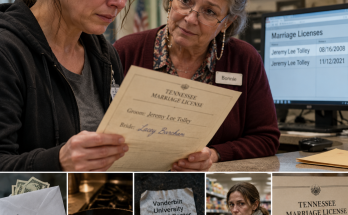
Jeremy waited three weeks before visiting David.
Not because he was avoiding him.
Because he had learned not every urgent feeling required immediate action.
David completed his first treatment, then a second.
After each, Jeremy called.
He told me afterward.
Not every detail.
Enough.
“He sounds tired.”
“I imagine.”
“He made a joke about hospital coffee.”
“That seems to be a universal cancer tradition.”
Jeremy smiled.
Then he became quiet.
“What?”
“He asked if I would come.”
“Do you want to?”
“Yes.”
“Then go.”
He looked at me.
“You don't need to come.”
“I know.”
“That wasn't me trying to exclude you.”
“I know.”
“Good.”
The old us might have spent an hour interpreting that sentence.
The current us let it remain exactly what it was.
Jeremy booked a flight to North Carolina.
Two nights.
No hidden extension.
No unnecessary explanation.
He showed me the hotel information because we shared travel details now.
I did not ask for proof of where he went.
There was a difference between transparency and inspection.
At the airport, he kissed my forehead.
“I’ll call tonight.”
“Okay.”
Then he stopped.
“What?”
“I’m nervous.”
“About David?”
“Yes.”
“Why?”
“I don't know what version of us is left.”
I looked at him.
“You don't have to decide before you arrive.”
He nodded.
“That helps.”
He left.
That evening, he called from the hotel.
David had lost weight.
More than Jeremy expected.
His daughter, Hannah, had driven him to treatment and cooked for him.
“She seems good,” Jeremy said.
“Good how?”
“Direct.”
“That family needs one.”
Jeremy laughed.
“Apparently.”
“How was seeing him?”
“Awful at first.”
“Why?”
“Because I saw him and immediately remembered being seventeen.”
I understood.
Bodies age.
Relationships sometimes preserve younger versions underneath.
“What happened?”
“We sat on his porch.”
“Talk?”
“Eventually.”
“About Lacey?”
Jeremy hesitated.
“Yes.”
There was no reason to hide that.
I felt a small ache anyway.
“Did that bother you to say?”
“Yes.”
“Good.”
He laughed softly.
“Still using that?”
“Always.”
“What did he say?”
“That when he got diagnosed, he thought about calling Lacey.”
My chest tightened.
Then reality corrected itself.
“She’s been dead for years.”
“I know.”
“He said his brain still went there.”
“That happens.”
Jeremy was quiet.
“He said she was the first person he ever imagined beside him when he was scared.”
I thought about David loving her for most of his life.
Never being chosen the way he wanted.
Still becoming one of the people who stayed.
“That makes sense.”
“I thought you might hate hearing it.”
“I don't.”
“Really?”
“It’s sad.”
“Yes.”
“Not threatening.”
Jeremy breathed out.
Then said, “He apologized for pretending to be me.”
“Again?”
“Yes.”
“What did you say?”
“That apology had already been accepted as information.”
I smiled.
“That sounds like Thomas.”
“It does.”
“And emotionally?”
Jeremy took time.
“I told him I forgave him.”
My chest tightened slightly.
Not because I disapproved.
Because forgiveness once felt so connected to whether someone deserved access again.
“And?”
“He started crying.”
“What did forgiveness mean to you?”
“That I don't want to keep carrying anger every time his name comes up.”
“That’s fair.”
“It doesn't mean I trust him like before.”
“No.”
“It doesn't mean I want the old friendship.”
“No.”
“It means I don't need the injury to stay active.”
I looked toward our dark kitchen.
“That sounds familiar.”
“I learned from you.”
“You’re overusing that line.”
“Probably.”
We stayed on the phone another ten minutes.
Then he said, “There’s something else.”
My stomach tightened automatically.
Even after all these years.
“What?”
“David asked me to take something home.”
“What?”
“A box of old photographs.”
I almost laughed.
“No.”
“That was my answer too.”
“Good.”
“He said Hannah doesn't want them.”
“What kind of photos?”
“High school. Lacey. Me. Him.”
“Then why would you take them?”
“I wouldn't.”
“Good.”
“He asked whether you might want to look first.”
I stared.
“Why me?”
“He thinks some might matter.”
“Everything does not have to matter.”
“I told him that.”
“Then?”
“He agreed.”
I smiled.
“Progress.”
“He’s going to let Hannah decide what to keep.”
“Good.”
Jeremy returned two days later.
He looked tired.
Not emotionally wrecked.
Just tired.
“How was goodbye?”
He set down his bag.
“It may not be goodbye.”
“No.”
“Doctors are still treating.”
“Yes.”
He sat at the kitchen table.
“But we both knew it could be.”
I poured coffee.
“Did you say everything?”
“No.”
“Good.”
He looked surprised.
“Good?”
“You don't need a perfect final conversation.”
He smiled.
“Right.”
“What did you say?”
“That I loved him.”
I nodded.
“Do you?”
“Yes.”
“As a friend?”
“As whatever is left after thirty years of friendship changes shape.”
“That is vague.”
“It’s accurate.”
I sat.
“Did he say it back?”
“Yes.”
“Then that sounds enough.”
Jeremy nodded.
The following months moved unevenly.
David’s treatment worked at first.
Then less.
Jeremy visited once more.
This time he stayed one night.
No crisis.
No mystery.
When David eventually entered hospice, Hannah called Jeremy directly.
I answered because Jeremy was in the shower.
“Jill?”
“Yes.”
“This is Hannah.”
“I know.”
She sounded exhausted.
“Dad asked whether Jeremy can come.”
I looked toward the hallway.
“When?”
“Soon.”
“How soon?”
“The nurse says days.”
I closed my eyes.
Hospice.
Again.
Different person.
Different marriage.
Different us.
“I’ll tell him.”
She paused.
“Are you okay with it?”
The question surprised me.
“Hannah.”
“Yes?”
“You don't need my permission for your father to ask for his friend.”
“I know.”
“And Jeremy doesn't need my permission to decide.”
“Right.”
“But thank you for caring how it affects me.”
She exhaled.
“Dad said you deserved that.”
I felt something shift.
Not forgiveness for David.
That had never been the main issue.
Recognition.
“Tell him Jeremy will call.”
“I will.”
Jeremy left that evening.
I drove him to the airport.
He looked out the window most of the way.
“This feels familiar.”
“Yes.”
“I hate that.”
“I know.”
“Are you worried?”
“For you?”
“Yes.”
“Yes.”
“That I’ll disappear into it?”
“A little.”
He nodded.
“Fair.”
“But I also know you won’t.”
He looked at me.
“You know?”
“Yes.”
The word meant something now.
At the curb, he reached for his bag.
Then stopped.
“Can I ask something strange?”
“Go ahead.”
“If David says something about Lacey, do you want to know?”
I thought.
“No.”
Jeremy waited.
“Unless it changes something that affects us now.”
He nodded.
“That’s a good boundary.”
“Otherwise, let it belong to the two of you.”
He leaned across and kissed me.
Not gratitude.
Not apology.
A normal goodbye.
David died thirty-six hours later.
Jeremy was there.
He called me from the hospice parking lot.
His voice broke on the first word.
“Jill.”
“I’m here.”
“He’s gone.”
“I’m sorry.”
Jeremy cried.
I listened.
No fixing.
No searching for the correct sentence.
After several minutes he said, “He asked me to tell you something.”
My chest tightened.
“What?”
“That he was sorry he ever thought you were the obstacle.”
I closed my eyes.
“He said he understands now that the obstacle was all of them refusing to accept that you were a person with the right to say no.”
The words hurt.
Not because they were new.
Because they had taken a lifetime for him to say.
“What did you tell him?”
“That you already knew.”
I almost laughed through tears.
“Good.”
Jeremy continued.
“He asked if I thought you would forgive him.”
“What did you say?”
“That it wasn't his question anymore.”
My throat tightened.
“You said that?”
“Yes.”
“Good.”
He breathed out.
“Then I told him I had.”
“That was yours.”
“Yes.”
I sat with him on the phone until he was ready to hang up.
He returned home the next day.
No box of photographs.
No keepsakes.
Only one object.
A small pocketknife David had given him when they were teenagers.
“He insisted.”
I looked at it.
The handle was worn smooth.
“Do you want it?”
“Yes.”
“Then keep it.”
No symbolic fear.
No demand to throw away evidence of another relationship.
Objects could survive without owning us.
Jeremy placed the knife in his workshop drawer.
Years later, it would still be there.
Used sometimes.
Not displayed.
David’s funeral was small.
I attended.
Not because I owed him.
Because Jeremy asked, and I wanted to stand beside my husband while he buried his oldest friend.
At the service, Hannah spoke.
She said her father had spent much of his life believing loyalty meant never leaving someone alone.
Then she added:
“He learned too late that loyalty also means telling people the truth when they might hate you for it.”
Jeremy lowered his head.
I took his hand.
At the cemetery, no one mentioned Lacey.
That surprised me.
Then I realized Hannah had known only pieces.
That was enough.
David had belonged to more stories than ours.
Afterward, Jeremy and I walked toward the car.
He looked back once.
Then forward.
“Ready?”
“Yes.”
We drove home.
Months passed.
Grief settled into ordinary life again.
Jeremy still thought of David.
Sometimes he said so.
Sometimes he didn't need to.
Then one morning, while drinking coffee, he said, “I think I’m the last one.”
I frowned.
“Last what?”
“Of that group.”
“Which group?”
“Me. Lacey. David.”
I understood.
“Raymond’s alive.”
“Different group.”
“Yes.”
He looked older suddenly.
Not weak.
Just aware.
“Does that scare you?”
“Yes.”
“Why?”
“Because being the one left feels like being responsible for remembering everyone correctly.”
I set down my mug.
“You are not the historian.”
He smiled faintly.
“No?”
“No.”
“You don't have to preserve the perfect version of Lacey.”
“Good.”
“Or David.”
“Good.”
“Or yourself.”
He looked at me.
“That one is harder.”
“I know.”
“Then what do I do with it?”
“Remember what you remember.”
“And when I remember wrong?”
“Correct it when you can.”
“That’s all?”
“That’s all.”
Jeremy nodded.
The simplicity seemed to relieve him.
The story did not require one final authorized version.
It had already been lived by too many people.
All we could do was stop deliberately falsifying it.
That was enough.
Click here to continue reading: PART 42: Growing Older Made the Old Betrayal Smaller Without Making It Unimportant, and One Last Family Gathering Showed What Our Choices Had Become
A Routine Question About My Marriage Sent Me Looking for One Paper I Never Thought I Would Need
Part 41 of 43