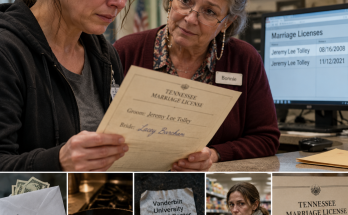
Jeremy died at seventy-eight.
Not suddenly.
Not dramatically.
And not in a hospital.
His heart had weakened over several years.
Medication helped.
So did stubbornness.
Eventually there were fewer good days.
Then fewer ordinary days.
We both knew what was happening.
That was the gift.
No one hid the prognosis.
No doctor softened it into something we were not allowed to understand.
No family member decided one of us was too fragile for truth.
Jeremy chose hospice at home.
The decision was his.
I supported it.
Not because of Lacey.
Not because we had once watched another person make the same choice.
Because Jeremy wanted his own bed.
His own windows.
Morning light in the room.
Coffee smells from the kitchen even when he could no longer drink much.
His workshop visible through the back window.
The uneven stool still in the corner.
He became weaker in increments.
Sophie came often.
Karen, older and moving with a walker by then, visited twice a week.
Mark had died several years earlier.
Quietly.
Sophie attended his funeral and cried honestly.
No one rewrote his life into innocence.
No one reduced him to his worst decisions either.
Second Room sent Jeremy a card signed by volunteers.
He held it for a long time.
“They shouldn't know.”
“Know what?”
“That I’m sick.”
“You drove half of them around town.”
He smiled.
“Fair.”
Emma, now twenty-one, sat beside him one afternoon.
She had grown into the same kind of person who asked difficult questions at inconvenient times.
“Grandpa Jeremy?”
“Yes?”
“Are you scared?”
Everyone in the room went still.
Jeremy smiled.
“Yes.”
Emma nodded.
“Me too.”
Good.
No inspirational speech.
No promise that death was beautiful.
They held hands.
After she left, Jeremy said, “That kid.”
“She comes honestly by it.”
“From your side.”
“Absolutely.”
His final week was mostly quiet.
He slept often.
Woke confused sometimes.
Then clear again.
One evening, he asked me for the wooden box from the closet.
“What’s in it?”
“Our rings.”
I frowned.
“My ring is on my hand.”
“The other one.”
I knew.
Lacey’s ring.
After the funeral home returned her belongings years ago, the ring had eventually come to Jeremy through her estate.
He had not worn it.
He had placed it in a box and told me.
I had forgotten.
That pleased me once.
Now the memory returned.
I brought the box.
Jeremy held Lacey’s ring between two fingers.
“You kept it?”
“You knew I did.”
“I forgot.”
“Good.”
He smiled.
“What do you want done with it?”
I asked.
His eyes filled.
“I don't know.”
I almost laughed.
“Our favorite answer.”
“Yes.”
“Do you want it buried with you?”
“No.”
“Second Room?”
“No.”
“Raymond’s gone.”
“Yes.”
“David too.”
“Yes.”
“Then?”
He looked at the ring.
“Maybe melt it.”
I stared.
“Into what?”
“No idea.”
“That sounds like fixing.”
He laughed weakly.
“Still catching me.”
“Yes.”
He thought.
“Then you decide.”
“No.”
“Right.”
He smiled.
“Old habit.”
I sat beside him.
“What did Lacey originally want?”
“To be buried with it.”
“But she was cremated.”
“Yes.”
“It stayed behind.”
“Yes.”
Jeremy looked at me.
“She wanted it because she thought it proved she was chosen.”
I nodded.
“And then she learned it didn't.”
“Yes.”
“What if we just let it stop meaning anything?”
The answer surprised me.
“How?”
“Sell it.”
I laughed.
“You want to pawn your dead second wife’s ring?”
“Invalid second wife.”
“Jeremy.”
He laughed too, then coughed.
I helped him sit higher.
When he settled, he said, “Sell it. Give the money wherever.”
“Second Room?”
He thought.
“No.”
“Why?”
“Too symbolic.”
“Good answer.”
“Buy something stupid.”
I smiled.
“Like what?”
“A good dinner.”
“That ring might buy several.”
“Then take everyone.”
I looked at him.
“You’re serious.”
“Yes.”
“Family dinner?”
“Yes.”
“No memorial speech?”
“No.”
“Just food?”
“Yes.”
I took the ring from him.
“Okay.”
He relaxed.
“That feels right.”
I put it back in the box.
A ring that had once carried unbearable meaning became future dinner.
That was perhaps the healthiest ending available.
The following morning, Jeremy asked me to open the bedroom curtains.
Sunlight crossed the floor.
He looked toward the hallway.
“Our wedding picture?”
“What about it?”
“Bring it.”
I did.
The courthouse photograph.
Young Jill.
Young Jeremy.
Twenty-two years before the discovery.
Decades before now.
I placed it beside him.
He studied us.
“We were babies.”
“Idiots.”
“Also that.”
“Happy.”
“Yes.”
“Do you regret marrying me?”
He had asked variations before.
Never like this.
I answered carefully.
“No.”
His eyes filled.
“Do you regret staying?”
“No.”
A tear moved down his cheek.
“Do you regret finding out?”
I thought of the courthouse.
Bonnie.
The second certificate.
Hospital rooms.
Lacey.
Mark.
Karen.
Amanda.
David.
The Nashville house.
Second Room.
Years of pain.
Years after pain.
“No.”
Jeremy nodded.
“I’m glad.”
“What about you?”
“What?”
“Do you regret marrying me?”
“No.”
“Staying?”
“No.”
“Lacey?”
His face changed.
That question contained too much.
“I regret what I did.”
“That wasn't the question.”
“I know.”
He looked toward the sunlight.
“I don't regret that she existed in my life.”
I nodded.
“I don't need you to.”
His eyes returned to me.
“I regret how I loved her.”
That was the answer.
“How?”
“Like love gave me permission.”
I held his hand.
“It didn't.”
“I know.”
“Now.”
“Yes.”
He smiled faintly.
“Too late?”
“For some things.”
“Yes.”
“Not everything.”
He squeezed my fingers weakly.
We remained like that.
Later, Karen arrived.
She sat beside him.
“You look terrible.”
Jeremy laughed.
“You always were cruel.”
“Family tradition.”
She cried shortly afterward.
Jeremy reached for her.
“I’m sorry about Mark.”
Karen shook her head.
“That's not yours.”
“I know.”
“Then stop collecting things.”
“Working on it.”
She smiled through tears.
“Still?”
“Apparently.”
Sophie arrived after lunch.
She brought Emma.
Noah came too.
The room became crowded.
Jeremy liked that.
He had once spent a lifetime trying to be the person everyone needed.
Now people came because they wanted to.
No fixing required.
Second Room’s director sent no ceremony.
Only a brief message through Sophie.
Tell Jeremy the volunteer ride schedule is full through next month.
He smiled.
“That’s good.”
That evening, everyone left except me.
Jeremy slept.
Around midnight, he woke.
“Jill?”
“I’m here.”
“I know.”
His breathing was shallow.
He looked toward my ring.
“You still wear it.”
“Yes.”
“Why?”
The question surprised me.
“Habit.”
He frowned.
I smiled.
“And choice.”
“Better.”
“Yes.”
He closed his eyes.
Then opened them again.
“Bad sentence.”
I leaned closer.
“What?”
“I’m afraid.”
My throat tightened.
“Of dying?”
“Yes.”
I nodded.
“Me too.”
“Of leaving you.”
“I’ll be okay.”
“I know.”
“Do you?”
“Yes.”
That answer mattered.
He did not need me to collapse to prove our love.
“I’m still afraid.”
“That’s allowed.”
He breathed slowly.
“Your turn.”
“What?”
“Bad sentence.”
Even now.
I swallowed.
“I’m angry you get to go first.”
A faint laugh escaped him.
“That is bad.”
“Yes.”
“Anything else?”
“I don't want to wake up in this house without you.”
His eyes filled.
“I know.”
“And part of me is already planning practical things because I don't know what else to do.”
“Jill.”
“What?”
“Don't fix tomorrow tonight.”
I laughed and cried at the same time.
“That was good.”
“I’ve had practice.”
He slept again.
Near dawn, his breathing changed.
I knew.
Not because anyone told me.
Because I had sat beside enough endings to recognize the body withdrawing.
I called the hospice nurse.
She said she would come.
I did not call everyone immediately.
That was not secrecy.
They had already said goodbye.
I sat beside him.
Held his hand.
The room became pale with morning.
Jeremy opened his eyes once.
“Jill.”
“Yes.”
“Tell the bad sentence.”
I smiled through tears.
“I love you.”
His mouth moved.
“That’s not bad.”
“It scares me right now.”
He understood.
“I love you too.”
Those were his final clear words.
Jeremy died shortly after sunrise.
No revelation.
No hidden confession.
No letter under the pillow.
Nothing left waiting to explode.
Just death.
Clean in the way death almost never feels.
The hospice nurse came.
Then Karen.
Then Sophie.
Then the practical steps began.
Funeral home.
Calls.
Paperwork.
Food no one wanted.
I cried.
Then did not cry.
Then cried again because his coffee mug was beside the sink.
Grief was not dignified.
It was repetitive.
The funeral followed his instructions.
Cremation.
No expensive coffin.
No required burial place.
We held a service anyway because we wanted one.
That was our choice.
The hall was full.
Contractors.
Neighbors.
Second Room volunteers.
Family.
Old clients.
People I barely knew.
No one called Jeremy perfect.
Thank God.
Sophie spoke.
“He taught me that adults can be wrong for a very long time and still become different people.”
My chest tightened.
She continued.
“He also taught me that changing does not mean pretending the harm never happened.”
That was enough.
Karen spoke briefly.
“He fixed everything until he learned not everything should be fixed.”
People laughed.
I did too.
Emma read the note Jeremy had written years earlier.
I hurt people I loved by avoiding difficult truths, and I spent the rest of my life trying to become someone who spoke sooner.
Then she folded the paper.
No one mentioned the secret marriage.
No need.
The sentence held the truth without turning his funeral into a trial.
Afterward, I sold Lacey’s ring.
A jeweler bought it for less than Jeremy imagined.
I laughed in the parking lot.
“Your ridiculous dinner budget shrank.”
Still enough.
I invited Karen.
Sophie.
Noah.
Emma.
Hannah, David’s daughter.
Raymond had died, so I invited his son’s surviving sister, whom I had met once.
Thomas too.
He refused at first.
I insisted.
“You survived the paperwork.”
“That is not a reason.”
“It is tonight.”
We ate at a restaurant Jeremy loved.
Nothing fancy.
Good steaks.
Excellent pie.
No speeches.
Exactly as promised.
At the end, Emma asked why we were there.
I told her.
“A ring paid for dinner.”
“What ring?”
“One that used to mean too much.”
She frowned.
“That sounds weird.”
“It was.”
She ate another bite of pie.
The ring was gone.
No memorial plaque.
No preserved object.
Just dinner in the bodies of living people.
I liked that.
Months later, I scattered Jeremy’s ashes.
Not at Lacey’s hill.
Not at the courthouse.
Not at Second Room.
At a lake where he had taken me fishing during our first year of marriage.
He hated fishing.
I loved that story.
He had spent six hours pretending to enjoy himself because he wanted me to think we had hobbies in common.
Years later he admitted the truth.
Too late, but harmless.
I went alone.
By choice.
Karen offered.
Sophie offered.
I said no.
The morning was quiet.
I stood at the water with the urn.
“You were an idiot,” I said.
Wind moved across the lake.
No answer.
“Sometimes a coward.”
Nothing.
“Sometimes kind.”
Water against shore.
“You hurt me.”
My throat tightened.
“I hurt you too.”
I breathed.
“I loved you.”
The sentence no longer frightened me.
“I still do.”
I opened the urn.
No dramatic speech.
No final explanation.
Ashes moved into water and air.
Then were gone from my hands.
I stood there for a long time.
Not waiting for a feeling.
Just standing.
When I finally turned back toward the car, my phone buzzed.
A message from Sophie.
Second Room served patient number 20,000 today.
I stared at the screen.
Twenty thousand.
I smiled.
Then replied:
Tell them congratulations.
Nothing about Lacey.
Nothing about Jeremy.
The program had outgrown us all.
Years passed.
I moved to a smaller house.
Not because the old one was haunted.
Because stairs became annoying.
Karen lived ten minutes away.
We had lunch every Thursday.
Sophie visited when work allowed.
Emma became a nurse.
Nobody pressured her to work in oncology.
She chose emergency medicine because, in her words, “I like people who don't have time to lie.”
Family trait.
The courthouse photograph came with me to the new house.
I placed it on a shelf.
Not central.
Not hidden.
Sometimes visitors asked.
“Your wedding?”
“Yes.”
“You were beautiful.”
“I was young.”
Same thing to them.
Different to me.
I kept Lacey’s 2004 letter in a locked file.
Not because it remained dangerous.
Because it was private.
Amanda’s recording stayed archived with Sophie.
My father’s letter remained beside old family documents.
Jeremy’s note about honesty sat in the drawer with his pocketknife from David.
Objects.
Nothing more unless I chose to open them.
That became the final lesson.
Truth does not require living forever inside evidence.
You can know.
Then close the drawer.
On my eightieth birthday, Sophie asked me the question Jeremy once had.
“If you could go back, would you still walk into the courthouse and find out?”
“Yes.”
“No hesitation?”
“No.”
“Even knowing what it cost?”
“Yes.”
She smiled.
“I knew you’d say that.”
“Then why ask?”
“Because people change.”
I looked toward the wedding photograph.
“Yes.”
“They do.”
Sophie sat beside me.
“Was Grandpa Jeremy the love of your life?”
I almost laughed.
“That phrase is too neat.”
“Fine. Did you love him most?”
“Most compared to whom?”
She rolled her eyes.
“You know what I mean.”
I thought.
“He was the person I chose to build most of my life beside.”
“That sounds less romantic.”
“It was more real.”
She accepted that.
“What about Lacey?”
“What about her?”
“Did you love her?”
I stared.
“No.”
Then thought.
“Not the way you mean.”
“But?”
“I came to care what happened to her story.”
“Is that love?”
“I don't know.”
Our favorite answer.
Sophie smiled.
Then she asked the last question.
“Do you think everybody finally told the truth?”
I looked around my quiet house.
At the photograph.
The ring on my hand.
Still there.
Jeremy gone.
Lacey gone.
David gone.
Mark gone.
My father gone.
Amanda gone.
Karen still alive and probably complaining that I had not returned a container.
“No.”
Sophie looked surprised.
“No?”
“There were probably things we never found.”
“Doesn't that bother you?”
Once, it would have.
Now?
“No.”
“Why?”
“Because truth is not the same as total access.”
She waited.
“I learned what belonged to my life.”
“And the rest?”
“Belongs where it belongs.”
Sophie nodded slowly.
“That took you a long time.”
“Rude.”
“True.”
I smiled.
Outside, afternoon light crossed the yard.
No unanswered phone.
No courthouse clerk.
No second marriage certificate waiting under another name.
The central question had never been whether Jeremy legally belonged to me.
People do not belong to people.
The question had been whether a marriage could survive after choice had been stolen from one person through years of secrecy.
Ours did.
Not because survival proved goodness.
Not because forgiveness erased anything.
Not because Jeremy earned me.
Not because Lacey died.
It survived because, once everything false was dragged into light, I was finally allowed to choose.
For a while, I chose uncertainty.
Then I chose trying.
Later, I chose staying.
Again and again, through ordinary mornings, bad anniversaries, hospital rooms, grief, laughter, aging, and all the boring days no one writes stories about.
Jeremy chose too.
Not perfectly.
Not once.
Repeatedly.
That became our marriage.
Not the certificate.
Not the ring.
Not the years already spent.
The ongoing decision.
I once thought discovering the truth destroyed my life.
What it destroyed was the version of my life that required me not to know.
I grieved that version.
Then I built another.
One where love did not excuse secrecy.
Where forgiveness did not require forgetting.
Where privacy was not the same as deception.
Where helping did not mean ownership.
Where the dead did not control the living.
Where family history could be known without becoming destiny.
Where someone could hurt you and still change.
Where you could forgive and still leave.
Where you could forgive and stay.
Where neither choice made you weaker.
I looked again at the courthouse photograph.
Young Jill smiling.
Young Jeremy beside her.
Neither knowing what waited.
I no longer wanted to warn them.
That surprised me.
They would have to become us the only way people ever become themselves.
By living.
By failing.
By learning too late.
Then earlier the next time.
I touched my wedding ring.
Not proof.
Not ownership.
A choice I had made so many times it had become part of my hand.
Then I stood, closed the photograph album, and went to call Karen about her missing container.
Life was still waiting.
The End
Read more original stories on Feel Every Story.
A Routine Question About My Marriage Sent Me Looking for One Paper I Never Thought I Would Need
Part 43 of 43